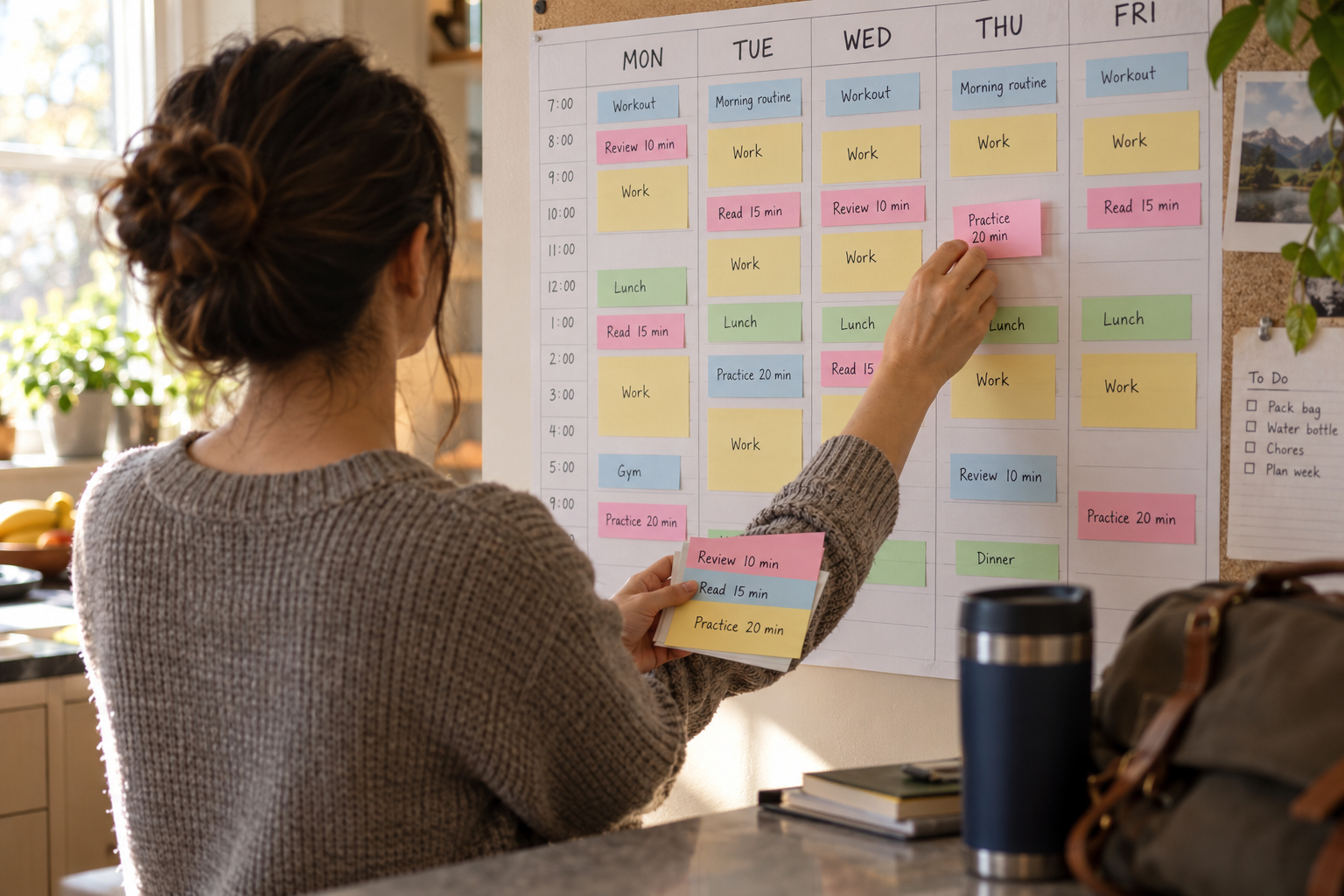
Busy professionals and lifelong learners often struggle to make steady progress because time feels fragmented and priorities shift. A practical learning schedule turns scattered minutes into intentional practice without demanding large, uninterrupted blocks. By focusing on consistency, realistic goals, and varied practice types, learners can maintain momentum even with limited hours. This article outlines steps to build a sustainable, adaptable schedule that fits into a full life.
With clear structure and modest expectations, learning becomes a predictable habit rather than a sporadic effort. The following sections offer concrete tactics you can apply immediately.
Why a tailored schedule matters
A tailored schedule acknowledges individual rhythms, commitments, and preferred learning formats so that study sessions are more effective. Generic routines fail when they ignore peak focus times or social responsibilities, leading to abandonment. When a plan aligns with real constraints, it increases completion rates and improves retention through regular review. Personalization also allows you to balance deep, focused sessions with lighter maintenance activities.
Investing time up front to design a schedule saves time later because it reduces decision fatigue. The result is a sustainable pattern that supports steady skill accumulation.
Creating realistic weekly blocks
Start by mapping available pockets of time across a typical week and categorize them by length and energy level. Reserve longer blocks for complex or creative tasks and shorter ones for review, flashcards, or micropractice. Use the principle of spacing: distribute similar topics across multiple days rather than cramming them together to enhance long-term retention. Include at least one session for integration—applying what you’ve learned in a project or teaching it to someone else.
Keep your weekly plan flexible by designating alternate slots and adjusting based on outcomes. This hybrid of structure and adaptability prevents burnout and keeps the schedule realistic.
Maintaining momentum and tracking progress
Momentum depends on measurable, visible progress; choose a tracking method that fits your style, such as a simple checklist, habit tracker, or a brief weekly review. Set modest, specific objectives for each session so that accomplishments are clear and motivating. Incorporate varied practice—mixing review, problem-solving, and creative application—to keep engagement high and strengthen different memory systems. Regular reflection helps you identify friction points and refine time allocations.
Celebrate small wins and iterate on the plan every few weeks based on what works. Consistent tracking turns motivation into a reliable driver for long-term learning.
Conclusion
Designing a practical learning schedule starts with realistic time mapping and personalized priorities. Combine consistent short sessions with occasional deep work and clear tracking to sustain progress. With iteration and modest goals, even very busy learners can build lasting competence.