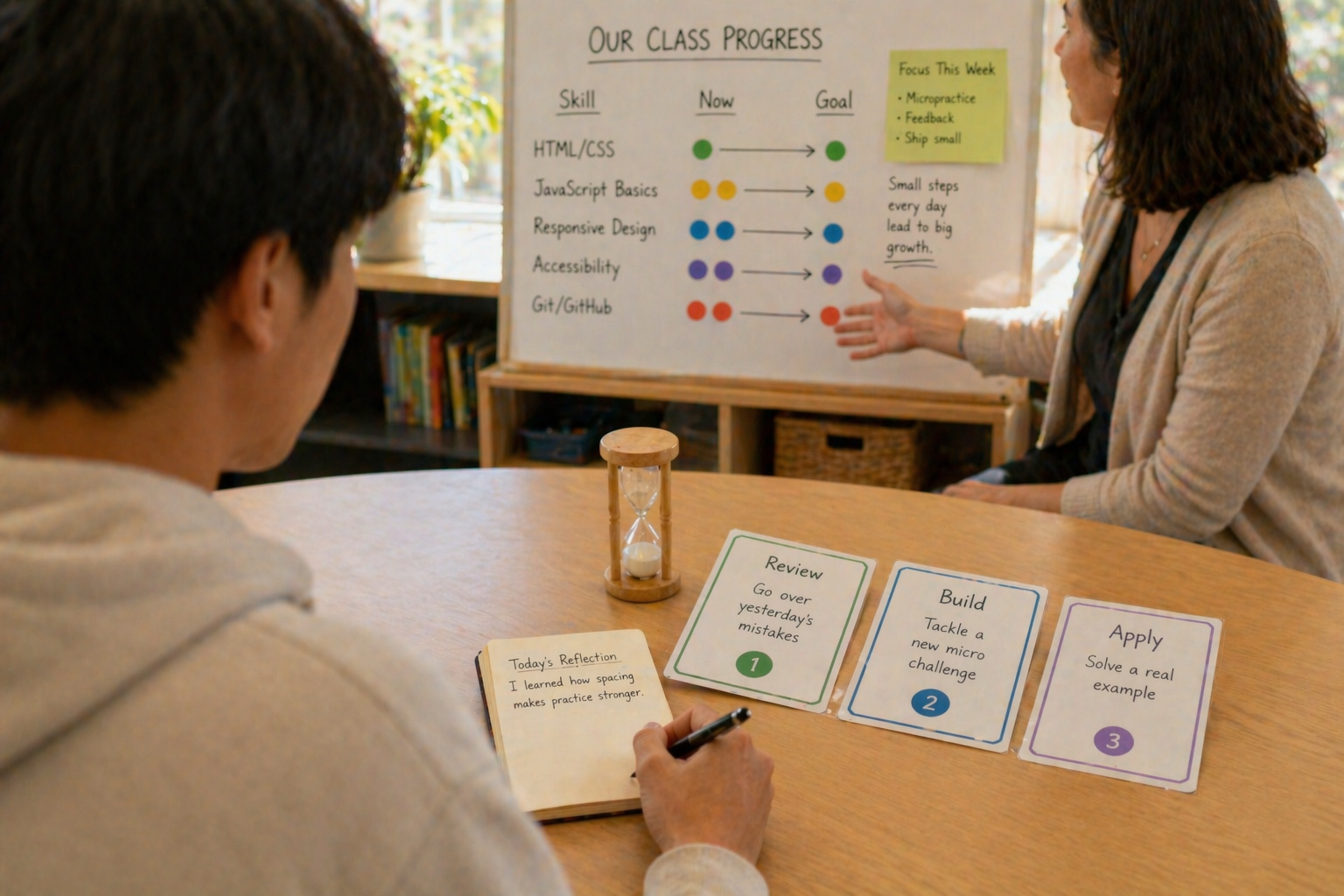
Independent learning flourishes when systems reduce friction and invite repetition rather than relying on willpower alone. Small, predictable structures help learners turn intention into habit and make progress visible. Teachers and program designers can create lightweight frameworks that slot into busy schedules without overwhelming learners. This article outlines practical structures you can adopt to encourage sustained, autonomous study.
These approaches focus on simplicity, consistency, and reflection to build confidence. They work across subjects and age groups when adapted to context and capacity.
Begin with compact, repeatable routines
Routines shrink the cognitive load of getting started: a fixed opening task, a short warm-up, or a five-minute planning step can anchor attention and clarify goals. Keep each routine under ten minutes and repeat it daily to foster automaticity. Emphasize what happens first, not everything that follows; learners who know the opening sequence are more likely to begin work independently. Design routines so they can be completed alone and scaled up when learners are ready for more challenge.
- Example starters: a quick review question, a goal statement, or a brief self-check.
- Keep materials ready and predictable to minimize setup time.
- Rotate variations weekly to maintain engagement without complexity.
These compact rituals act as entry points; once started, learners tend to continue with the next steps. Consistency over novelty makes progress measurable and repeatable.
Design short practice-reflect cycles
Short cycles of focused practice followed by quick reflection accelerate learning by closing the feedback loop. Limit practice sessions to 15–25 minutes with a 3–5 minute reflection that asks what worked, what didn’t, and one next step. This encourages metacognitive habits and helps learners translate effort into adjustments. Over time these cycles improve planning and increase the transfer of skills to new contexts.
Encourage students to record a single insight and a simple action for the next session. That minimal reflection keeps momentum and prevents overwhelm.
Make tracking and choices effortless
Lightweight tracking tools—checklists, short logs, or visual progress markers—make gains visible and sustain motivation. Offer limited choices about tasks or difficulty so learners exercise decision-making without facing paralysis by analysis. Keep templates simple and accessible so students spend time learning, not maintaining records. When learners can quickly see their trajectory, they are more likely to take ownership of next steps.
- Use a one-line daily log or a two-column reflection sheet.
- Provide three consistent options for extension tasks.
Transparent, simple systems reduce barriers to independent work and empower learners to experiment responsibly. Clear signals about progress and choices invite continued engagement.
Conclusion
Practical systems for independent learning prioritize low friction, short cycles, and visible progress to build confidence. Start small, measure a little, and iterate based on learner feedback. Over time these systems create durable habits that support lifelong learning.