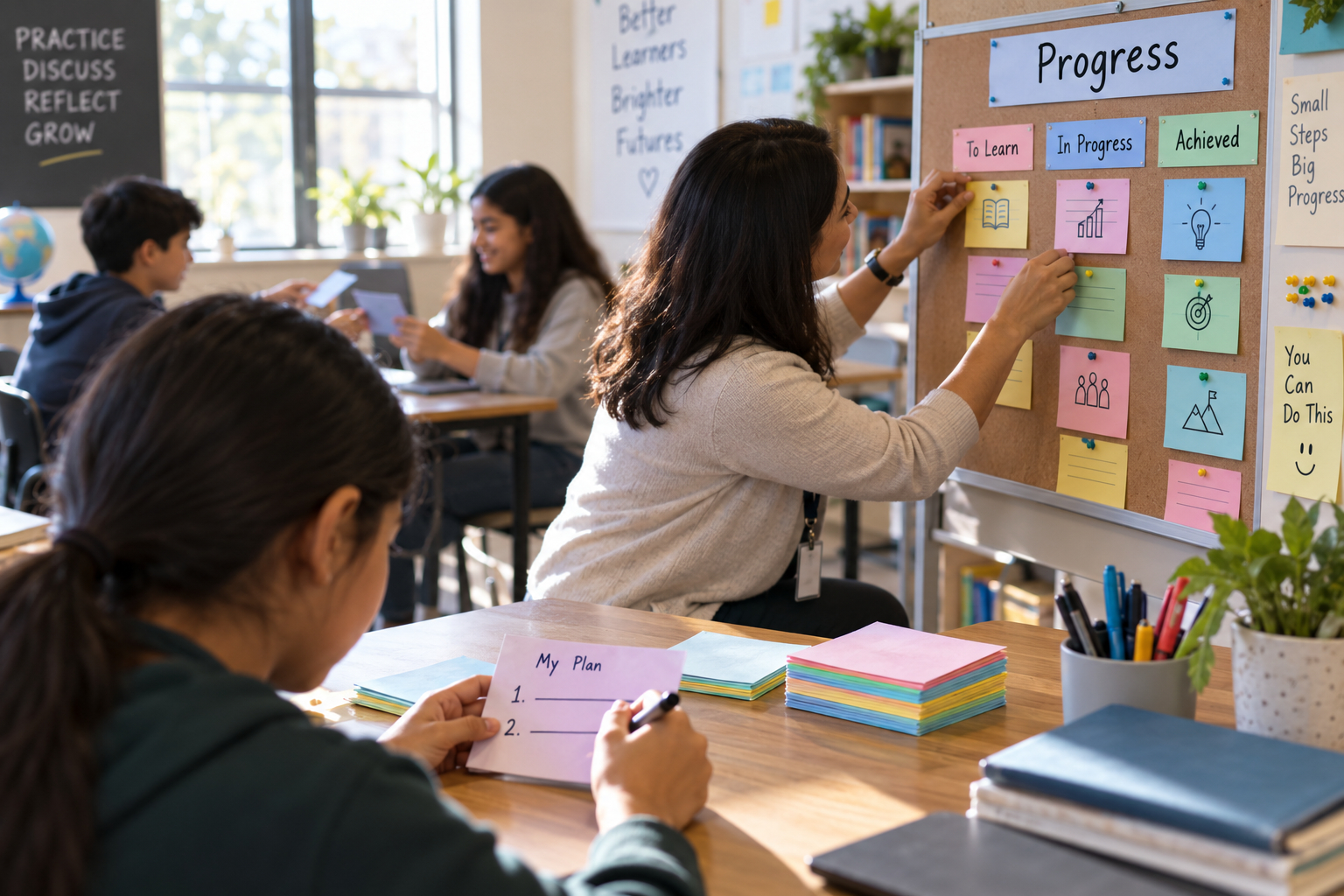
Many students struggle to manage time and prioritize tasks in busy learning environments. A compact personalized study plan helps learners set clear short-term goals and build consistent routines. Such plans are small, portable, and focused on immediate progress rather than exhaustive lists. This article outlines a practical approach teachers can use to help students design and sustain these plans. The method suits diverse subjects and learning contexts.
Why compact plans produce results
Compact study plans reduce decision fatigue by limiting choices to a few achievable actions. When learners see quick wins, motivation increases and self-efficacy grows. Short, repeated successes also help students internalize processes they can transfer to new tasks. By emphasizing clarity and small iterations, teachers can shift focus from perfection to progress. They also create a simpler feedback loop for teachers to monitor growth.
Teachers should emphasize consistency and reflection as the core benefits. Small plans build momentum and create data students can use to adjust habits. Make explicit how outcomes will be measured.
Designing a compact personalized plan
Begin by guiding students to list one clear objective for the study block and two measurable steps to reach it. Encourage them to select a realistic time estimate and one indicator that signals completion. Add a brief reflection prompt—what went well and what to try next—to foster metacognitive awareness. Keep the template short so students complete it quickly and can repeat the process daily. Students can personalize language and metrics so plans feel relevant.
Templates should be flexible; different learners will adapt them. The teacher’s role is to model and gradually release responsibility. Provide occasional check-ins to recalibrate expectations.
Classroom strategies to support uptake
Introduce the format during a warm-up activity and co-create examples with the class to increase buy-in. Pair students for peer review at the end of a session so they practice both giving and receiving feedback. Use role modeling and think-alouds to demonstrate how to adjust plans when obstacles arise. Schedule brief checkpoints so students form the habit of reviewing progress and revising their approach. Celebrate small improvements publicly to normalize iterative progress.
Consistent routines and visible examples accelerate adoption. Over time, fewer prompts are required as students internalize the practice. Adjust scaffolds for students who need more structure.
Conclusion
This compact approach helps learners make steady progress while practicing self-regulation. Small templates lower the barrier to planning and encourage daily reflection. With regular support teachers can help students turn short plans into durable study habits.