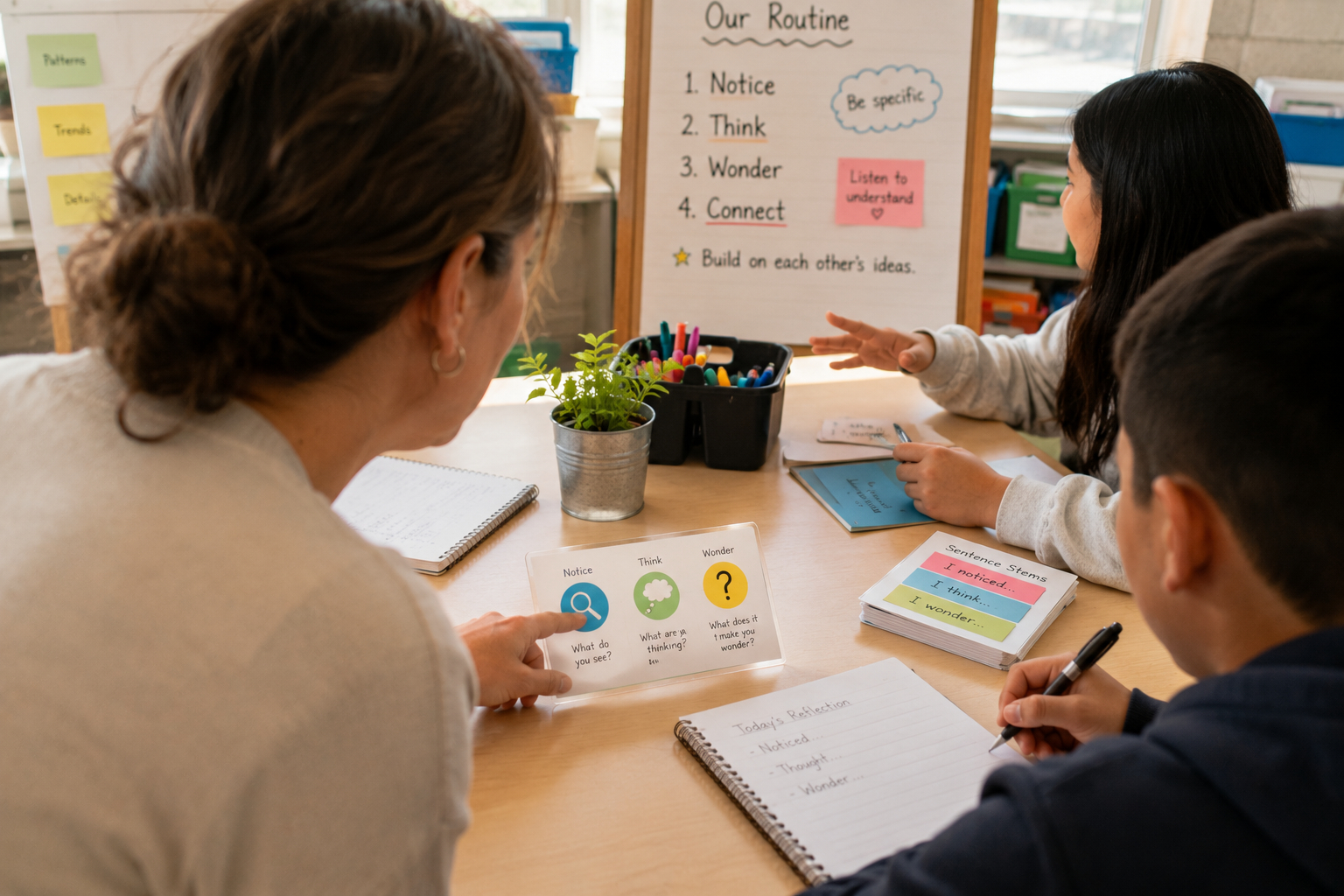
Students learn best when routines reduce cognitive load and free attention for deeper thinking. Simple frameworks give predictable practice, clearer goals, and a shared language for instruction. Teachers can introduce compact structures that students repeat daily until they become automated. Those structures help learners transfer strategies across tasks and build metacognitive awareness.
Why compact frameworks matter
Classroom complexity can overwhelm learners while compact frameworks offer focus and direction. By limiting choices and clarifying next steps, students conserve mental energy for genuine problem solving. Predictable routines also create space for reflection and formative checks that guide instruction. Over time, the repeated pattern becomes a portable strategy students can apply in new settings. The result is increased independence and more efficient use of class time.
When teachers value repetition and refinement, student confidence grows and performance stabilizes. Small, consistent structures often outpace one-off interventions because they foster durable habits.
Designing repeatable student routines
Start with a clear, single-purpose routine that aligns with a measurable learning goal. Keep steps to three or four essential actions so students can internalize the sequence quickly. Use explicit modeling and guided practice before asking students to perform the routine independently. Provide visual cues and simple checklists to scaffold early enactment and reduce ambiguity. Plan short practice windows so the routine becomes familiar without monopolizing instruction.
- Define the routine goal in one sentence.
- Limit steps to essential moves only.
- Practice it in short daily cycles and record quick outcomes.
Iterate the routine based on student feedback and observable results to keep it relevant. Small adjustments maintain momentum without adding complexity.
Supporting practice and transfer in class
Create regular opportunities for students to apply routines across different lessons and content areas. Pair brief peer coaching with rapid teacher checks to accelerate skill uptake and prevent fossilized errors. Encourage students to annotate how they used a routine and what differences they noticed when applying it elsewhere. Use reflection prompts focused on strategy rather than only content recall to reinforce transfer. Gradually reduce scaffolds as competence increases to promote autonomy.
Over weeks, normalize mini-assessments that spotlight routine use instead of just correct answers. Celebrate strategy use to motivate continued adoption and refinement.
Measuring and iterating small systems
Select a few simple indicators to monitor routine adoption, such as frequency of use, student explanations, and brief performance checks. Collect quick data during lessons—notes, exit tickets, or a one-point rubric—to judge effectiveness and guide tweaks. Share results with students and invite their suggestions for improvement; this builds ownership and actionable insight. Use short cycles of change so adjustments remain manageable and evidence-driven.
Keep measurement low-burden and focused on learning processes rather than exhaustive data collection. Iteration anchored in student experience ensures the framework stays practical and meaningful.
Conclusion
Begin small, model clearly, and practice consistently. Adjust routines based on evidence and student voice. Sustained simplicity helps learners carry skills beyond the classroom.