Small, predictable classroom moves help students take charge of their learning. Teachers can balance structure and choice so learners practice decision-making daily. When routines are brief and visible, students spend less energy on logistics and more on thinking. Over time these habits support confidence and independent problem solving in class.
Start with Clear, Short Routines
Begin by designing routines that solve one classroom friction at a time, such as entry tasks, resource checks, or transition signals. Keep instructions concise and repeatable so students can internalize steps without frequent prompts. Use consistent language and visible prompts so expectations become part of the environment rather than ongoing directives. Routines should reduce cognitive load and free time for meaningful engagement.
Introduce each routine explicitly, model it, and practice it together until it becomes automatic. Reinforce the desired behavior with brief, specific feedback so students know what to repeat. Over weeks, gradually reduce adult prompts to encourage student initiation and responsibility.
Model and Fade Support
Demonstration is essential: show students exactly how to carry out a task, think aloud about choices, and narrate troubleshooting steps. Make the invisible decisions visible so learners can mimic both the actions and the reasoning behind them. After modeling, guide students through the process with scaffolded prompts. Monitor progress and intentionally pull back supports as competence increases.
- Start with teacher-led examples.
- Use paired practice with shared responsibility.
- Move to independent application with check-ins.
By fading support deliberately, teachers create a clear path from dependence to autonomy. Students gain ownership when they can replicate strategies independently and know when to ask for help.
Use Simple Reflection Tools
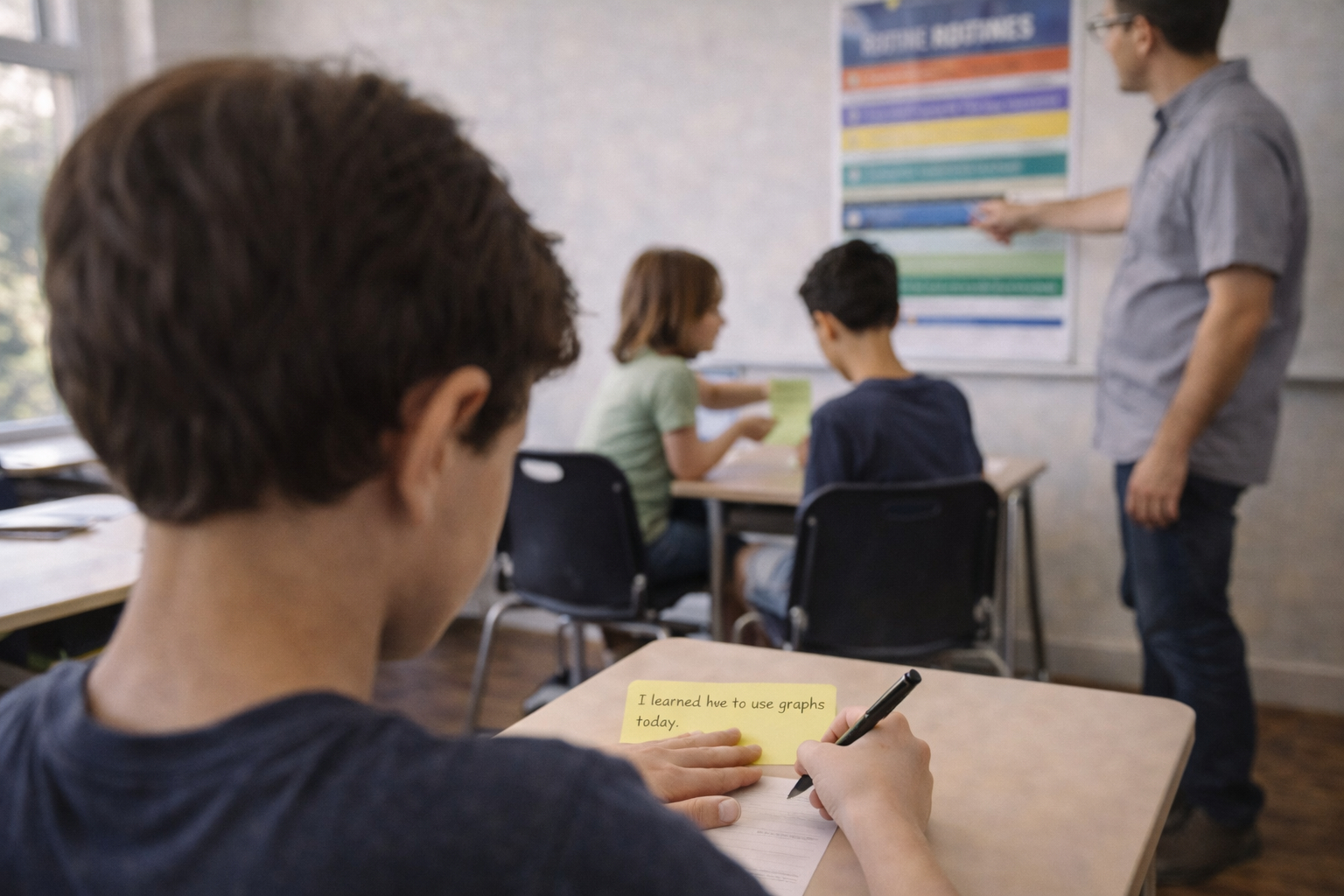
Reflection encourages metacognition and helps students notice strategies that work. Short tools—like exit slips, quick self-checklists, or brief goal statements—fit easily into daily routines and produce actionable insights. Encourage students to record one thing that went well and one specific next step. These practices build a habit of planning and revising without taking much instructional time.
Make reflection regular but low-stakes so students are honest and thoughtful. Share examples of useful reflections and celebrate incremental progress to reinforce the value of self-assessment.
Conclusion
Small, consistent changes to classroom practice can produce meaningful gains in student ownership. Focus on clear routines, modeled supports, and brief reflection to build independence over time. With intentional practice, students become active agents in their learning journey.