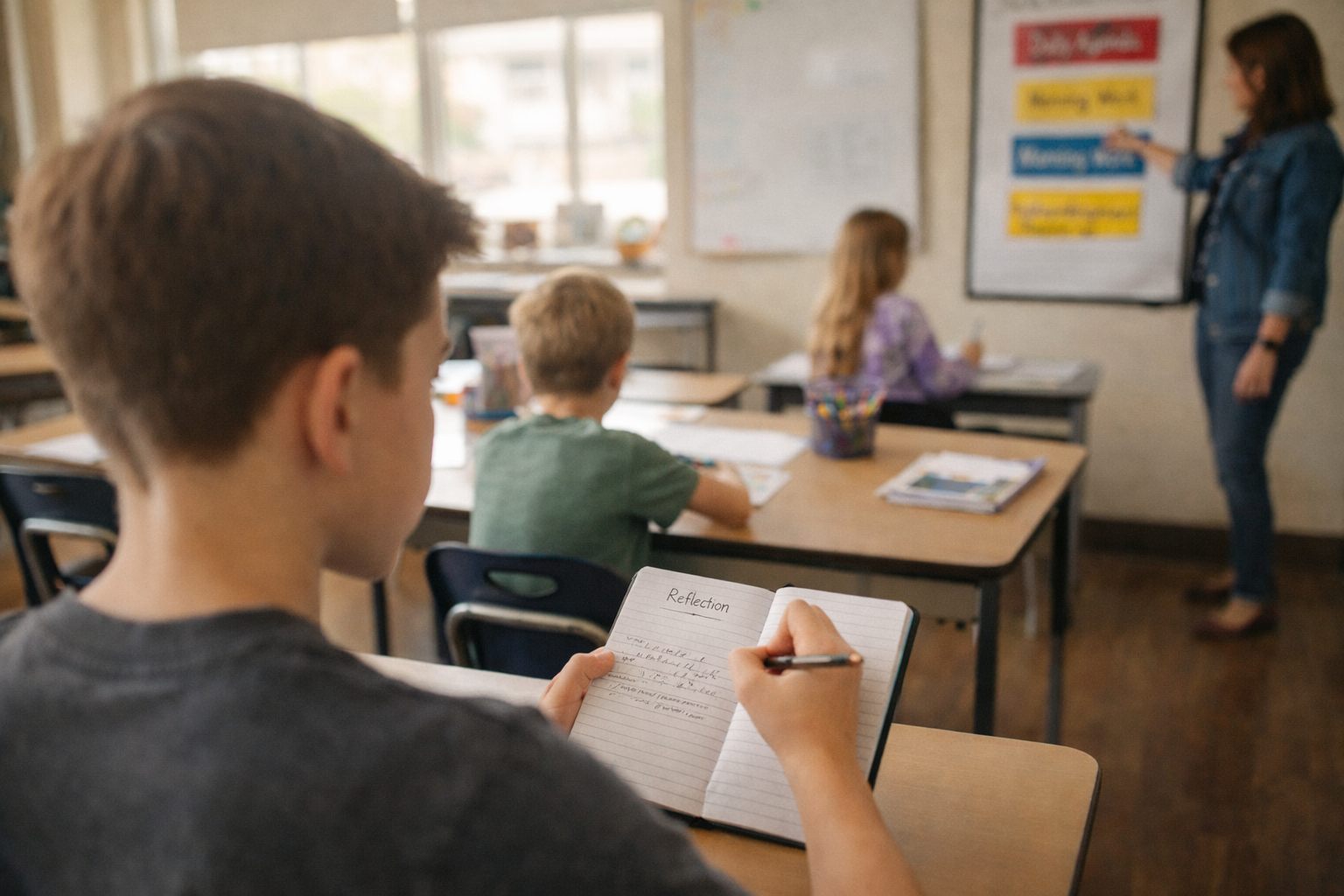
Creating classroom habits that encourage learners to take ownership of their progress is a practical, high-impact goal for any educator.
Clear routines reduce cognitive load and free students to focus on strategy rather than logistics.
When independence is taught explicitly, students develop confidence and transferable skills for future learning.
This article outlines actionable routines teachers can adopt and adapt across grade levels.
Why cultivate independence?
Encouraging independent learning supports deeper engagement and helps students become resilient problem solvers in and out of class. Teachers who prioritize autonomy notice improved participation, better time management, and greater persistence when tasks get difficult. Independence also strengthens metacognitive skills, enabling learners to evaluate and adjust their approaches. Those outcomes contribute to long-term academic growth and a stronger classroom culture.
Focusing on independence does not mean removing support; it means providing the right supports at the right time. With intentional design, routines can simultaneously guide novices and challenge more experienced learners.
Daily routines and rituals
Simple, repeatable rituals make independence predictable and manageable for students. Start each lesson with a brief objective statement and a student check-in question that prompts quick planning. End with a two-minute reflection where learners note one strategy that helped and one next step, which builds habit and accountability. Consistent timelines and clear expectations reduce anxiety and increase the likelihood students will attempt tasks on their own.
These rituals require minimal prep yet produce steady gains in student ownership over weeks and months. When routines are visible and practiced, they become part of the classroom’s learning DNA.
Scaffolding and gradual release
Deliberate scaffolds guide students toward independence without removing challenge prematurely. Use modeling and think-alouds to reveal expert strategies, then move to guided practice before independent application. Offer task variations that allow students to self-differentiate based on readiness, and teach checkpoint habits so learners know when to ask for help. Gradual release empowers students to internalize processes and make informed decisions.
Confidence grows when supports are temporary and purposeful, so schedule scaffold removal as an explicit part of instruction. Clear exit criteria help students recognize their own growth.
Conclusion
Small, consistent teaching moves produce measurable increases in student independence over time.
By structuring routines, scaffolds, and reflections intentionally, educators build transferable skills and a stronger classroom culture.
Applying these practices gradually makes independence achievable and sustainable for every learner.
Related Articles

Recent Posts

Designing Compact Choice Menus to Foster Student Decision-Making
Teaching Students to Sequence Tasks for Deeper Engagement
Practical Classroom Methods for Teaching Strategic Study Prioritization
Translate Everyday Work into Clear Professional Evidence
A Practical Process for Building Portable Career Proofs


