Building consistent learning habits in classrooms relies on small, repeatable systems rather than wholesale changes. When teachers design compact frameworks students can follow, routines become predictable and effortful skills automate over time. This article outlines practical approaches to create those systems with clarity and minimal overhead. The emphasis is on transferability so students can apply routines across subjects and contexts.
Identify Small, Repeatable Routines
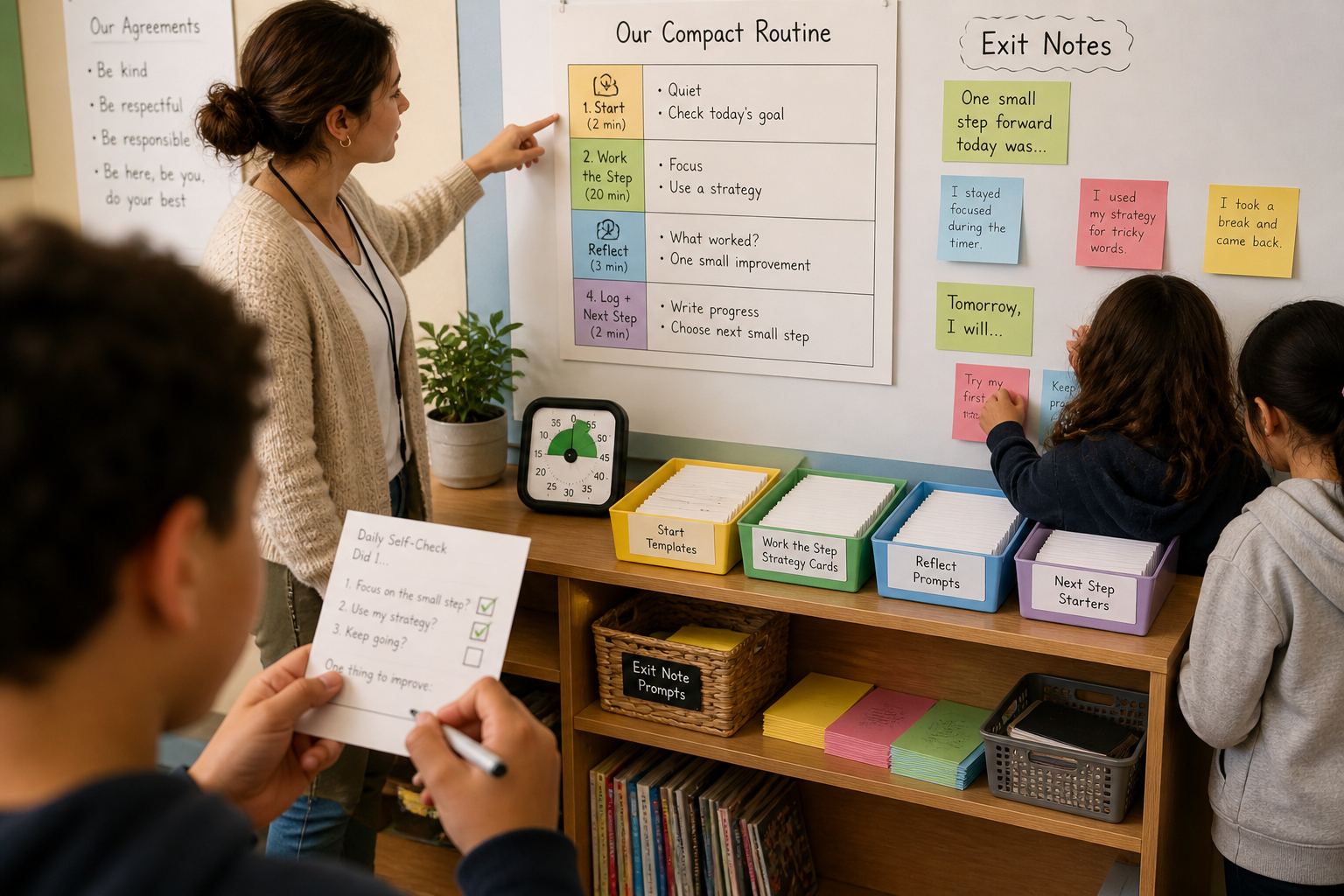
Start by selecting two to three micro-routines that address common learning moments, such as beginning a lesson, checking understanding, and ending with reflection. Each routine should be clear, observable, and simple enough for students to complete independently within a few minutes. Prioritize routines that scaffold higher-order skills like planning, monitoring, and revising work. Keep documentation minimal so routines fit into daily practice without disrupting instruction.
Once routines are chosen, introduce them explicitly and model the steps several times. Use quick checks rather than long assessments to verify that students adopt the habits.
Structure Feedback and Self-Monitoring
Design brief feedback loops that encourage learners to reflect and act without extensive teacher intervention. For example, pair quick self-check prompts with a one-line target students can revise before submitting work. Teach students language for evaluating progress so feedback becomes a habit rather than a surprise. Embedding consistent checkpoints reduces anxiety and builds a culture of continuous improvement.
- Short, specific prompts for self-assessment.
- Quick revision windows after formative checks.
- Classroom norms for peer feedback that focus on next steps.
These structures turn feedback into a routine part of practice and help students internalize a growth mindset. Over time, learners begin to monitor their work proactively.
Make Time and Materials Predictable
Consistency depends on predictable time and readily available materials so students spend energy on learning, not logistics. Create durable templates for common tasks, such as planning sheets or exit prompts, and store them where students can access them easily. Set aside brief, regular periods for independent practice so habits have space to grow. Predictability reduces cognitive load and makes habit formation more likely.
Teachers can rotate tools and prompts to maintain engagement while preserving the routine’s shape. Small adjustments keep systems fresh without sacrificing the benefits of consistency.
Conclusion
Clear, compact frameworks let teachers build sustainable learning habits with minimal friction. By focusing on repeatable routines, quick feedback loops, and predictable materials, classrooms become environments where independence grows. Start small, iterate, and let student ownership increase over time.