Helping students move from completing tasks to generating insights about how they learn is one of the most valuable classroom outcomes. When teachers model short experiments and reflection cycles, learners begin to treat study strategies as testable tools rather than fixed routines. This article outlines a practical approach teachers can use to coach students in planning small changes, observing results, and adapting methods. The goal is to create a classroom culture where iteration and evidence guide study habits.
Why iterative learning experiments matter
Iterative learning experiments make metacognition concrete: students try a tweak, observe an effect, and decide whether to continue. That cycle reduces the mystery of why some techniques work and others do not, shifting attention from effort alone to strategy effectiveness. It also lowers stakes because changes are framed as small, reversible tests rather than permanent judgments about ability. Over time, repeated cycles build a personal repertoire of strategies each student understands and trusts.
Teachers benefit too, because classroom experiments produce shareable data that inform instruction. When multiple students try variations from the same prompt, patterns emerge that help refine future lessons.
A simple three-step classroom routine
Introduce a compact routine students can follow: plan, practice, and review. First, ask learners to pick one small change to a usual approach, such as studying in shorter blocks or summarizing notes aloud. Next, have them apply the change for a defined, short period—one study session or a week—and collect one or two simple indicators of success. Finally, students reflect on the outcome and decide to keep, adapt, or discard the tactic.
- Plan: choose a specific change and a measurable signal.
- Practice: apply the change in a limited, low-pressure window.
- Review: compare expectations to results and update next steps.
Embedding this routine in class time and homework makes iteration habitual and manageable. The structure keeps students focused on evidence rather than vague impressions.
How to measure progress without heavy grading
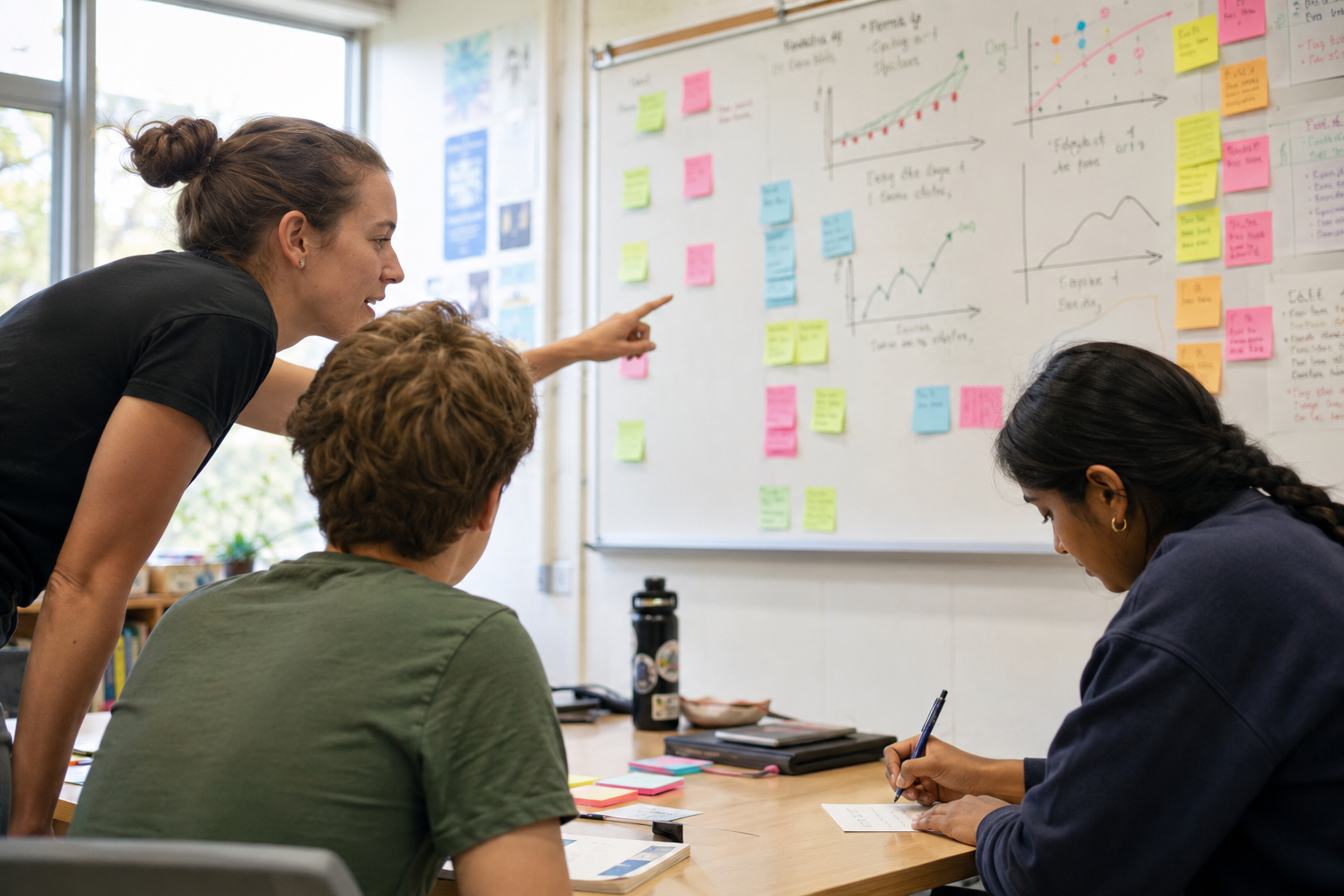
Use lightweight indicators that are quick to record and compare, such as time-on-task, self-rated comprehension, or one-question checks of recall. Short quizzes, minute summaries, or confidence scales provide immediate feedback without extensive marking. Encourage students to track these signals in a simple chart or notebook so trends are visible over time. Collective sharing of anonymized results can surface useful generalizations for the whole group.
Keeping measures simple ensures the routine is sustainable and centers learning over paperwork. The aim is informed choices, not perfect data collection.
Reflection prompts to guide student decisions
Prompts help students convert observations into actionable insights. Useful prompts include: “What changed about my approach?”, “What did I notice about my understanding or speed?”, and “What will I try next and why?”. These questions scaffold both analysis and planning, making iteration explicit and teachable. Over time students internalize these prompts and can apply them independently across subjects.
Regular reflection conversations—brief and focused—reinforce the habit of testing and refining. This turns isolated adjustments into deliberate growth processes.
Conclusion
Teaching students to plan, test, and adapt study methods moves learning from static routines to dynamic skill building. Small, manageable experiments plus simple measures and reflection create a repeatable cycle that supports lifelong learners. With consistent practice, students gain confidence in choosing and refining the strategies that work best for them.