Students make faster progress when they assemble repeatable approaches that guide decisions, manage time, and track progress. A durable learning playbook is a compact set of routines and templates students can carry across tasks and subjects. Teachers can shape these playbooks by modeling choices, simplifying options, and creating short cycles for planning and reflection. When designed for transfer, playbooks reduce friction and help learners focus energy on deeper ideas rather than process logistics.
Start with a compact framework
Introduce a small, consistent framework that students can apply to many tasks, such as Plan–Do–Check–Adjust, or Question–Research–Synthesize. Keep language simple and give concrete examples from different subjects so learners see how the same steps map to varied work. Provide a one-page template that fits in a notebook or digital file to lower activation energy. Consistency matters more than complexity when the goal is durability.
Having a compact framework reduces decision fatigue and accelerates independent use. Start with one routine and build from there so students gain confidence before adding options.
Model explicit routines and choices
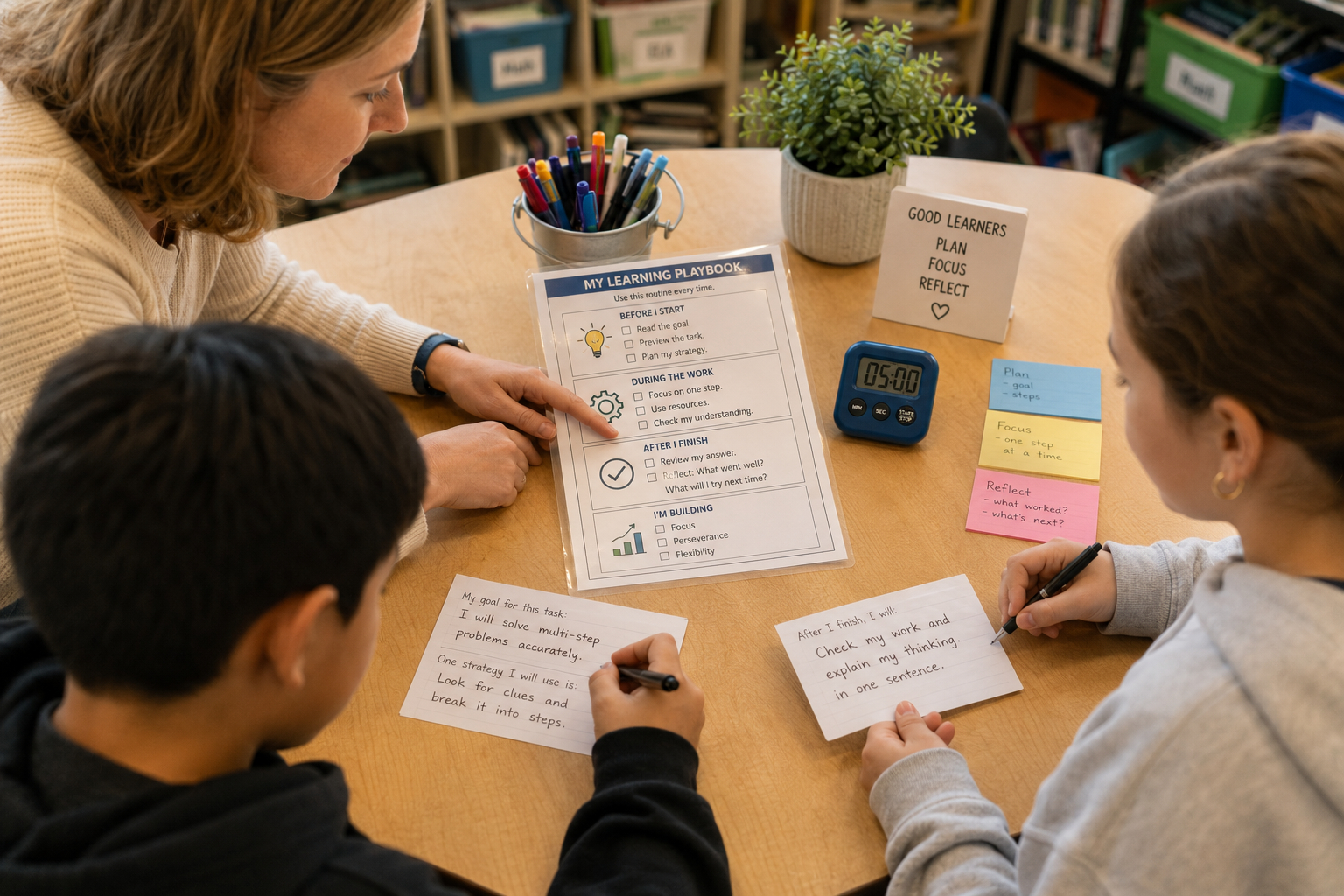
Students need visible reasoning to adopt new habits, so think aloud as you use the playbook during demonstrations. Show how you prioritize tasks, estimate time, and choose evidence to record. Contrast a quick, useful iteration with a longer, less focused approach so students can compare outcomes. Use brief debriefs to highlight which choices mattered and why.
Modeling doesn’t require long demonstrations; short, focused examples are more likely to be remembered. Repeat demonstrations in varied contexts to reinforce transfer.
Practice short cycles of planning and review
Design micro-cycles—ten to twenty minutes of planning, work, and review—that let students test parts of their playbook frequently. Encourage concrete checks, like identifying the next small step or naming one metric of success. Regularly scheduled reviews build metacognitive awareness and let students tweak templates based on real experience. These short cycles also create low-risk opportunities for iteration.
Frequent, low-stakes practice helps learners internalize routines more reliably than one-off lessons. Celebrate small adjustments so students learn to refine rather than abandon their systems.
Make tools portable and visible
Portability drives transfer: offer printable checklists, digital shortcuts, or pocket cards that students can carry between classes and tasks. Visual reminders posted in the classroom or embedded in assignment sheets cue the same sequence of choices. Encourage students to personalize templates so the playbook fits their workflow while preserving core steps. Peer-sharing sessions can surface variations that broaden usefulness across learners.
Visibility and personalization increase likelihood of sustained use and make it easier for students to explain their process to others. Over time, the playbook becomes an asset they can adapt for new challenges.
Conclusion
Durable learning playbooks combine simplicity, visible modeling, short practice cycles, and portable tools to support steady growth. When students own a compact set of routines, they spend more time learning and less time figuring out how to work. Teachers who focus on transferable process design help learners build habits that last beyond any single unit or class.