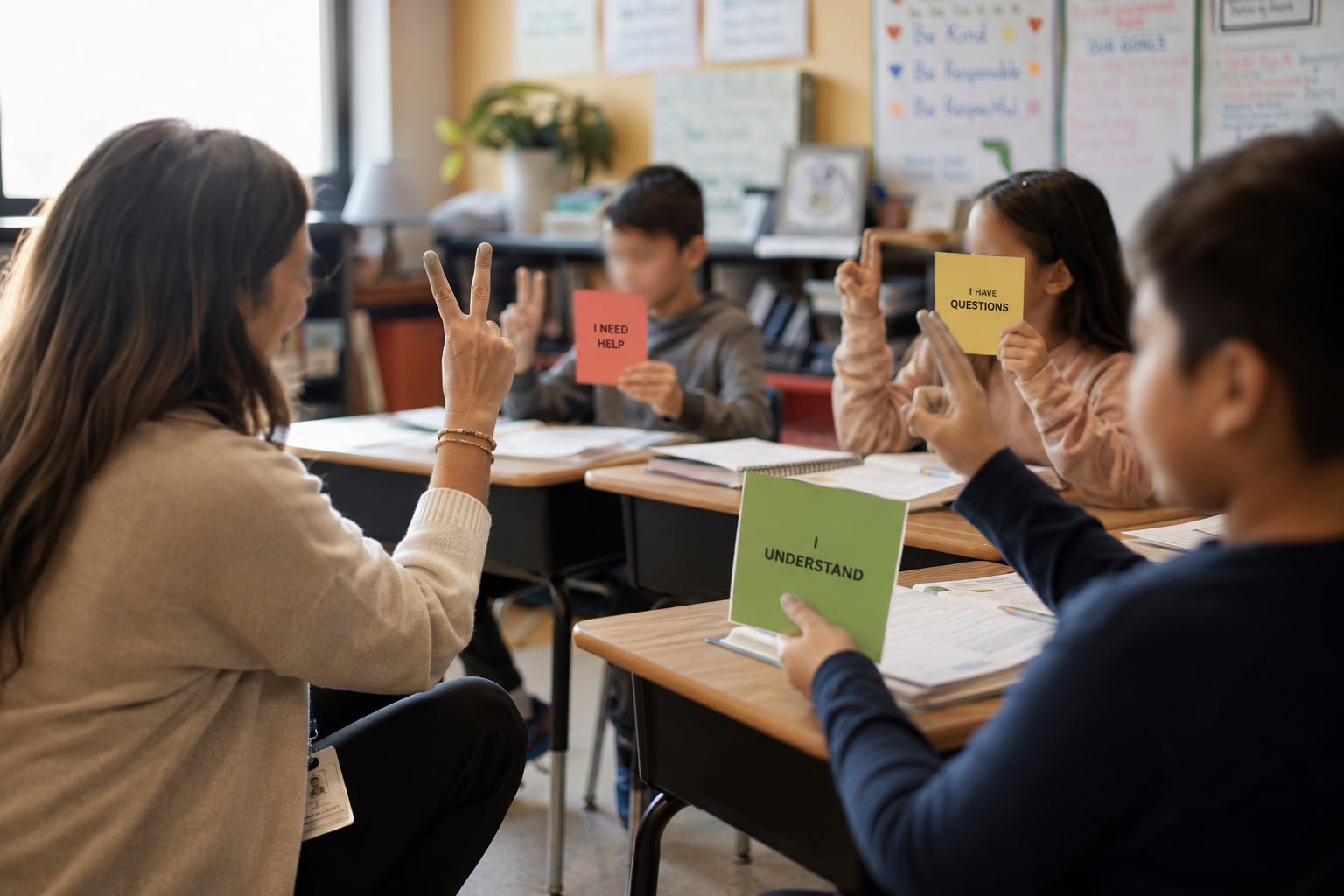
Small, consistent signals in the classroom can scaffold students toward greater independence without adding heavy structures. When teachers introduce compact cues tied to habits, learners notice expectations and can self-correct more quickly. Habit-based signals work best when they are predictable, brief, and framed as tools students use for their own learning. This piece outlines why these cues matter and how to start using them tomorrow.
Why habit-based signals work
Signals tap into routine, reducing the cognitive load required to make productive choices during lessons. Rather than delivering long directives, a brief visual or verbal cue becomes a shared prompt that nudges students toward a desired behavior. Over time the repeated pairing of cue and action builds automaticity, freeing attention for higher-order learning. This approach aligns with how habits form and supports transferable self-management skills in varied contexts.
Because signals are small and consistent they can be practiced often and adapted easily. They create predictable moments for pause and reflection without interrupting flow.
Practical examples to start with
Choose signals that match the rhythm of your classroom and the goals you want to reinforce. Examples include a two-finger tap on the desk to indicate self-check, a color card students show when ready for feedback, or a short countdown to shift from group work to independent tasks. Each signal should be explained, modeled, and rehearsed until students respond reliably. Keep the number of signals low to avoid confusion and to promote mastery.
- Two-finger self-check: quick accuracy pause before submission.
- Color readiness cards: visual cue for teacher pacing and peer feedback.
- Thirty-second cleanup bell: transitions and closure without long instructions.
Start with one signal, refine it with student input, and add others only when the first feels embedded. This paced approach helps sustain consistency.
How to introduce signals with students
Introduce a signal by describing its purpose, modeling the expected response, and rehearsing with the class in low-stakes settings. Invite students to practice and give feedback on clarity and timing so the cue feels collaborative. Use quick checks and reminders in the early days, then fade teacher prompts as students adopt the behavior. Celebrate progress to reinforce the habit loop and keep momentum going.
Consistent language and brief reinforcement are essential during the adoption phase. Over time the signals should require less external prompting.
Measuring small impacts
Track simple indicators such as reduced transition time, fewer teacher prompts, or higher rates of on-task behavior in brief intervals. Use low-effort measures like a quick tally, a student self-report, or spot observations over a week to see if the signal is working. Reflect with students about what changed and adjust timing or form if responses are inconsistent. Small wins accumulate and help justify refining or expanding the system.
Collecting concise evidence keeps the practice grounded and responsive. Share results with students to reinforce ownership of the change.
Conclusion
Habit-based signals are low-cost, high-impact tools that promote student ownership through routine and predictability. Start small, collaborate with learners on the cues, and use brief measures to guide adjustments. With steady practice these signals can quietly transform classroom rhythms and student self-management.