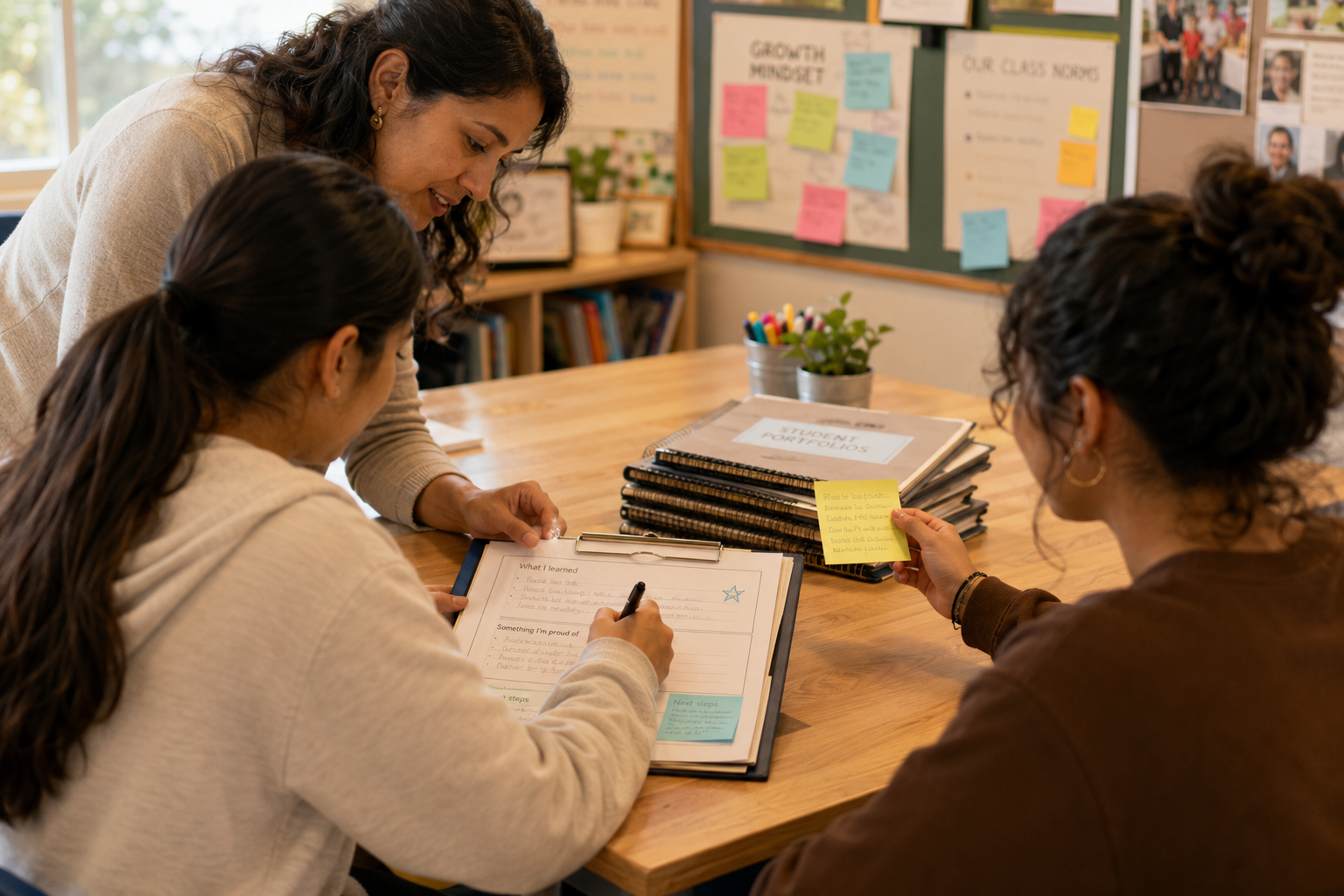
Reflective study portfolios give learners a visible record of progress, challenges and strategies that worked. When students curate short artifacts and reflections, they practice metacognition and develop a habit of self-assessment. Portfolios can be small, portable and aligned to clear learning goals so they remain practical for daily use. This piece outlines simple steps teachers can use to introduce, maintain and assess reflective portfolios.
Why portfolios support learning
Portfolios shift emphasis from single high-stakes products to growth over time, encouraging iterative improvement. They make invisible processes visible: goal-setting, revision, feedback response and strategic adjustments. Teachers and peers can use brief entries to target instruction and celebrate incremental gains. The structure also promotes ownership by letting students choose representative work and assess their own progress.
By keeping entries concise, portfolios stay sustainable and relevant. Students begin to notice patterns and can make informed adjustments to study strategies.
Designing a student reflective portfolio
Start with a compact template that asks for a learning goal, one artifact, a short reflection and a next step. Limit prompts to one or two focused questions to reduce resistance and ensure quality responses. Provide examples and model how to write a specific reflection that links evidence to strategy. Decide whether portfolios live digitally or in paper notebooks based on access and ease of review.
Clear expectations and a simple rhythm make the process scalable across a class. Students perform better when they know what to include and how often to update entries.
Practical implementation steps
Introduce the idea with a short pilot: one week of entries focused on a single transferable skill or standard. Allocate five to ten minutes at the end of selected lessons for students to add an artifact and write a reflection. Use peer review cycles where students exchange entries and ask two targeted questions about clarity and next steps. Regular check-ins from the teacher give formative data without heavy grading demands.
- Week 1: Model and practice the template.
- Week 2: Independent entries with peer feedback.
- Ongoing: Monthly review and revision.
These steps build routine without overwhelming class time. Over a term, small investments yield a richer picture of student development.
Assessment and revision
Assess portfolios formatively, focusing on evidence of reflection and growth rather than polished presentation alone. Use rubrics with a few clear criteria: connection to goal, quality of evidence and clarity of next steps. Schedule brief conferences where students summarize learning from their portfolio and set new targets. Encourage revision: older entries can be reworked to show how strategies changed and why.
Feedback loops keep portfolios dynamic and useful for planning instruction. They also teach students how to interpret feedback and apply it purposefully.
Conclusion
Reflective study portfolios are a low-cost, high-impact way to scaffold metacognition and long-term growth. When templates are simple and routines are short, students sustain the habit and produce actionable evidence of learning. Start small, model often, and treat portfolios as living documents that guide future work.