Students who can visualize their progress develop clearer goals and steady habits. A personal learning dashboard translates daily effort into visible signals, making reflection and planning easier. When learners collect a few meaningful metrics, they move from vague intentions to concrete actions. This piece explains how educators can guide students to build simple dashboards that support continuous growth.
Why dashboards help learners
Dashboards provide immediate, formative feedback that learners can interpret and act upon. They shift attention from final grades to process indicators like practice frequency, error patterns, and self-reported confidence. Such visibility supports metacognition by encouraging students to compare strategies and outcomes over time. The result is a more intentional approach to studying and targeted adjustments.
When students maintain their own records they develop ownership and agency. Teachers can use dashboards to tailor prompts and to scaffold goal-setting conversations without replacing student judgment.
Designing a simple student dashboard
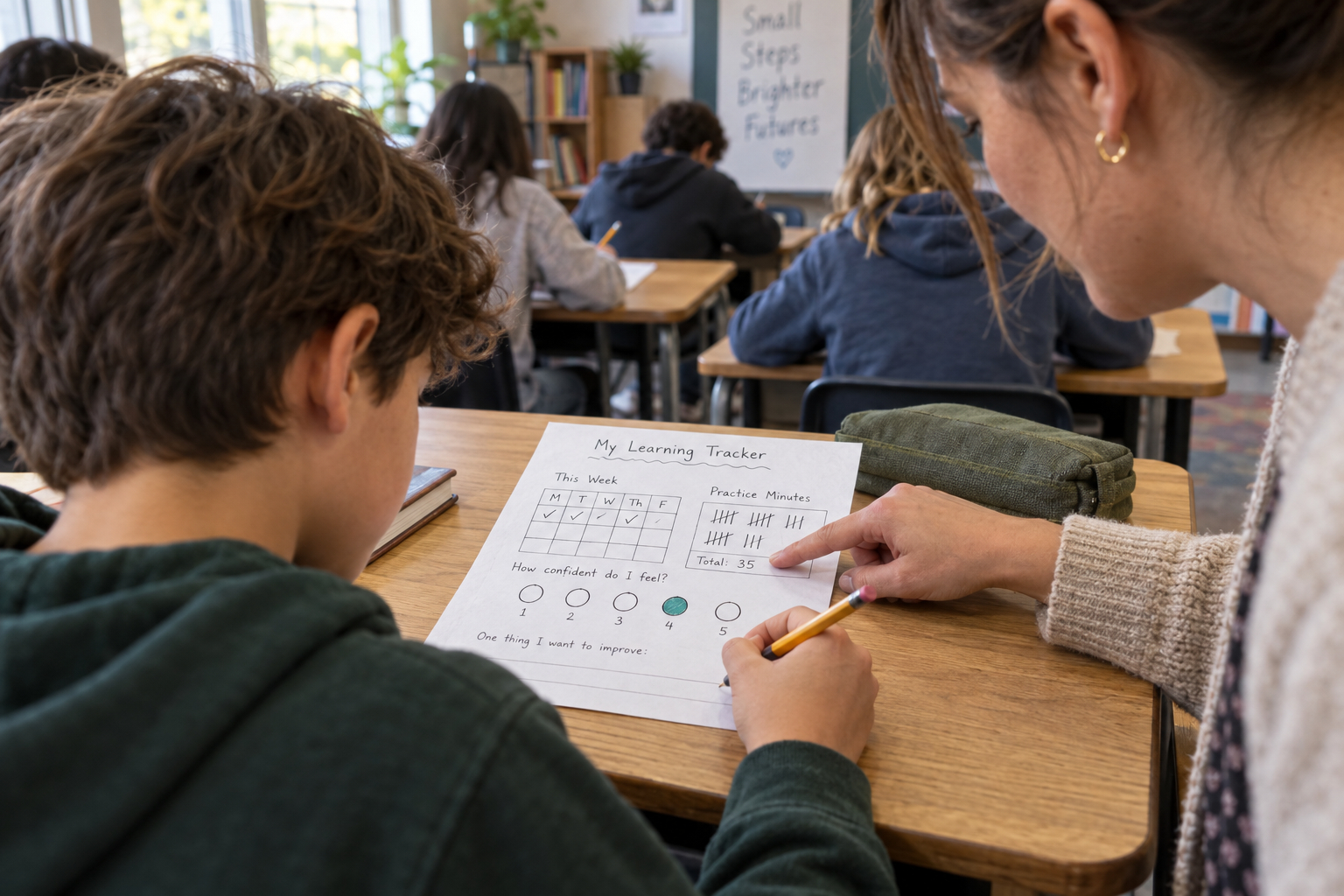
Start with two to four metrics that are easy to collect and meaningful for the task at hand. Useful choices include practice minutes, attempts on a skill, common error types, and confidence ratings. Keep formats consistent: a small table, a weekly chart, or a checklist are enough to create trend signals. Prioritize clarity so students spend time learning, not managing the tool.
- Practice frequency (days per week)
- Attempt success rate (correct/attempts)
- Confidence rating (1–5 after each session)
A minimal list like this scales across subjects and can be recorded on paper, a shared spreadsheet, or within existing learning platforms.
Implementing dashboards in the classroom
Introduce the dashboard with a short modeling session showing how to record entries and how to read trends. Provide two or three structured moments each week for students to update and interpret their dashboard: after practice, after assessments, and during a short reflection block. Use quick conferences to prompt students to identify one change they will try based on what the dashboard shows. Keep teacher interventions lightweight and focused on questioning rather than prescribing.
Over time, encourage students to customize indicators to match personal goals. Periodic class sharing of dashboard insights can normalize experimentation and highlight varied pathways to improvement.
Conclusion
Personal learning dashboards turn scattered signals into actionable information and strengthen learners’ metacognitive habits. With a few clear metrics and brief routines, students can monitor progress and make informed adjustments. Teachers support this work best by modeling use, asking reflective questions, and keeping the process simple.