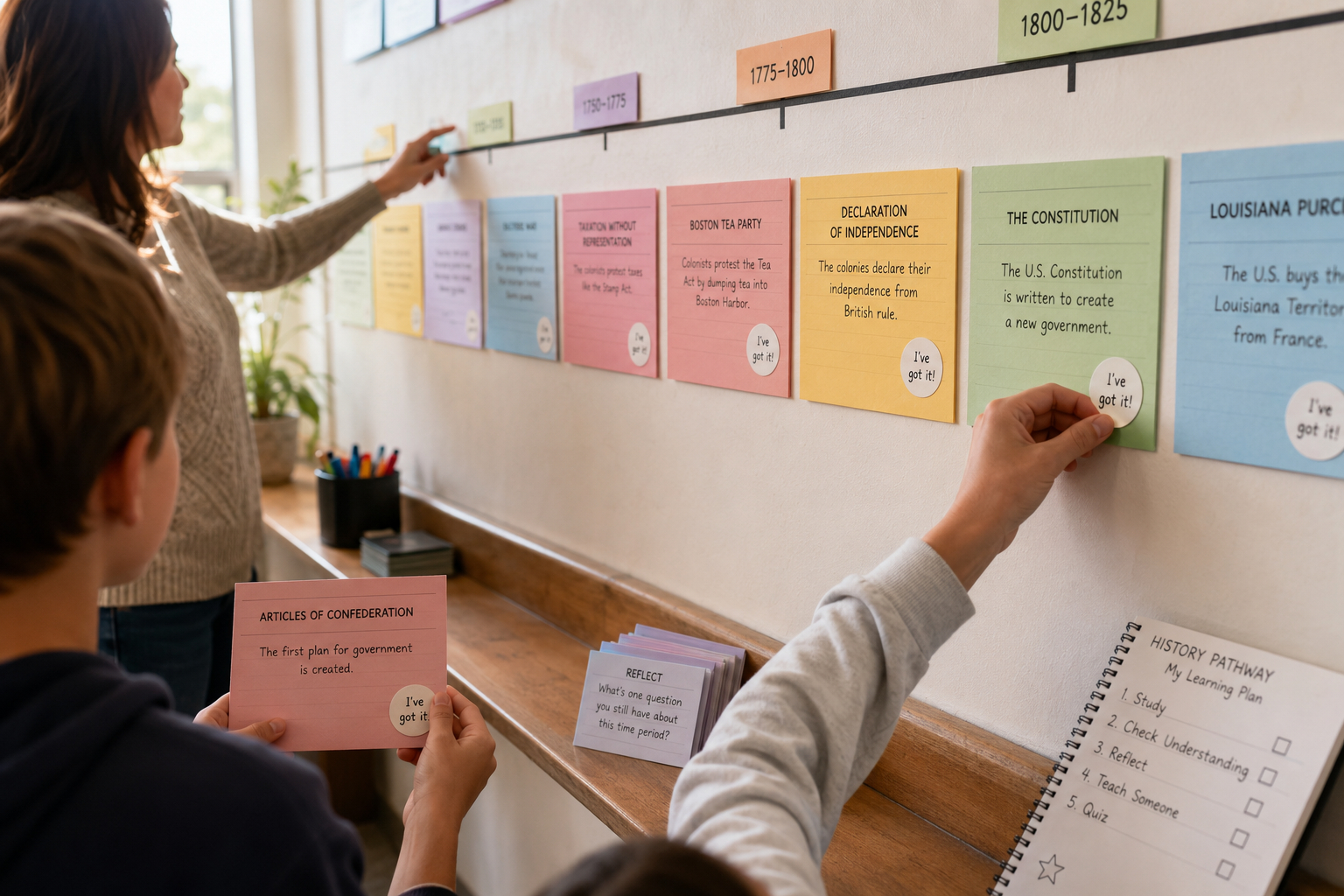
Students learn more effectively when they can turn one-off tasks into predictable, reusable workflows. Teaching learners to engineer repeatable pathways gives them a toolkit for planning, monitoring, and adapting their study. This article outlines practical steps teachers can use to help students break complex learning into manageable modules. The goal is durable habits that transfer across subjects and projects.
Define Modular Learning Paths
Start by helping students identify the common components of a learning task: goal, inputs, practice steps, checks, and review. Encourage them to break larger goals into discrete modules that can be reused in future work. Modularization reduces cognitive load and makes progress visible, which increases motivation. When students see recurring patterns, they can apply the same pathway with less guidance.
- Goal: what mastery looks like for this module.
- Steps: a sequence of focused actions or micro-tasks.
- Checks: quick evidence that learning is on track.
After mapping a module, ask students to name it and place it in a personal toolkit. Naming helps retrieval and supports flexible recombination of modules for new challenges.
Teach Students to Map and Sequence Tasks
Once modules exist, sequencing determines efficiency. Show students simple mapping techniques: timelines, prioritized checklists, or visual cards. Teach them to estimate time for each module and plan buffer time for review or errors. Sequencing practice helps learners spot dependencies and choose better starting points.
- Visual timelines to reveal order and pacing.
- Priority flags to mark high-impact modules.
- Mini-deadlines that create manageable cadence.
Regular short planning sessions reinforce the habit. Over time students will internalize sequencing decisions and require less external scaffolding.
Use Feedback Loops and Reflection
Effective pathways depend on quick feedback and deliberate reflection. Teach students to collect two types of evidence: performance checks during a module and reflective notes after completion. Encourage brief end-of-session reflections that ask what worked, what didn’t, and what to try next. Those reflections become the raw material for iterating better pathways.
- Quick quizzes or tasks for immediate feedback.
- Reflection prompts that are short and specific.
- Version notes so students track changes to their pathway.
When feedback leads to deliberate adjustments, students learn to refine their own systems. That loop turns isolated assignments into evolving, personalized learning architectures.
Conclusion
Engineering repeatable pathways helps students move from task completion to strategic learning. With modules, clear sequencing, and rapid feedback, learners grow more autonomous and adaptable. Teachers who scaffold these skills enable sustained progress across subjects and projects.