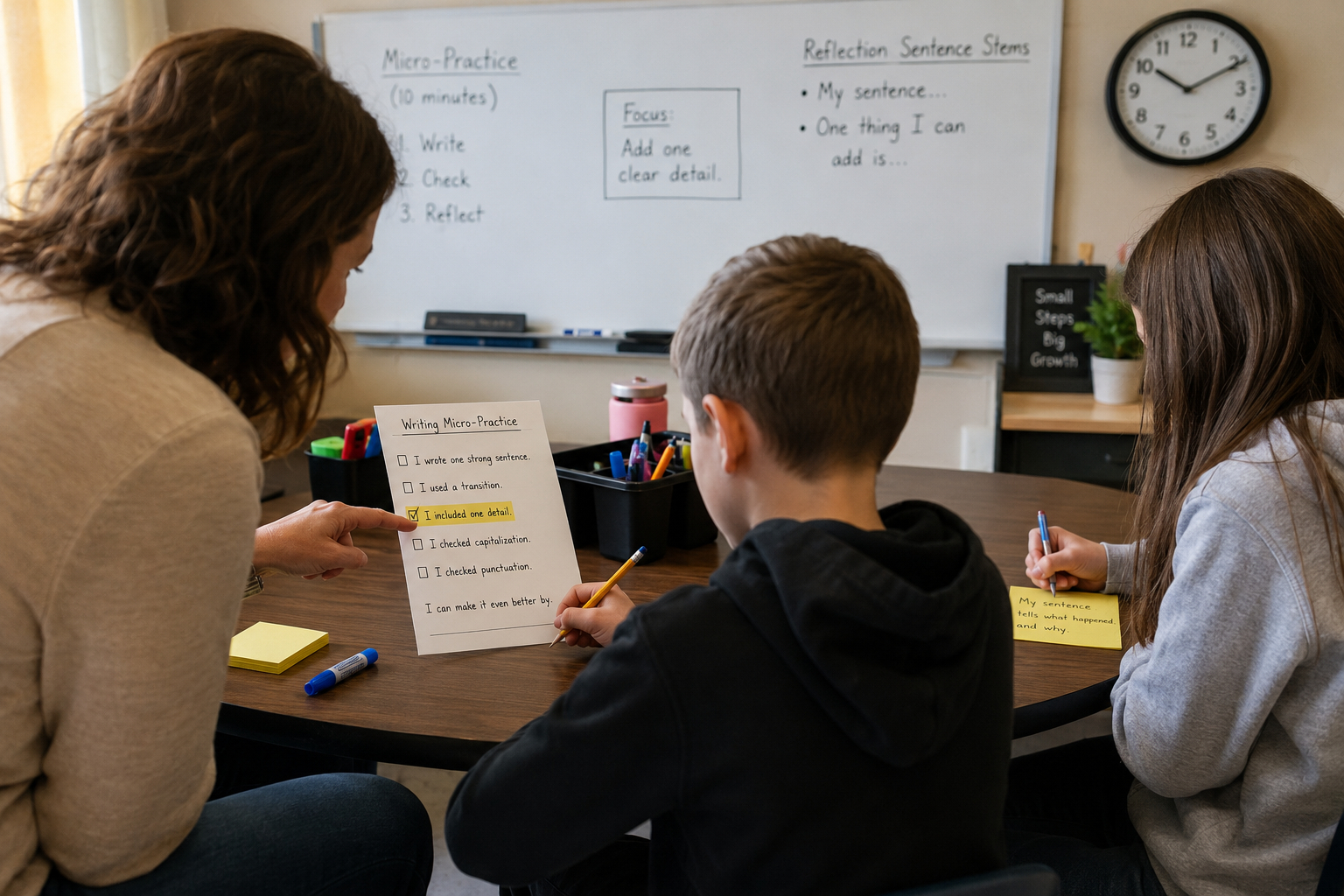
Students often practice tasks without closing the gap between repetition and reliable performance. Teachers can design simple structures that make practice purposeful and measurable. This article outlines practical steps to turn everyday practice into confident demonstrations of learning. These approaches fit into regular lessons and require minimal additional prep.
Frame Small, Measurable Practice Tasks
Begin by breaking skills into focused, observable steps that students can attempt in short windows. Clear, measurable targets (for example: ‘write three supporting sentences’ or ‘solve five linear examples’) help learners know what success looks like. Short practice tasks reduce cognitive overload and allow frequent opportunities for success. Framing tasks tightly also helps teachers give specific feedback tied to demonstrable actions. Use simple rubrics so students can self-evaluate during practice.
- Set a two-minute fluency check for core processes.
- Assign one focused revision target after a practice round.
- Use timed problem sets with explicit success criteria.
Repeat these micro-tasks across lessons to build automaticity. Over time, complexity can increase while preserving the same success criteria.
Use Short Feedback Checkpoints
Feedback should be quick, focused, and actionable so students can immediately apply it in the next attempt. Use techniques like two-minute peer checks, teacher mini-conferences, or quick annotated samples to highlight one or two improvement targets. Immediate feedback increases the likelihood that practice shapes performance rather than merely consuming time. Keep language specific and tied to the task criteria to avoid vague comments.
- Two-minute peer checks with a success checklist.
- Teacher mini-conferences focused on one target.
- Quick annotated examples showing ‘before’ and ‘after’ edits.
Track common errors across checkpoints to inform whole-class adjustments. Celebrate small improvements publicly to reinforce the link between practice and progress. Small public recognitions encourage risk-taking and persistence.
Encourage Iteration and Reflection
Iteration helps students see how small changes affect outcomes and builds metacognitive control. Ask students to record a single change they will try next, and to compare outcomes after a subsequent practice round. Reflection prompts should be brief—one sentence on what changed and one sentence on what worked. These short cycles make refinement manageable and visible.
Over time students develop a repertoire of strategies and learn when to apply them. This habit of testing and adjusting is central to converting practice into confident performance.
Conclusion
Designing practice with small targets, rapid feedback, and brief reflection helps learners transfer effort into reliable skills. Teachers can introduce these patterns gradually and scale them across units. The result is more confident, independent students who can demonstrate learning under pressure.