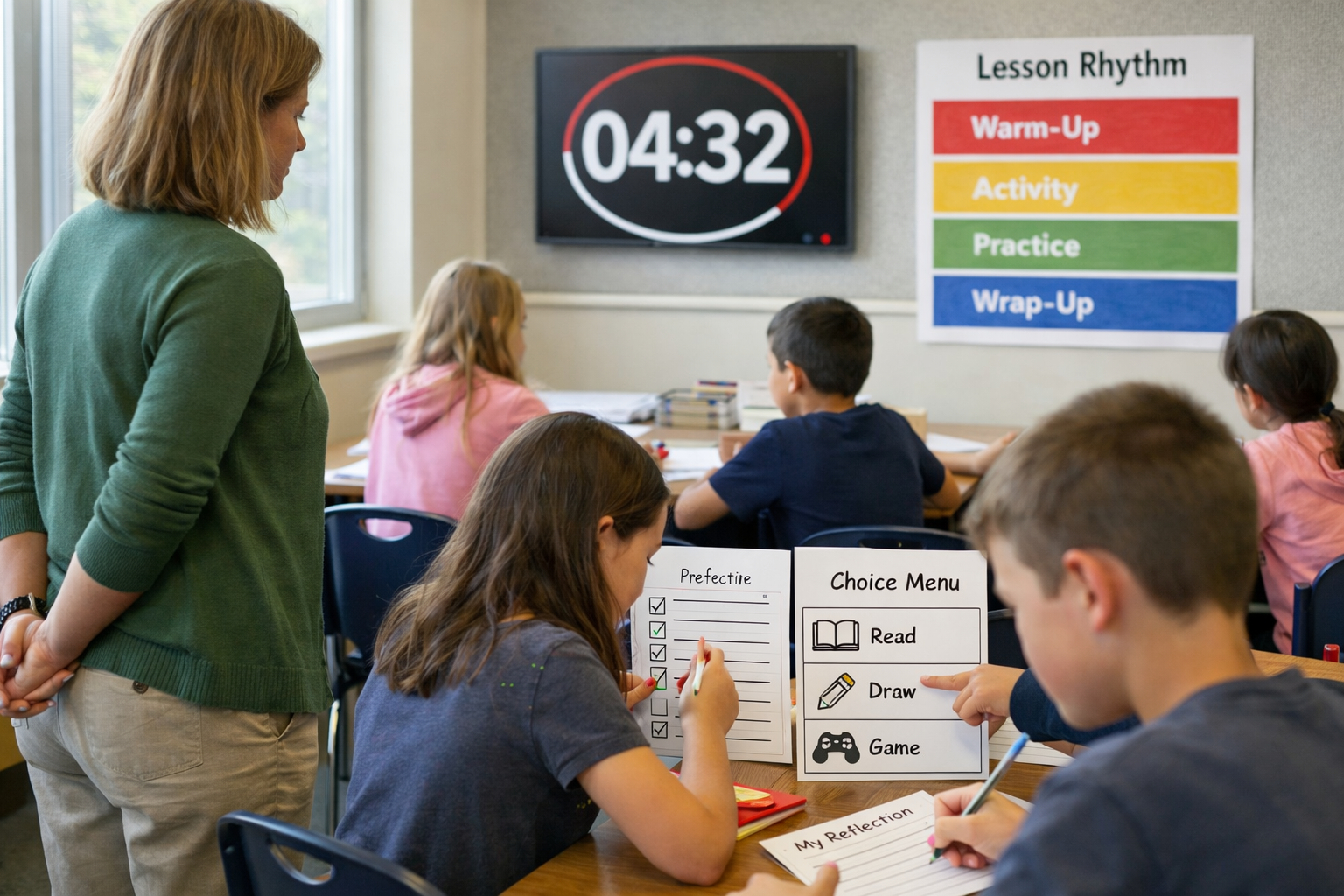
Teachers can intentionally arrange classroom time to give students clearer pathways toward independent learning. Small shifts in lesson pacing, checkpoints, and choices make autonomy manageable for learners at any stage. This article outlines practical routines teachers can adopt without overhauling curriculum or adding heavy workload. Each suggestion emphasizes habit, clarity, and lightweight scaffolds so students practice decision-making and self-regulation.
Plan Short, Clear Learning Blocks
Break lessons into short, predictable blocks that focus on a single objective. When students know the rhythm—teach, practice, reflect—they can plan how to use class time productively. Clear time limits and visible timers help learners gauge effort and keep momentum without constant teacher prompting. Teachers can model pacing and gradual withdrawal, showing how to break a task into micro-steps.
- Start-of-class goal: one- to two-minute focus target.
- Independent practice with two format choices.
- Exit ticket: one quick question to check understanding.
These routines reduce cognitive load and normalize short bursts of focused work. Over time students internalize pacing and begin to self-monitor. Students notice progress and adjust strategies more quickly.
Embed Quick Reflection and Goal-Setting
Build brief checkpoints into every lesson so learners pause to set micro-goals. Prompts might ask what strategy they will try, what resource they need, or how they will check understanding. These moments teach students to translate teacher direction into personal actions and next steps. Regular checkpoint habits make formative assessment feel natural and quick rather than evaluative.
End lessons with a quick reflection that focuses on progress and one specific adjustment for next time. Consistent practice makes reflection a habit rather than a chore. Share patterns you observe to guide whole-class adjustments.
Use Lightweight Scaffolds and Choices
Offer simple scaffolds that fade as competence grows, such as checklists and choice menus. Give choices about task format, partners, or evidence of learning to increase ownership while keeping expectations firm. Lightweight tools help students plan steps without waiting for teacher direction. Provide brief examples of successful work so students can compare and choose approaches.
- Checklist template for multi-step tasks.
- Choice menu offering format and partner options.
- Mini-rubric highlighting one success criterion.
As scaffolds are removed, students gain confidence in selecting strategies that work for them. The teacher shifts from director to coach, intervening when students need support. Over weeks, offer fewer prompts so responsibility transfers to students.
Conclusion
Small structural choices about time, checkpoints, and supports make independent learning accessible. Teachers can implement these practices gradually and measure impact through student reflections and work samples. With consistent routines, learners build the skills to direct their own growth.
Related Articles


Recent Posts

Designing Compact Choice Menus to Foster Student Decision-Making
Teaching Students to Sequence Tasks for Deeper Engagement
Practical Classroom Methods for Teaching Strategic Study Prioritization
Translate Everyday Work into Clear Professional Evidence
A Practical Process for Building Portable Career Proofs


