Education is evolving at a rapid pace, and technology is at the center of this transformation. From personalized learning platforms to immersive digital experiences, EdTech tools are not only enhancing classrooms but also redefining how students learn and teachers teach. Here are some of the most innovative tools shaping the future of education.
1. Artificial Intelligence (AI) in Learning
AI-powered platforms adapt lessons to individual learning styles and paces. These systems provide personalized feedback, help identify areas of improvement, and even predict student performance, making learning more effective and tailored.
2. Virtual and Augmented Reality (VR & AR)
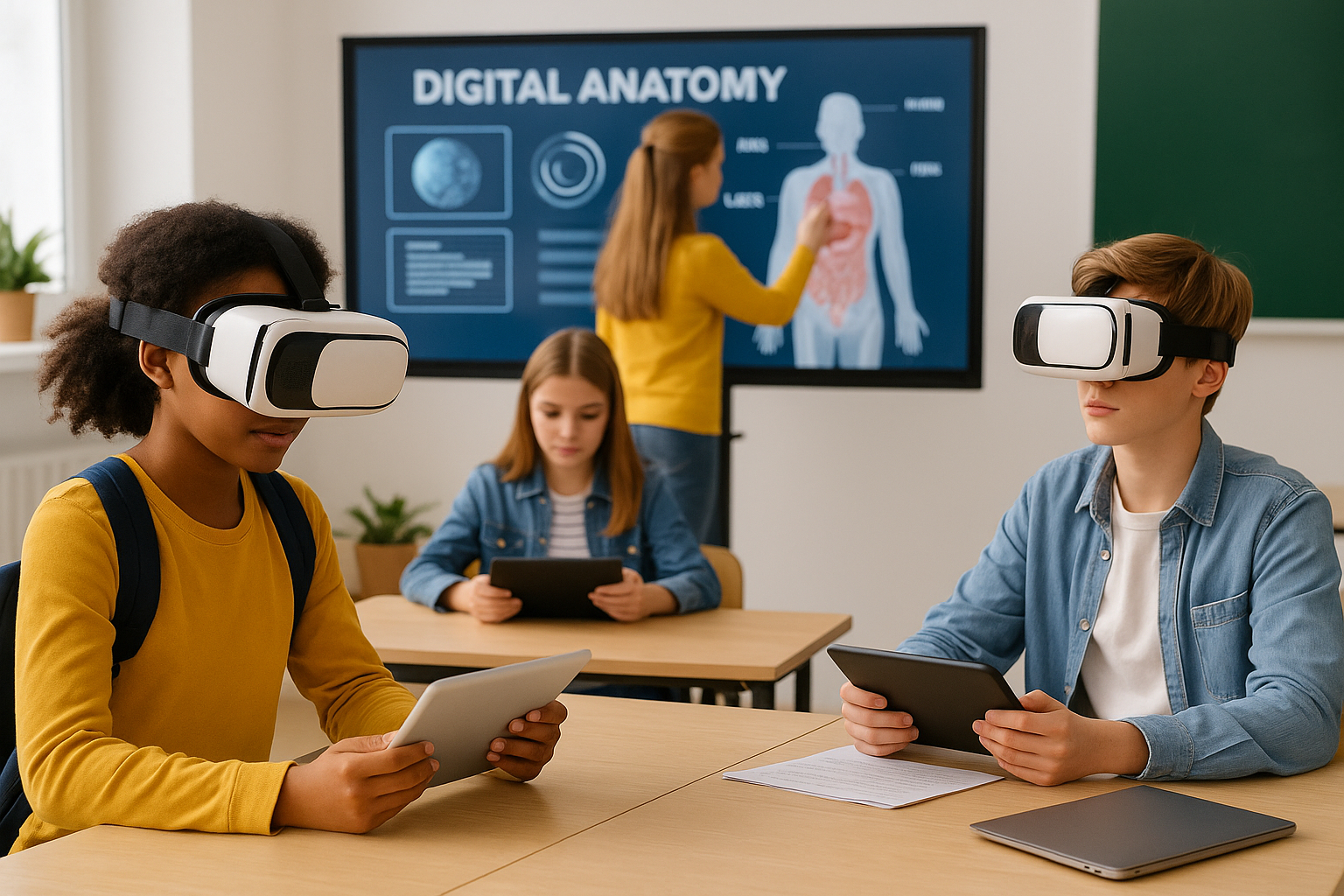
Imagine biology students exploring the human body in 3D or history classes walking through ancient civilizations. VR and AR bring immersive experiences into education, making learning more engaging and memorable.
3. Gamification Platforms
By turning lessons into interactive games, gamification increases motivation and participation. Students can earn points, badges, or rewards, making learning fun while reinforcing important skills.
4. Collaborative Tools
Cloud-based apps and platforms enable real-time collaboration, whether students are in the same room or across the globe. Shared documents, whiteboards, and project spaces foster teamwork and communication skills.
5. Learning Management Systems (LMS)
Modern LMS platforms do more than deliver content—they integrate assessments, analytics, and communication tools. Teachers can track progress, assign tasks, and create customized learning paths for students.
6. Adaptive Assessment Tools
These tools use data analytics to adjust the difficulty of questions in real-time, ensuring accurate measurement of student knowledge while keeping learners challenged without overwhelming them.
Conclusion
EdTech is no longer just an add-on—it’s becoming the foundation of modern education. By combining innovation with accessibility, these tools are empowering students to learn in new ways while helping teachers enhance their impact. The future of education lies in technology that makes learning smarter, more interactive, and more inclusive.