Short, intentional reflection can transform how students process lesson content and monitor their own learning. Implemented consistently, brief reflective practices help learners identify gaps and celebrate progress without taking class time from core instruction. When built into routines, reflections become habits that support metacognition and independent problem solving. This article outlines practical ways to add quick reflection moments that teachers can sustain day after day.
Why concise reflection matters
Reflection supports memory consolidation and helps students connect classroom activities to personal goals and prior knowledge. Even one to three minutes of guided reflection encourages students to evaluate what they understood and what still feels uncertain, strengthening metacognitive awareness. Concise practices reduce cognitive load and make reflection accessible for diverse classrooms, including younger learners and students with busy schedules. When reflection is brief and structured, it reliably fits into transitions and routine checkpoints.
These small moments also create data points teachers can use to adjust instruction without elaborate assessments. Over time, patterns in student reflections reveal misunderstandings and opportunities for targeted feedback. Regular, low-effort reflection builds a classroom culture where self-assessment is normal and expected.
Classroom routines to embed reflection
Choose moments during the day where a one- to three-minute reflection feels natural, such as the start or end of class, after an activity, or during a transition. Provide a simple prompt that focuses attention—examples include “What helped you learn today?”, “What is one question you still have?”, or “Summarize the main idea in one sentence.” Use consistent language so students learn the shape of the task and can respond quickly.
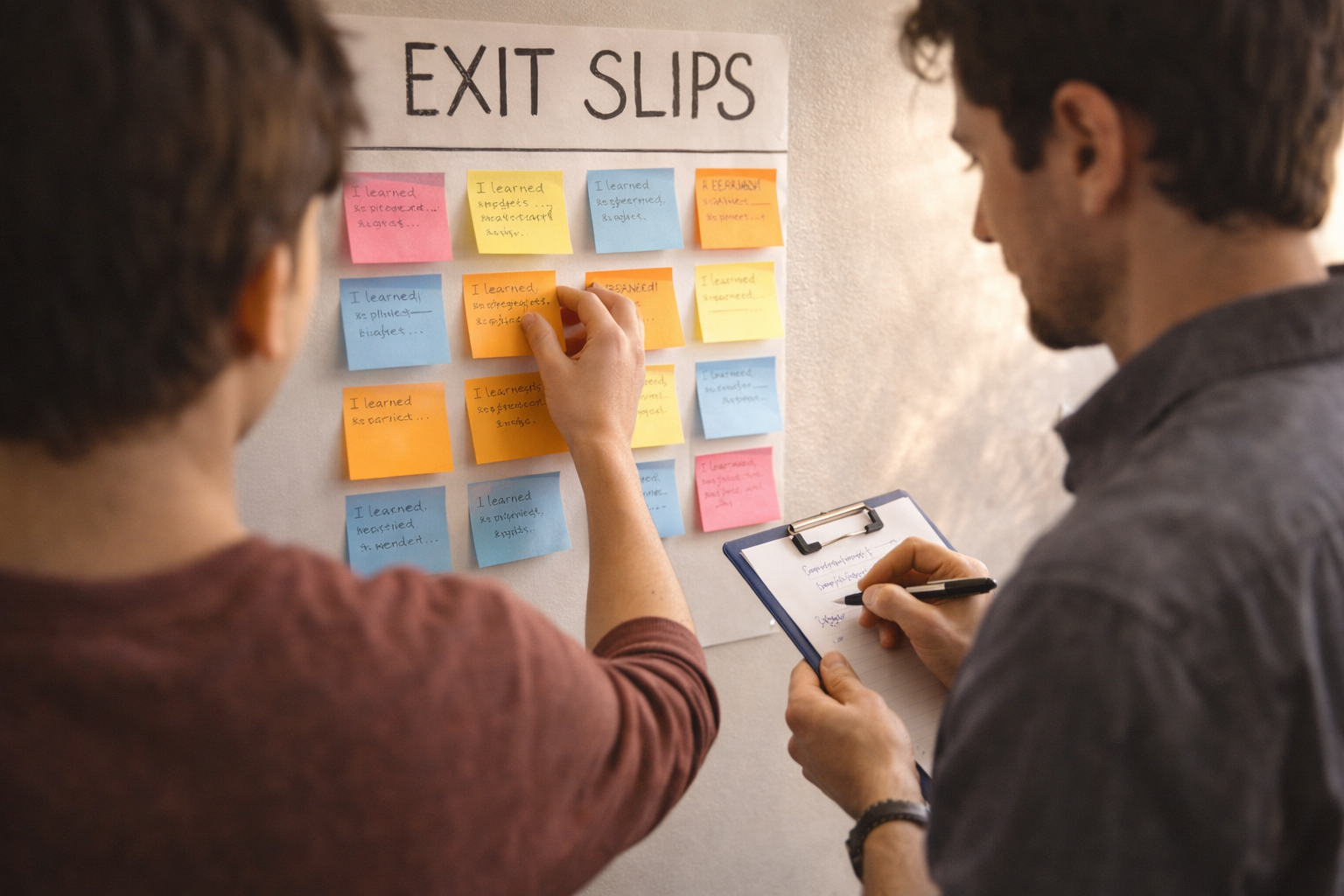
- Exit slips: a single sentence or checkbox response at the end of class.
- Two-minute pair-share: quick verbal reflections with a partner.
- Sticky-note boards: anonymous comments that reveal common confusions.
Rotate prompts occasionally to keep reflections purposeful and aligned to learning goals. Provide models and sentence starters so students of all levels can participate meaningfully.
Measuring impact and adapting practice
Keep reflection routines lightweight but intentional, then periodically review the aggregated responses to spot trends. Use a simple tracker or sampling strategy to note recurring questions and misconceptions, and let that data guide mini-lessons or reteaching. Solicit student feedback about which prompts help them most and adjust frequency or wording accordingly. Reflection practices should be responsive, not rigid, evolving with class needs and curriculum pacing.
Over time, students will internalize reflective language and require less scaffolding. The aim is sustainable integration that enhances learning without adding administrative burdens.
Conclusion
Short, regular reflections turn fleeting classroom moments into meaningful learning checks. Consistency and simplicity are key to making reflection stick. Start small, track impact, and refine prompts to suit your students.