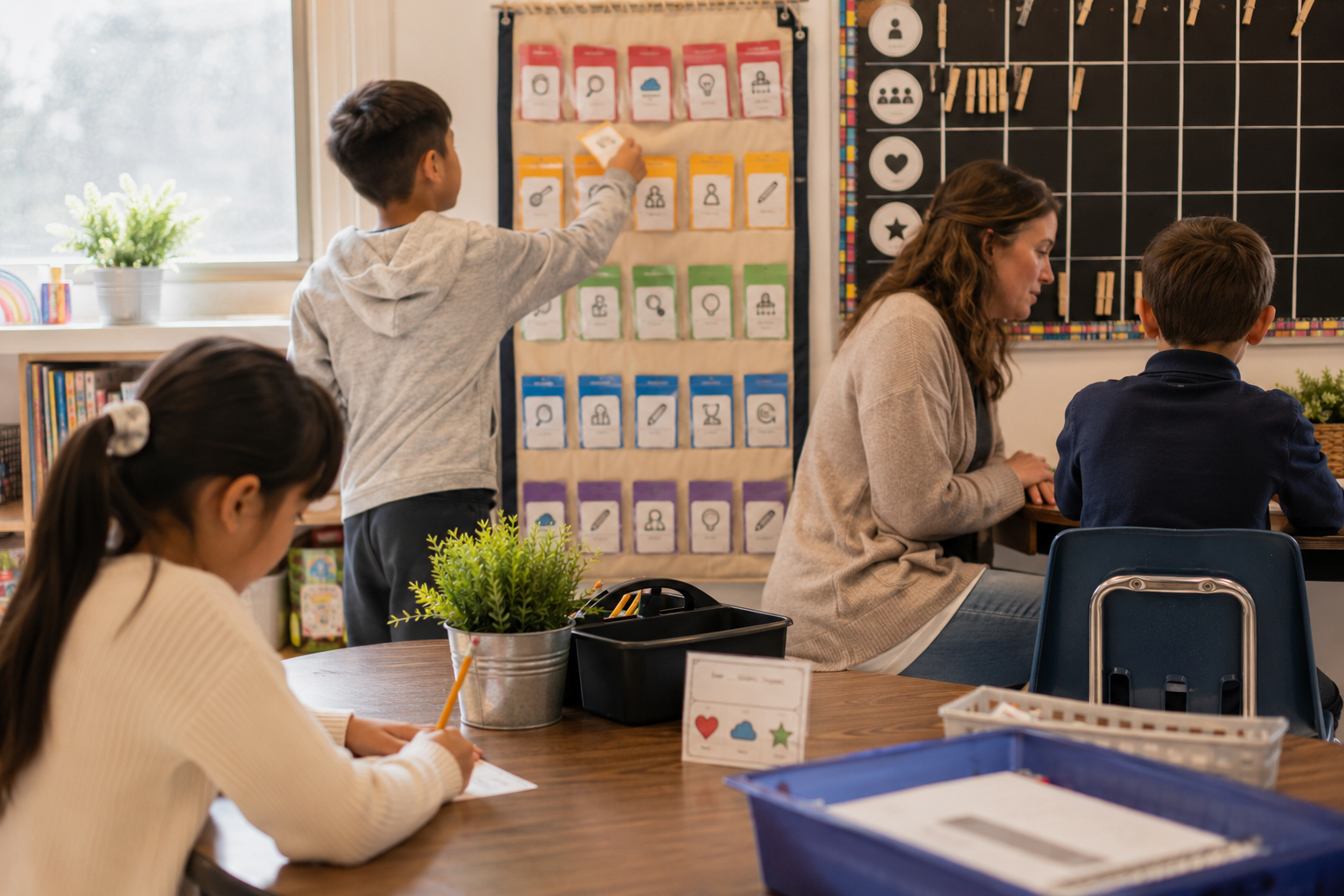
Simple, low-technology systems can give learners structure while preserving choice. These practical approaches reduce teacher load and increase student confidence. They rely on clear routines, visible supports and short check-ins. Used consistently, they make independence an everyday classroom habit.
What Low-Tech Systems Look Like
Low-tech systems use paper, display boards and predictable routines to guide learning without complex tools. A clear checklist, laminated task cards or a visible progress board all serve as anchors for student decisions. These systems prioritize clarity: steps are explicit, expectations are visible, and options are limited to manageable choices that students can execute. By lowering cognitive overhead, learners focus on strategy and quality rather than on figuring out process logistics.
Teachers who adopt these systems see faster uptake because materials are simple to replicate. Students benefit from fewer interruptions and more time engaged in meaningful practice.
Practical Examples for Any Classroom
Begin with a task menu that groups activities by skill level or learning goal so students can self-select a next step. Use a daily reflection slip that students complete in two minutes to monitor progress and plan a short follow-up. Establish checkpoint cards that prompt specific self-help moves before asking the teacher for support. These small tools are inexpensive and adaptable across subjects and age groups while giving students repeated practice in decision-making and self-assessment.
Over time these routines become habit, and students require less external prompting. The classroom culture shifts toward problem-solving and resourcefulness.
Rolling Out and Sustaining Systems
Introduce one low-tech routine at a time and model it with students until it becomes fluent. Use short weekly reviews to collect quick feedback from learners and adjust prompts or options for clarity. Celebrate when students use the system independently and highlight examples to reinforce expectations. Keep iterations small so the system evolves without overwhelming daily instruction.
Consistency and brief reflection drive long-term adoption. Small adjustments maintain relevance and student ownership.
Conclusion
Low-tech systems offer practical paths to stronger self-reliance for learners. They are easy to implement, scale, and adapt to classroom needs. When sustained, these routines make independent learning an accessible daily practice.