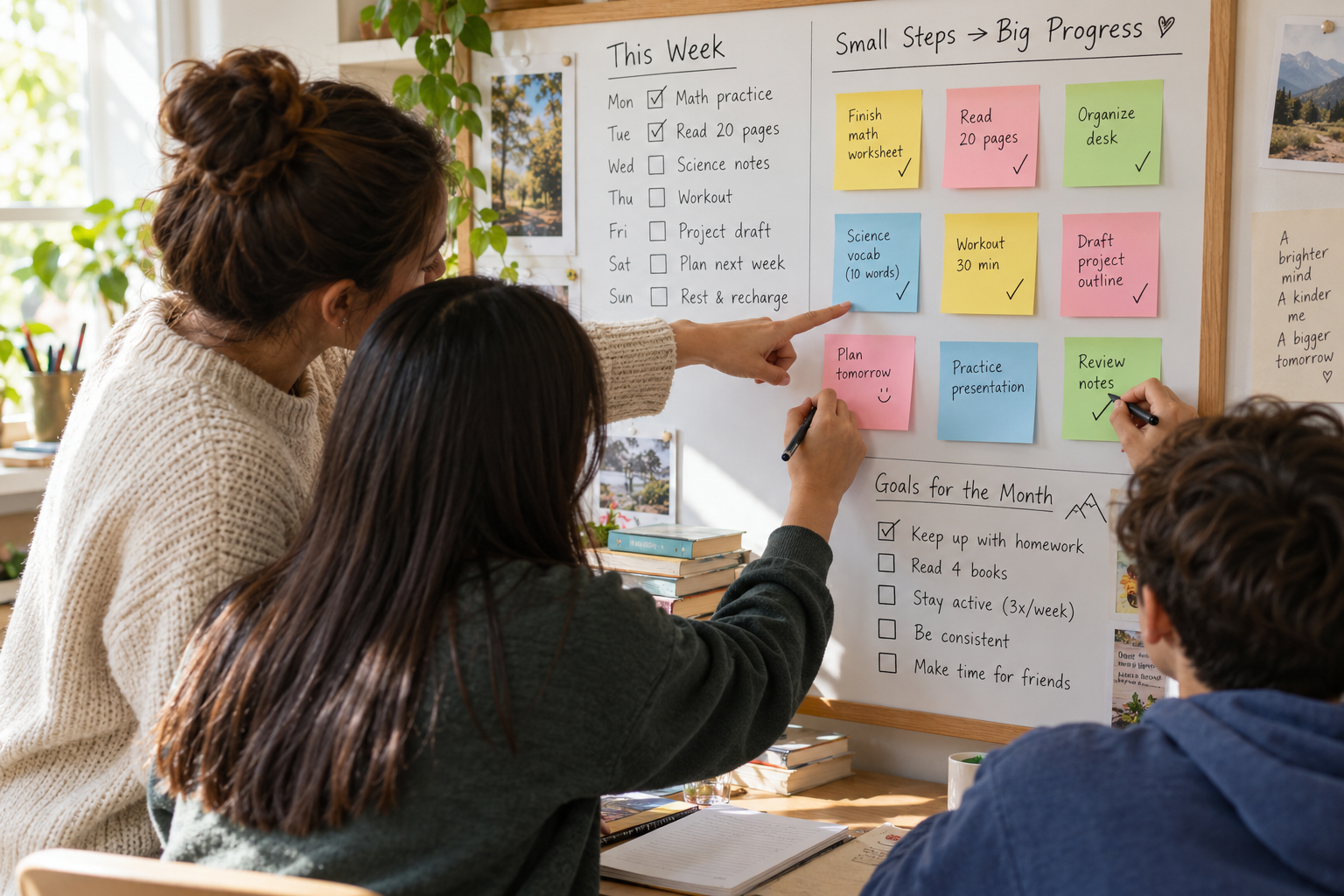
Breaking large skills into small, achievable goals makes learning less overwhelming and more measurable. When learners focus on short, concrete targets they can plan practice, monitor progress, and maintain motivation. This article outlines practical steps to set short-term goals, design scalable practice routines, and use feedback to improve steadily. Adopting this approach helps learners sustain momentum while adapting to real-world time constraints.
Set Specific, Short-Term Targets
Start by transforming broad ambitions into clear, specific targets that can be completed within a week or two. Examples include mastering a single concept, practicing a micro-skill for a fixed number of repetitions, or producing a short project deliverable. Specificity removes ambiguity and makes it easier to allocate focused time and measure outcomes. Keep targets challenging but achievable so each success reinforces confidence and commitment.
Record each target in a simple tracker and schedule it into your calendar. Reflection at the end of the period will reveal which goals propelled learning and which need refinement.
Design Practice That Scales
Develop practice routines that fit into available windows, such as 15–30 minute focused sessions repeated consistently. Use varied practice modes — reading, active recall, application, and spaced repetition — to strengthen retention. Gradually increase complexity as the small goals are met, so effort scales with growing competence. Automate cues and limit distractions to make it easier to begin each scheduled session.
Batch similar tasks and create templates for recurring exercises to reduce setup friction. This efficiency preserves cognitive energy for the actual learning work.
Track Feedback and Adjust Weekly
Reliable feedback accelerates improvement by highlighting errors and directing attention to weaknesses. Collect feedback through self-tests, mentor reviews, peers, or performance metrics tied to your short-term goals. Set a weekly review ritual to compare planned targets with outcomes and identify patterns. Use those insights to modify the next set of small goals rather than relying on vague intentions.
Small adaptations compound over weeks and keep the learning trajectory upward. Celebrate measurable wins and iterate quickly on areas that fall short.
Maintain Momentum with Meaningful Rewards
Recognize progress with small, meaningful rewards that align with your learning goals to reinforce the habit loop. Rewards can be brief breaks, a small treat, or time for a favorite micro-activity after completing a target. Link rewards to milestones rather than every practice session to maintain reward value and avoid dependency. Pair social accountability with rewards by sharing progress with peers or mentors to increase commitment.
Regularly revisiting why you study helps maintain intrinsic motivation during plateaus. Adjust rewards over time so they continue to support progress without overshadowing the learning itself.
Conclusion
Mapping small, achievable goals into a repeatable practice and feedback loop makes learning steady and sustainable. By setting clear targets, designing scalable practice, and reviewing progress weekly, learners preserve motivation and improve efficiently. Start with one short target this week and use its outcome to guide the next steps.