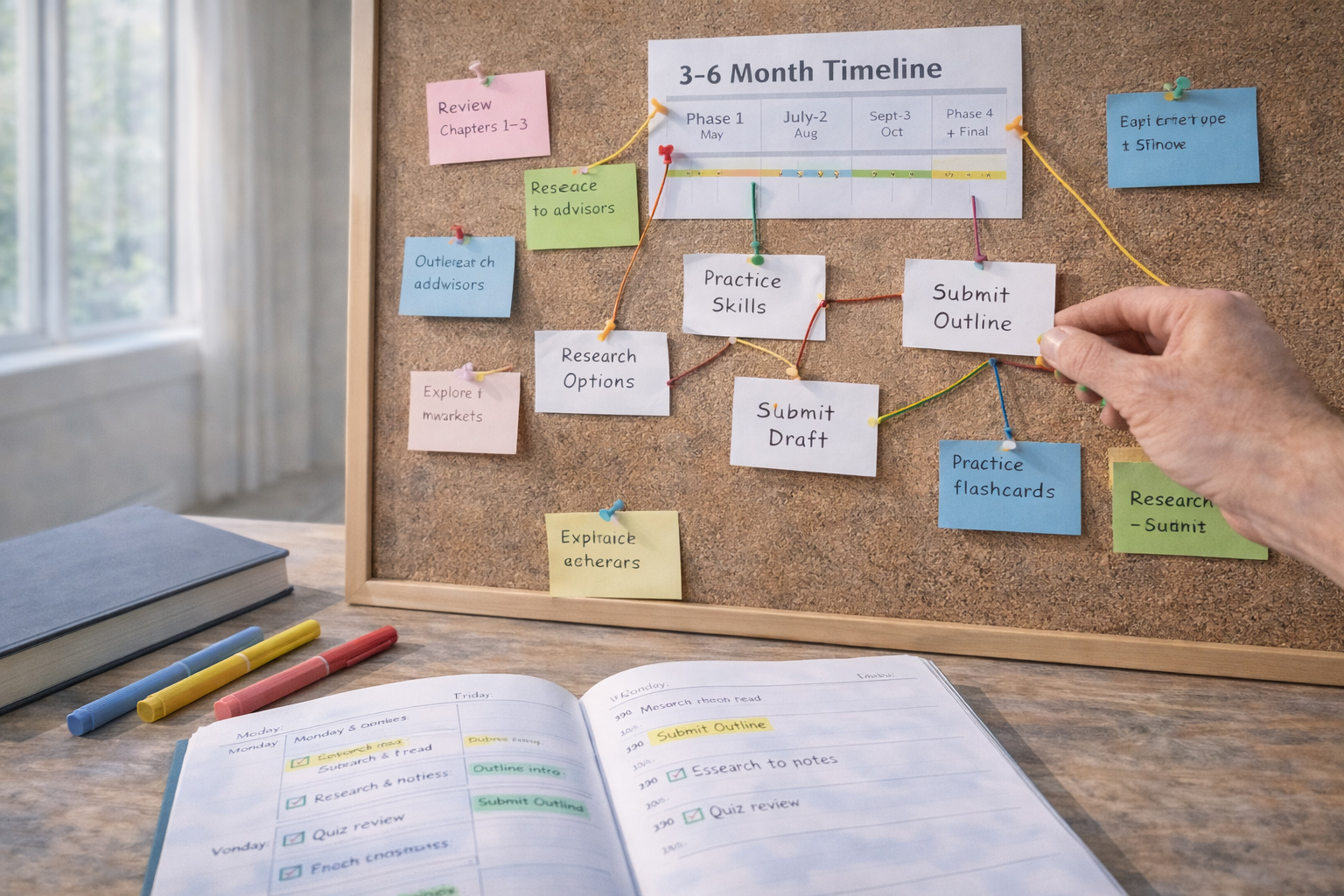
Learning effectively requires both a clear destination and a flexible route to get there.
This article outlines practical planning techniques that help prioritize goals, structure study time, and measure progress.
Whether you are reskilling, deepening expertise, or exploring a new subject, these steps make learning intentional.
Use them to convert vague ambitions into manageable, trackable milestones.
Clarify Priorities and Learning Outcomes
Begin by defining what success looks like for each learning effort and set outcomes that are specific and measurable. Break larger ambitions into distinct, time-bound objectives so you can focus on one competency at a time. Prioritization helps allocate energy to high-impact skills rather than scattering effort across too many topics. Commit to a limited number of goals for each quarter to maintain momentum and avoid burnout.
- Identify core skills and rank them by relevance to your goals.
- Transform vague aims into concrete, testable outcomes.
Clear priorities make planning and resource selection simpler. They also provide criteria for saying no to distractions and low-value tasks.
Design a Flexible Learning Roadmap
Create a roadmap that translates outcomes into weekly and monthly actions while leaving room for adjustments. Combine short focused sessions with longer project work to reinforce theory through practice. Use varied resources—courses, articles, hands-on projects, and peer feedback—to address different learning styles and reinforce retention. Schedule checkpoints to reassess effort, update timelines, and introduce new materials as needed.
- Map milestones across a 3–6 month horizon for visible progress.
- Reserve time each week for review and practical application.
- Mix active recall, spaced repetition, and project-based tasks.
A flexible roadmap keeps learning sustainable and responsive to real-world demands. It also encourages iteration: refine the plan as you gather feedback from outcomes.
Track Progress and Adapt
Regular tracking turns abstract progress into tangible evidence and highlights where to invest next. Use simple metrics such as completed projects, assessed skills, or time spent on deliberate practice to evaluate gains. Reflection sessions help identify what methods produced the best results and where to pivot strategies. When progress stalls, diagnose root causes and adjust scope, resources, or pacing accordingly.
- Log weekly achievements and setbacks to inform planning.
- Use brief retrospective notes to capture lessons learned.
Consistent tracking sustains motivation and provides data for smarter decisions. Adapting based on that data ensures continued growth without wasted effort.
Conclusion
Planning your learning journey turns intent into measurable progress.
Prioritize outcomes, build a flexible roadmap, and track results to stay on course.
Small, deliberate adjustments keep development steady and purposeful.