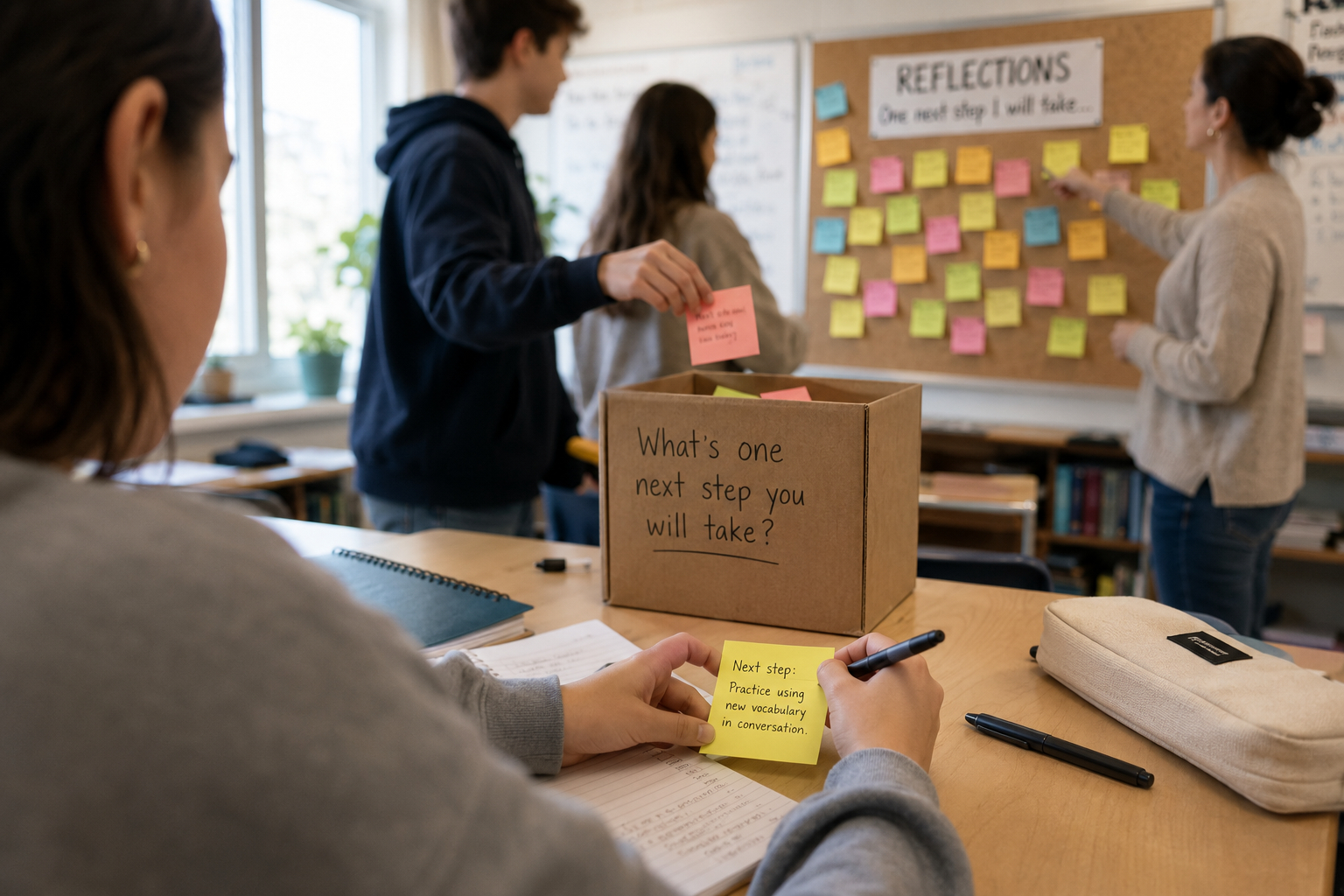
Short micro-retrospectives are brief end-of-task reflections that help students notice what worked and what did not during a learning activity.
When embedded routinely, these two-to-five minute practices build metacognitive habits without pulling time away from instruction.
They encourage students to pinpoint one concrete next step and to see revision as an expected part of learning.
This article explains what micro-retrospectives look like, offers a simple routine to run them, and suggests ways to measure and adapt their impact.
What a micro-retrospective is
A micro-retrospective is a focused, time-boxed reflection completed immediately after a task or lesson. Students typically answer a small set of prompts about strategy, outcome, and one next action to try. The emphasis is on clarity: an observable behavior, an outcome, and an actionable adjustment. Because the routine is brief, it reduces resistance and increases the likelihood students will repeat it.
- Sample prompts: What strategy helped? What blocked my progress? What will I try differently next time?
- Format options: written sentence, checklist, or a quick voice note.
These small reflections translate experience into future plans that students can act on. Over time they become mental defaults that guide study choices.
How to run a quick micro-retrospective
Begin by teaching the routine explicitly and modeling one or two examples while thinking aloud. Set a fixed time limit and repeat the same core prompts for several weeks so the process becomes familiar. Use clear evidence from the task—an attempt, a paragraph, a problem set—as the grounding for reflection so responses stay concrete. Provide simple scaffolds like sentence stems or a two-item checklist to support early practice.
- Step 1: Present the prompt and the time limit (2–5 minutes).
- Step 2: Students reflect and write or record one specific next step.
- Step 3: Collect or display a few anonymous examples to discuss briefly.
Keep expectations modest: one actionable change beats many vague intentions. Gradually give students choices about which prompt to answer to increase agency.
Assessing impact and adapting the practice
Track small indicators like how often students revise work, the specificity of next steps, or the frequency of targeted questions in class. Periodically sample reflections to identify common themes and to adjust prompts or supports. For diverse learners, offer alternatives such as visual checkboxes or oral summaries to ensure the routine is accessible. Flexibility helps maintain engagement while preserving the habit-building purpose.
- Metrics to watch: revision rate, clarity of next steps, student self-reports of usefulness.
- Adaptations: language scaffolds, peer-sharing, or digital voice responses.
Use collected reflections as low-stakes formative data to guide instruction. Celebrate improvements and iterate on the prompts when momentum slows.
Conclusion
Micro-retrospectives are a lightweight, repeatable way to grow student autonomy. They convert task endings into opportunities for clear, actionable learning steps. With steady practice, students learn to monitor and steer their own progress more effectively.
Related Articles

Recent Posts

Practical Framework for Prioritizing Education Expense Decisions
Practical Tactics for Managing Household Education Expenses
Everyday Rules to Decide When to Fund Education Costs
Habit-Based Classroom Signals to Encourage Continuous Student Ownership
Small Transferable Tools to Strengthen Learner Planning Skills


