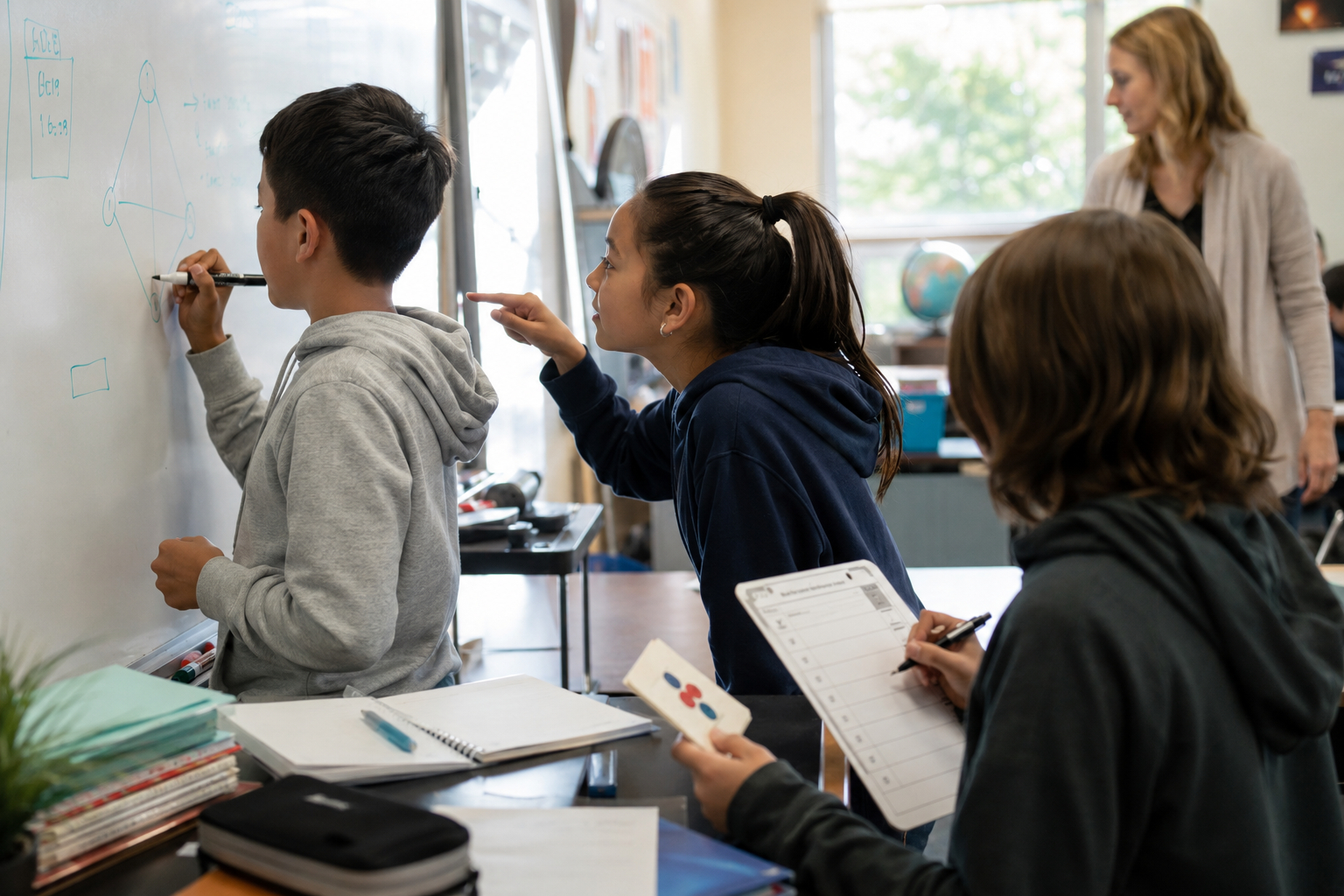
Peer-to-peer classroom structures give learners sustained opportunities to practice planning, explaining, and evaluating work with real responsibility. When carefully designed, these interactions shift routine cognitive tasks from teacher-led to student-managed moments, leaving room for deeper instruction. Small, repeatable protocols create predictable social roles that reduce friction and increase the likelihood learners will take initiative. This article outlines practical routines and steps teachers can use to introduce and scale peer-led habits.
Why Peer-to-Peer Structures Work
Peer structures leverage social accountability and natural teaching moments to make independent learning visible and repeatable. Students explaining ideas to classmates rehearse language, clarify understanding, and discover gaps faster than solitary practice. These interactions also distribute cognitive load: peers support one another through checkpoints while the teacher circulates to monitor and coach. When roles are explicit, participation becomes equitable and predictable rather than chaotic.
Short, consistent protocols reduce decision fatigue and help learners internalize productive behaviors. Over time those behaviors become part of classroom culture and a foundation for independent work outside class.
Simple Peer Protocols to Try
Start with compact routines that are easy to teach and quick to practice, so they fit into daily lessons without major planning overhead. Clear time limits, defined roles, and specific prompts keep interactions focused on the learning target rather than socializing. Rotate roles regularly so every student experiences explaining, questioning, and summarizing, which builds transferable skills for self-directed study. Use rubrics or checklists to make expectations concrete and measurable.
- Explain-Question-Confirm: one student explains, a peer asks a clarifying question, the explainer confirms or revises.
- Two-Minute Teachback: students summarize a concept to a partner in two minutes, then swap roles.
- Success Checklists: peers run quick checklists for work quality before submission.
These short protocols take minutes to implement and provide repeated practice in metacognition, communication, and quality control.
Scaling and Sustaining Peer Practices
To expand peer routines beyond ad hoc use, document procedures, train students explicitly, and schedule regular opportunities for practice. Use brief data checks—such as exit tickets or quick samples—to see whether peer interactions are improving independent performance. Provide feedback that focuses on process and role execution rather than only content accuracy, so students refine habits as well as knowledge. Celebrate improvements in collaboration and self-management to reinforce the value of the practice.
With predictable systems and ongoing attention, peer-to-peer structures become mechanisms for developing independent learners who can plan, monitor, and improve their own work.
Conclusion
Peer-to-peer structures turn classroom time into a workshop for autonomy by giving students repeated, structured practice in essential learning behaviors. Small, well-defined protocols make independence teachable and assessable while preserving instructional efficiency. Implementing and sustaining these routines creates durable habits that support lifelong learning.