Helping students develop self-regulation is central to long-term learning success.
Teachers can build routines and supports that scaffold students’ ability to plan, monitor, and adjust their work.
When self-regulation is taught explicitly, learners gain skills that transfer across subjects and contexts.
This article outlines classroom strategies, assessment approaches, and practical examples teachers can adopt.
Why self-regulation matters
Self-regulation enables students to manage attention, persist on tasks, and use feedback constructively. It supports metacognition — knowing what to do and recognizing when approaches need changing. Students who practice these skills show improved engagement, deeper understanding, and greater independence. For educators, fostering self-regulation reduces reliance on external prompts and builds classroom resilience.
Teaching these skills intentionally creates clearer pathways for student growth. It also aligns with broader goals like critical thinking and lifelong learning, which support future success.
Practical classroom strategies
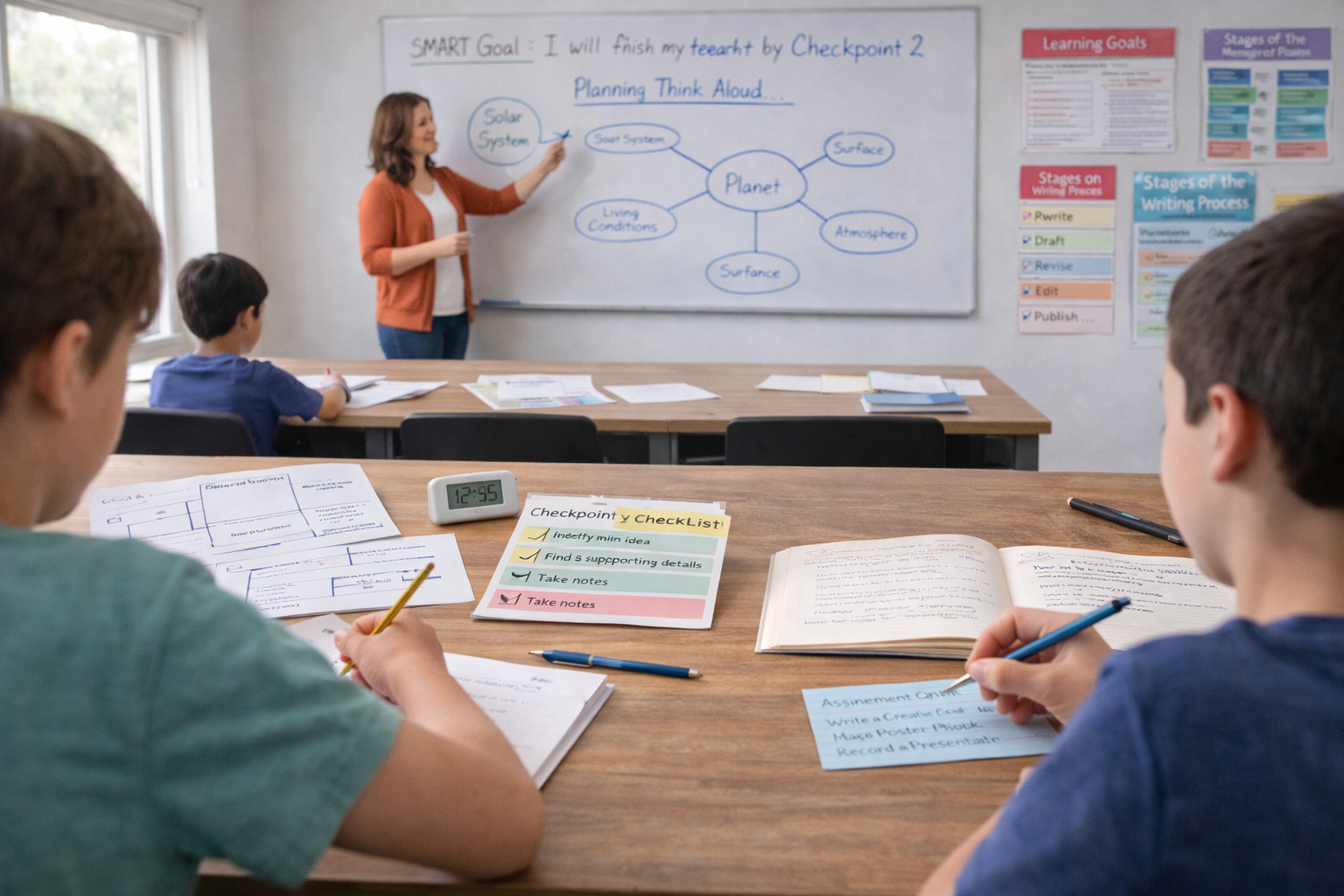
Begin by modeling planning and think-alouds so students see how decisions are made in real time. Establish short routines: goal-setting at the start of a lesson, check-in mid-task, and reflection at the end. Use visual organizers and timers to make expectations tangible and time management explicit. Scaffold tasks progressively so learners practice autonomy with supports that fade over time.
- Model planning with think-alouds.
- Set clear, short routines for goal-setting, checkpoints, and reflection.
- Provide visual organizers and timers to structure work.
These practices create predictable structures that encourage independent practice. Over weeks they become habits that students internalize and apply across tasks.
Assessment and feedback to promote self-regulation
Assessment should measure both content mastery and process skills such as planning and monitoring. Use formative checks, learning journals, and brief self-assessment prompts to capture students’ strategic thinking. Feedback should be specific, focusing on next steps and strategies rather than only correctness. Encourage peer feedback that emphasizes effortful strategies and revisions.
When feedback targets strategy, students learn how to adjust their approaches. Regular reflection helps them recognize progress and set realistic goals.
Supporting diverse learners
Differentiation matters: some students need more explicit modeling, while others benefit from extension tasks that challenge self-monitoring. Provide checklists, sentence starters, and choice boards to lower barriers and increase ownership. Collaborate with families to reinforce routines and celebrate incremental gains.
Small adaptations often produce large benefits for learners with different needs. Equity-focused supports ensure all students can build regulation skills.
Conclusion
Developing self-regulation is a practical, classroom-level goal that yields academic and personal benefits.
By combining modeling, routines, formative feedback, and targeted supports, teachers can nurture independent learners.
Consistent practice and reflection make these strategies sustainable and effective.