Classroom success often depends less on occasional interventions and more on steady systems that support student responsibility. Small, repeatable structures help learners manage time, monitor progress, and turn feedback into concrete next steps. This article explains practical systems teachers can add without major schedule changes or new resources. Use these approaches to cultivate ownership, reduce friction, and accelerate steady growth.
Why Systems Matter
Systems create predictable conditions that make independent work more likely to succeed. When students understand the steps, timelines, and where to find help, they can focus energy on learning rather than logistics. Predictability also reduces cognitive load so learners can apply strategies consistently across tasks. Finally, consistent systems make progress visible to both students and teachers, which supports ongoing adjustment.
- Reduce decision fatigue through clear routines.
- Increase transfer by repeating the same scaffolds.
By emphasizing systems, teachers trade one-off fixes for durable practices that scale across classes and terms. Over time, these systems become part of classroom culture and require less adult prompting.
Core Elements of a Classroom System
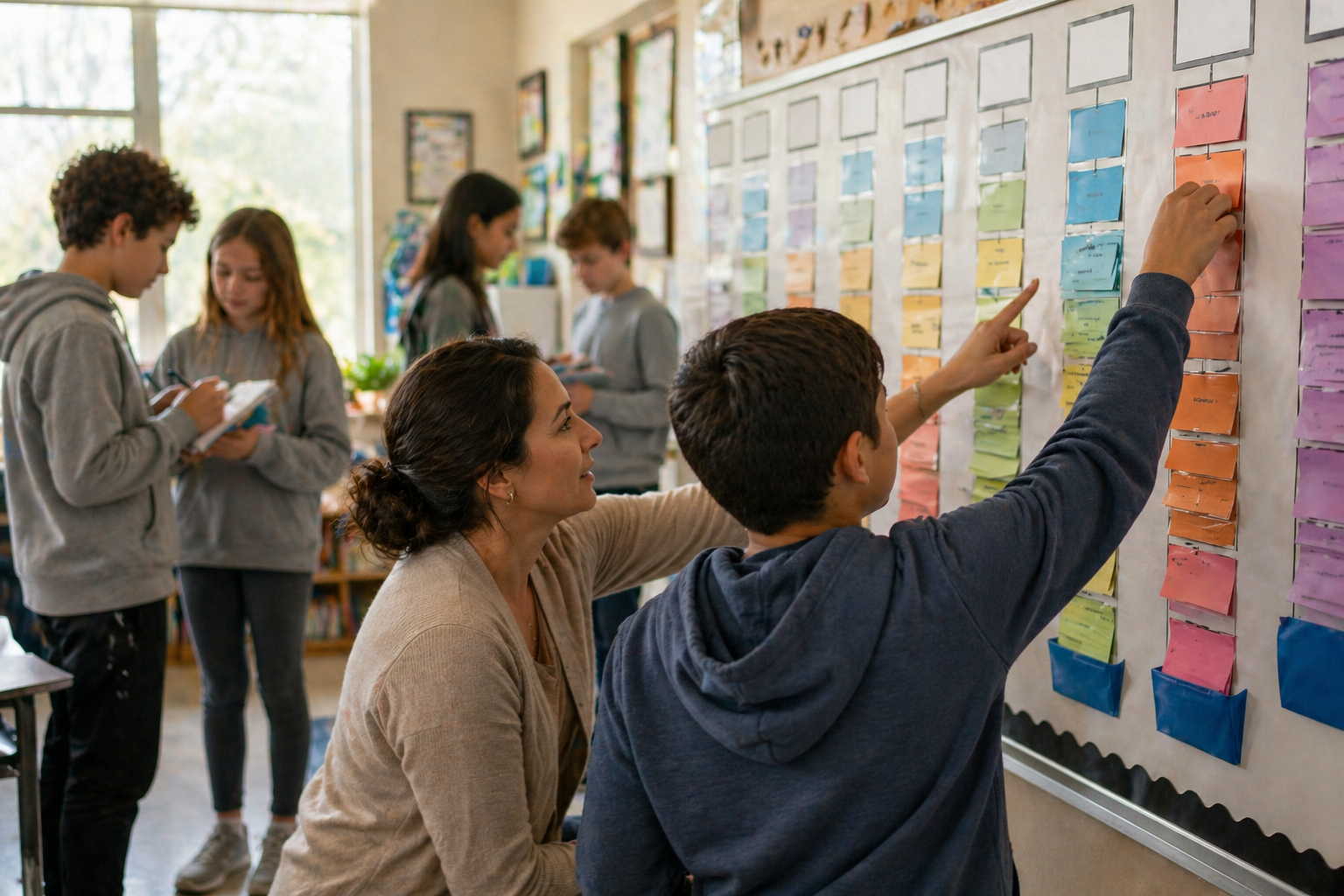
A reliable system typically includes clear expectations, brief cycles of work and feedback, and visible tracking of progress. Expectations should be posted and taught explicitly so all students know what success looks like. Short cycles — such as daily tasks with quick feedback — help students act on information while it is still useful. Visible tracking, like charts or individual logs, turns abstract goals into measurable steps.
- Clarity: explicit criteria and modeled examples.
- Consistency: regular timing for tasks and checks.
- Visibility: simple tracking tools that students update.
Focusing on these elements means systems are easier to maintain and easier for students to adopt. Each element supports the others, so a simple tracking tool without clear expectations will be far less effective.
Simple Routines to Start Today
Begin with short, manageable routines that students can master quickly. Try a two-minute planning ritual at the start of class where students list priorities and checkpoints. Use a quick exit task that asks students to identify one success and one next step before they leave. Weekly reflection forms can help students connect daily choices to longer-term goals.
- Two-minute planning: list three priorities and one challenge.
- Exit tasks: summarize, rate confidence, note next steps.
- Peer check-ins: 2-minute progress update with a partner.
These routines require minimal preparation but yield useful data about student needs and habits. When used consistently they shift responsibility for planning and monitoring onto learners.
Conclusion
Practical, low-friction systems help students take ownership of learning by making expectations and progress clear. Start with one routine, measure its impact, and scale what works so systems become classroom habit. Over time these small practices compound into greater independence and more efficient learning.