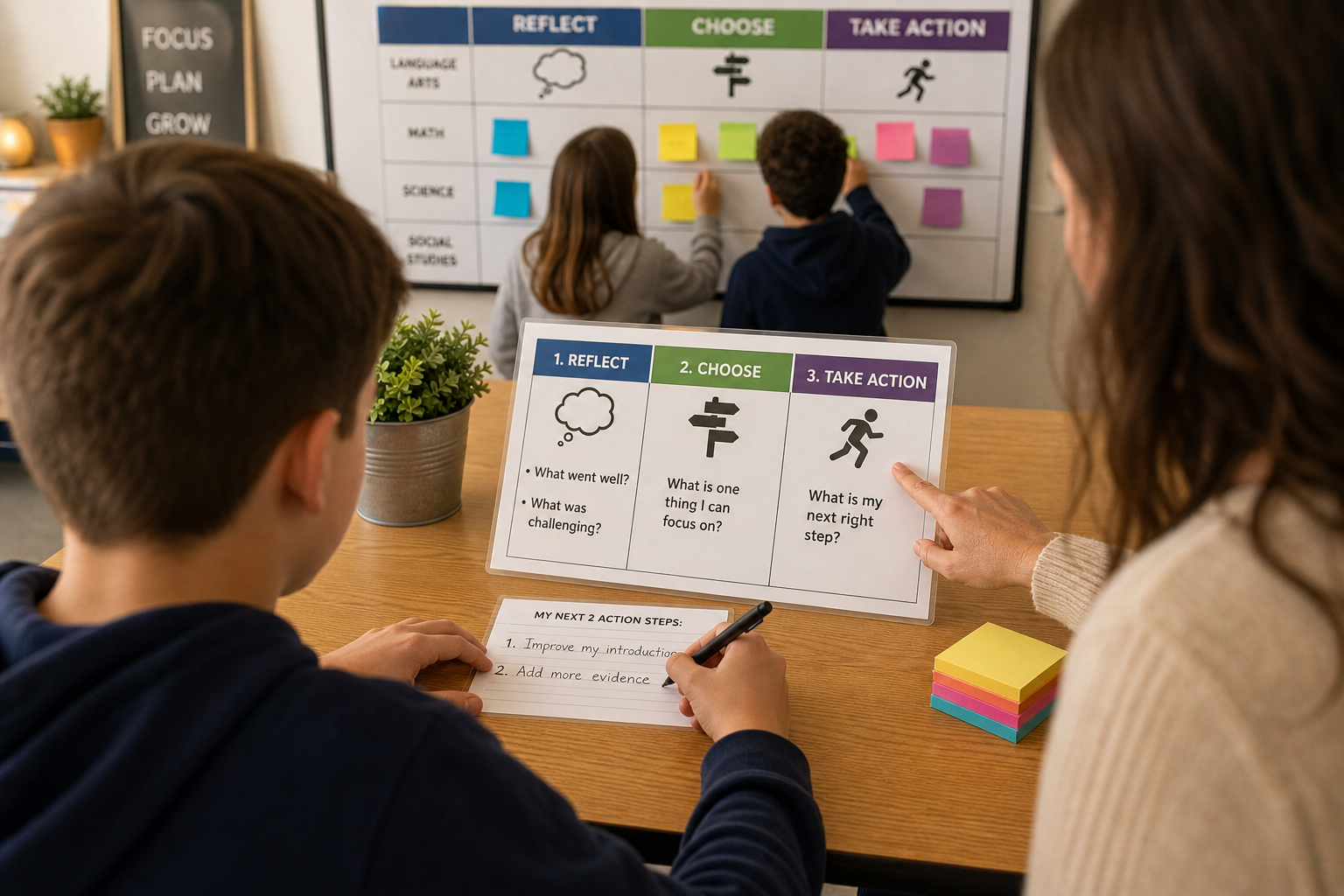
Building student self-management is less about grand redesigns and more about consistent, small instructional frameworks that students can learn and reuse. When teachers introduce brief, repeatable structures, learners gain clarity about expectations and how to approach tasks independently. These micro-frameworks reduce cognitive load, allow students to practice metacognitive moves, and make transfer across contexts easier. The goal is to design systems that students can adopt without constant external prompting.
Effective frameworks are simple, observable, and anchored to timely routines. They should be explicit so students can internalize them and apply the same steps across subjects. Over time, these routines free instructional time for deeper feedback and richer tasks.
Why Micro-Frameworks Matter
Micro-frameworks act as scaffolds that fade as students gain competence, moving responsibility from teacher to learner. They guide decision-making: what to do first, how to check progress, and when to seek help. These patterns also provide common language for teachers and students to discuss strategy use and progress. Consistency across classes and grade levels supports durability.
Prioritizing a few high-leverage frameworks prevents overload and helps students develop automaticity. That automaticity is what produces reliable self-management in unfamiliar or pressured learning situations.
Designing Repeatable Micro-Routines
Start with one target skill—planning, monitoring, or review—and create a short sequence students can follow in five minutes or less. Keep steps concrete and actionable so learners can perform them independently. Provide models, guided practice, and visual cues until the routine becomes habitual. Make the routine portable: students should be able to apply it across tasks and subjects.
- Example: A three-step planning routine—identify goal, list two next actions, set a 10-minute check.
- Example: A monitoring checklist—Am I on task? Do I understand this? What will I do next?
- Example: A quick review loop—summarize, identify one error, write one action to fix it.
Concrete examples help students see how to adapt the routine. Over time, ask learners to capture adaptations so the system evolves with their needs.
Teaching Students to Use the Systems
Explicit instruction, modeling, and reflection support adoption. Demonstrate the routine, coach students through it, and then prompt them to reflect on effectiveness. Use brief exit reflections or quick peer-teaches to reinforce transfer. Encourage students to set personal success criteria tied to the routine.
Feedback should focus on fidelity to the steps and on outcomes the routine is designed to improve. Celebrate independent use and highlight when adjustments lead to better results.
Monitor, Iterate, and Scale
Collect simple data: how often students use the routine, adjustments they make, and whether outcomes improve. Use short cycles of refinement—tweak language, timing, or cues based on what students report. Share successful frameworks with colleagues and align across grade levels for consistency. Scaling should preserve simplicity so fidelity remains high.
Periodic review keeps routines relevant as student needs change. The combination of evidence and iteration ensures the systems remain practical and impactful.
Conclusion
Small, repeatable instructional frameworks help students internalize self-management without overwhelming them. Focus on clear steps, explicit teaching, and iterative refinement so routines stick and scale. When designed well, these systems move responsibility to learners and support sustained, independent growth.