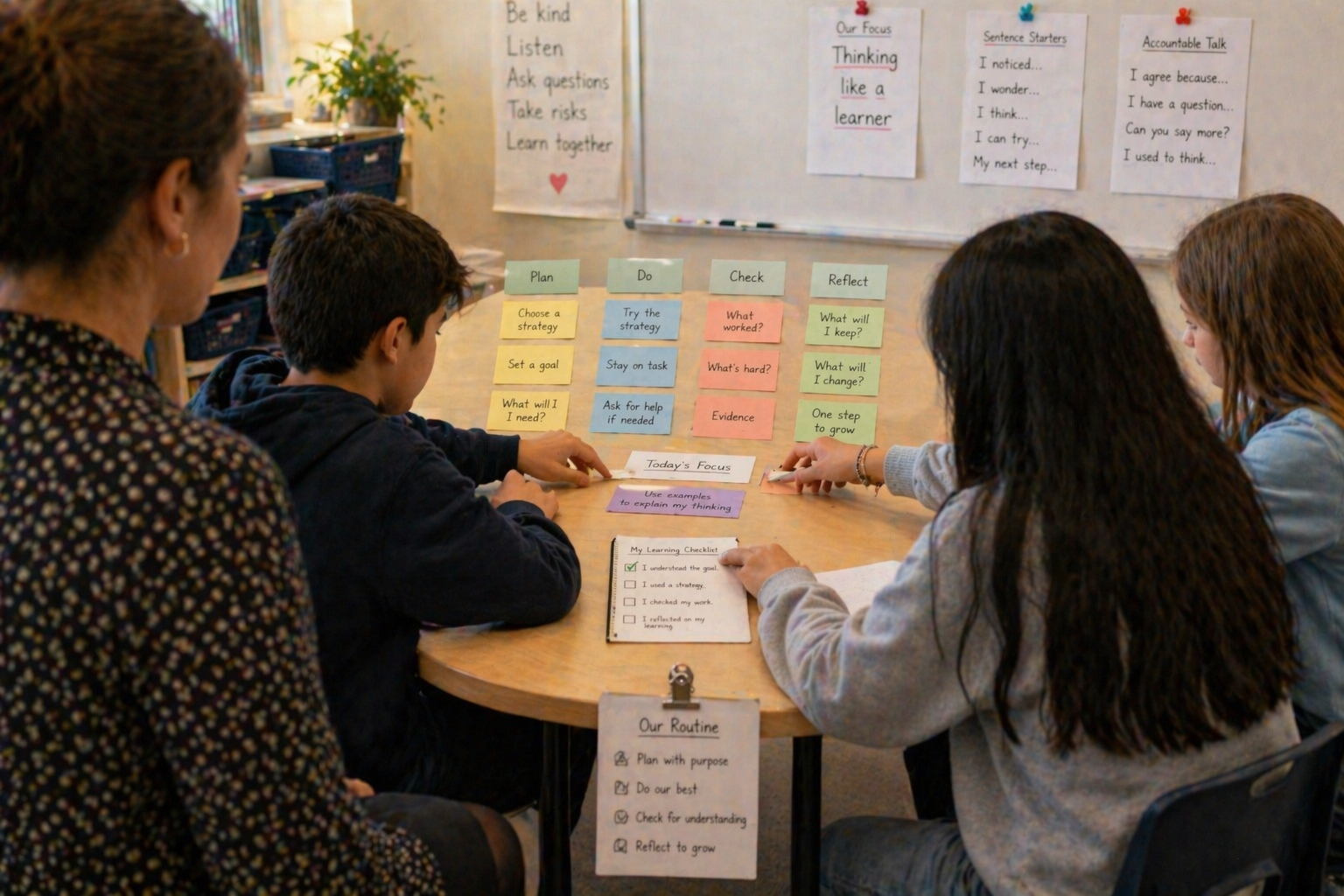
Teachers who want to deepen learning often rely on small, repeatable classroom moves that guide students to reflect and act without constant adult direction. Microstructures are brief routines or visible steps that scaffold metacognitive thinking and independent decision‑making. When chosen intentionally, these practices reduce cognitive load and help students internalize planning, monitoring and revision habits. This article outlines what microstructures are, how to design them, practical examples and simple ways to measure their effect.
Used consistently, microstructures create predictable spaces where students practice skills without high stakes. Over time these habits support autonomy and transfer across subjects.
What are microstructures and why they matter
Microstructures are concise, repeatable procedures—typically one to five minutes—that focus attention on a single cognitive move such as predicting, summarizing, or self-checking. They make invisible thinking visible by giving students language and a visible scaffold for how to approach a task. Because they are small and routine, teachers can model them, fade support quickly, and observe student uptake. Their brevity makes them scalable across lessons and easy to adapt to different age groups.
In classrooms that use microstructures well, students begin to recognize the pattern and apply the strategy without prompting. This gradual internalization is the core benefit for long-term independence.
Design principles for effective microstructures
Start with a clear, singular learning intention and choose one metacognitive move to target, such as setting a goal or checking for understanding. Keep language explicit and consistent so students hear the same prompts repeatedly; repetition builds fluency. Provide a visible cue or anchor—an index card, a slide, or a fixed spot on the board—so the routine is easy to retrieve. Finally, plan short modeling and guided practice moments before expecting independent use.
Design with equity in mind: differentiate prompts and allow multiple ways to respond so all learners can participate. Thoughtful design increases adoption and reduces resistance.
Practical routines teachers can implement
Examples include a two‑sentence prediction at the start of a text, a quick checkpoint checklist before submitting work, a one‑minute peer feedback protocol, or a three‑step problem‑solving map. Each routine targets a discrete habit and should be introduced with modeling, partnered practice, and a brief exit reflection. Rotate and retire microstructures as skills become internalized so students are always challenged to apply what they learned. Keep the number of active routines small to avoid overload.
These concrete moves can be adapted across subjects and grade levels, creating consistent expectations that transfer outside individual lessons.
Measuring impact and iterating
Collect simple evidence: exit ticket responses, student self-assessments, or a quick before‑and‑after sample of student work. Use observational notes and short conferences to see whether students are using the language and steps independently. Set a short review cycle—two to four weeks—to evaluate fidelity and adjust prompts, timing, or supports. Small tweaks informed by evidence will improve effectiveness faster than wholesale changes.
Regular review also signals to students that these routines matter and are part of a coherent learning system. Iteration keeps practices relevant and sustainable.
Conclusion
Microstructures are a low‑cost, high‑impact way to cultivate metacognition and learner autonomy in everyday lessons. By designing brief, consistent routines with clear prompts, teachers can help students internalize planning and self‑monitoring habits. Regular evidence collection and small iterations keep these practices effective and scalable.
Related Articles


Recent Posts

Designing Compact Choice Menus to Foster Student Decision-Making
Teaching Students to Sequence Tasks for Deeper Engagement
Practical Classroom Methods for Teaching Strategic Study Prioritization
Translate Everyday Work into Clear Professional Evidence
A Practical Process for Building Portable Career Proofs


