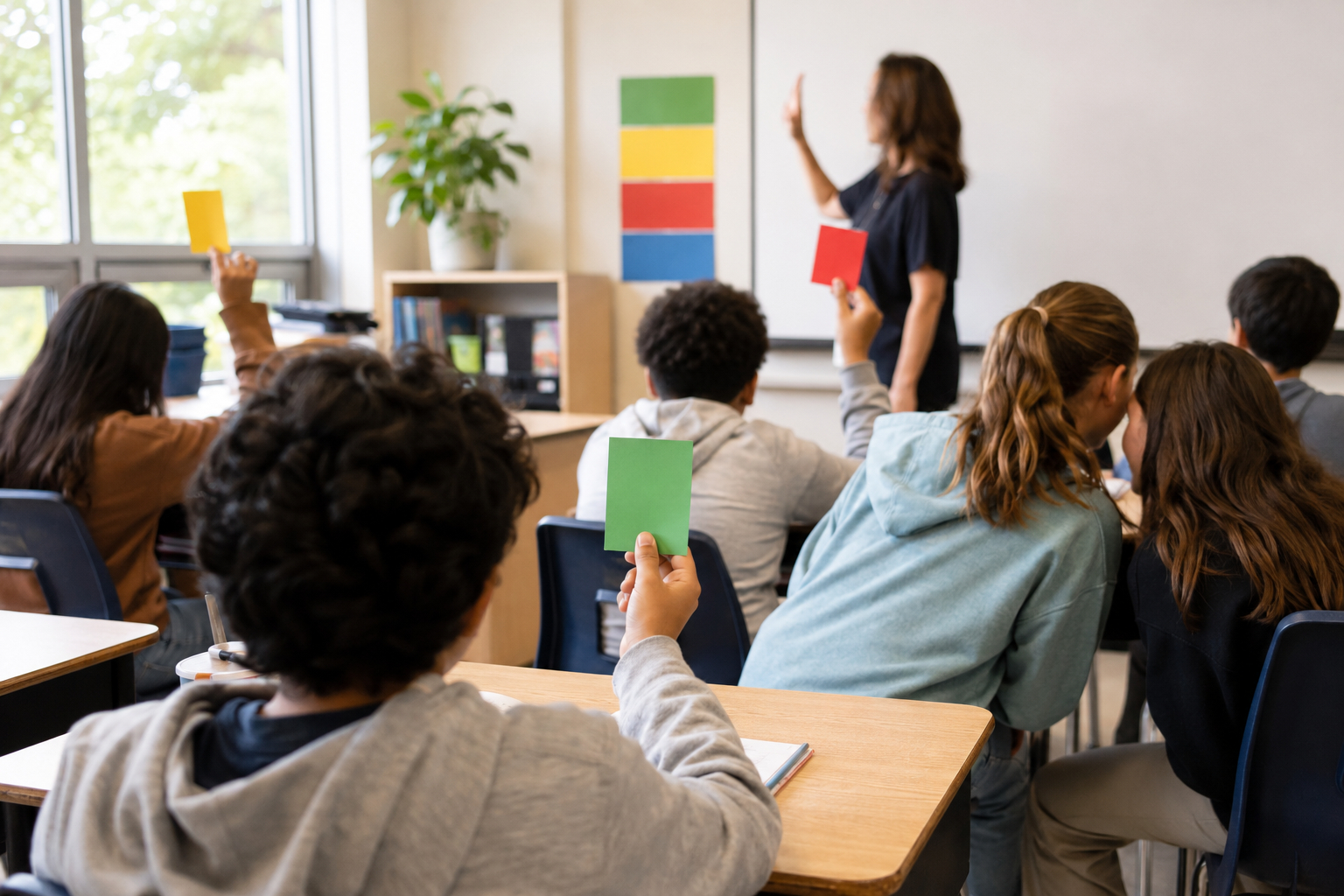
Mid-lesson signals are brief, intentional cues teachers use to refocus, transition, or check understanding. When designed with purpose, they minimize disruption and create predictable opportunities for students to make choices. Used consistently, these cues help learners monitor their progress and take responsibility for next steps. This article outlines practical signal types, design principles, and routines that promote student ownership.
What Are Mid-Lesson Signals?
Mid-lesson signals are compact actions or prompts embedded into instruction that communicate a clear expectation without derailing flow.
They can be visual, gestural, auditory, or tech-enabled, and their value comes from consistency and clarity.
Signals shorten teacher talk and give students fast feedback loops about behavior, pacing, or comprehension.
When students learn the language of signals, they respond more quickly and independently.
- Visual: colored cards, hand signals, or displayed icons.
- Gestural: point, thumbs-up, or a subtle teacher gesture.
- Auditory: a chime, clapped rhythm, or a short verbal cue.
Each type serves different needs depending on classroom dynamics and lesson goals.
Choosing one primary channel reduces confusion and builds habit.
Designing Signals That Fit Your Classroom
Start by identifying common mid-lesson needs: refocus, quick checks for understanding, transitions, and student choice points.
Design signals to be simple, memorable, and minimally disruptive to learning momentum.
Co-create meanings with students so expectations are clear and ownership grows as they help define responses.
Pilot one or two signals for a short period and refine based on how well students follow them.
- Keep signals brief and consistent to reduce cognitive load.
- Use existing classroom routines as anchor points for introduction.
- Document signal meanings visibly so students can self-check.
Adjust timing and complexity with different groups, and celebrate when students reliably respond independently.
Over time, signals become part of the classroom culture rather than an additional management task.
Using Signals to Foster Ownership
Signals are most powerful when they shift agency to students, for example by prompting peer checks or self-assessment.
Pair signals with explicit mini-lessons that teach how to act after a cue—what students do, say, or record next.
Encourage students to create or rotate signals for certain activities so they experience leadership and accountability.
Collect brief feedback and adapt signals to reflect student needs and classroom rhythms.
- Use a signal to trigger a 30-second partner check before asking for whole-class responses.
- Allow students to signal readiness to extend or request help.
- Rotate student-led signal roles to build ownership.
With practice, signals reduce teacher prompting and increase student-initiated regulation.
They create predictable decision points where learners practice autonomy and reflection.
Conclusion
Start small by introducing one clear mid-lesson signal and teaching its meaning through demonstration and practice.
Use consistent, visible cues and invite student input to strengthen understanding and buy-in.
Over weeks, these compact routines become tools that foster independence and classroom ownership.