Small, consistent routines help students practice self-regulation in manageable steps. When teachers intentionally design brief habits, students gain confidence and clarity. These routines reduce cognitive load and create space for reflection and choice. Over time, tiny practices compound into reliable learning behaviors.
Implementing routines does not require major curriculum changes; it demands planning and consistency.
Why tiny routines matter
When routines are short and predictable, students are more likely to adopt them and repeat them independently. Research on habit formation suggests that frequency and simplicity are more important than length or intensity, so a one-minute pause can be more powerful than a long, irregular activity. Routines also create shared expectations that reduce transition time and support classroom focus. Clear cues and consistent timing help students internalize processes for planning, monitoring, and adjusting their work.
Teachers can start by mapping moments in the lesson where a consistent prompt makes sense, such as entry tasks or exit reflections.
Designing predictable mini-routines
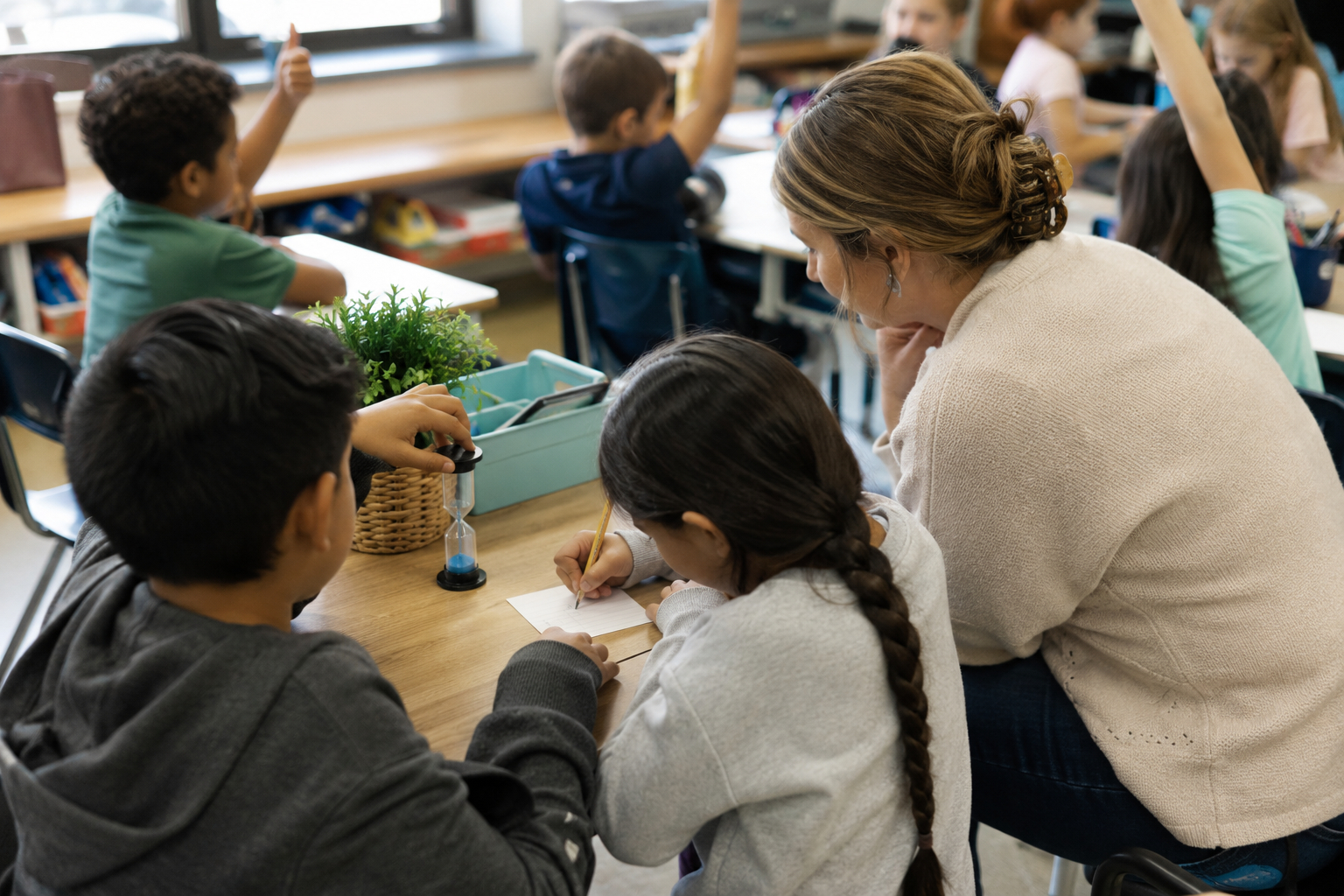
Design mini-routines around a simple structure: cue, action, feedback. The cue signals the start, the action is a short student behavior, and feedback closes the loop. For example, a three-step warm-up might ask students to note a learning goal, list one strategy, and set a 10-minute focus timer. Keeping each step explicit reduces ambiguity and helps students rehearse self-regulation skills in context.
- Entry prompt: summarize last lesson in one sentence.
- Mid-lesson check: rate confidence on a 1–4 scale.
- Exit reflection: note one next step for improvement.
These anchored practices are portable and can be adapted across subjects to reinforce transfer of self-regulation strategies.
Monitoring, feedback, and iteration
Regularly monitor how routines are used and solicit student input to refine them. Short observational checks, quick student surveys, or peer discussions reveal which steps are working and which create friction. Use simple data points—frequency of use, student-reported helpfulness, or time-on-task improvements—to inform small adjustments. Iteration keeps routines responsive and prevents them from becoming stale or performative.
Celebrate progress and model adjustments so students see routines as flexible tools, not fixed rules.
Conclusion
Start small and stay consistent when introducing self-regulation routines. Use clear cues, short actions, and immediate feedback to support habit formation. Over time, these practices help students manage learning more independently.