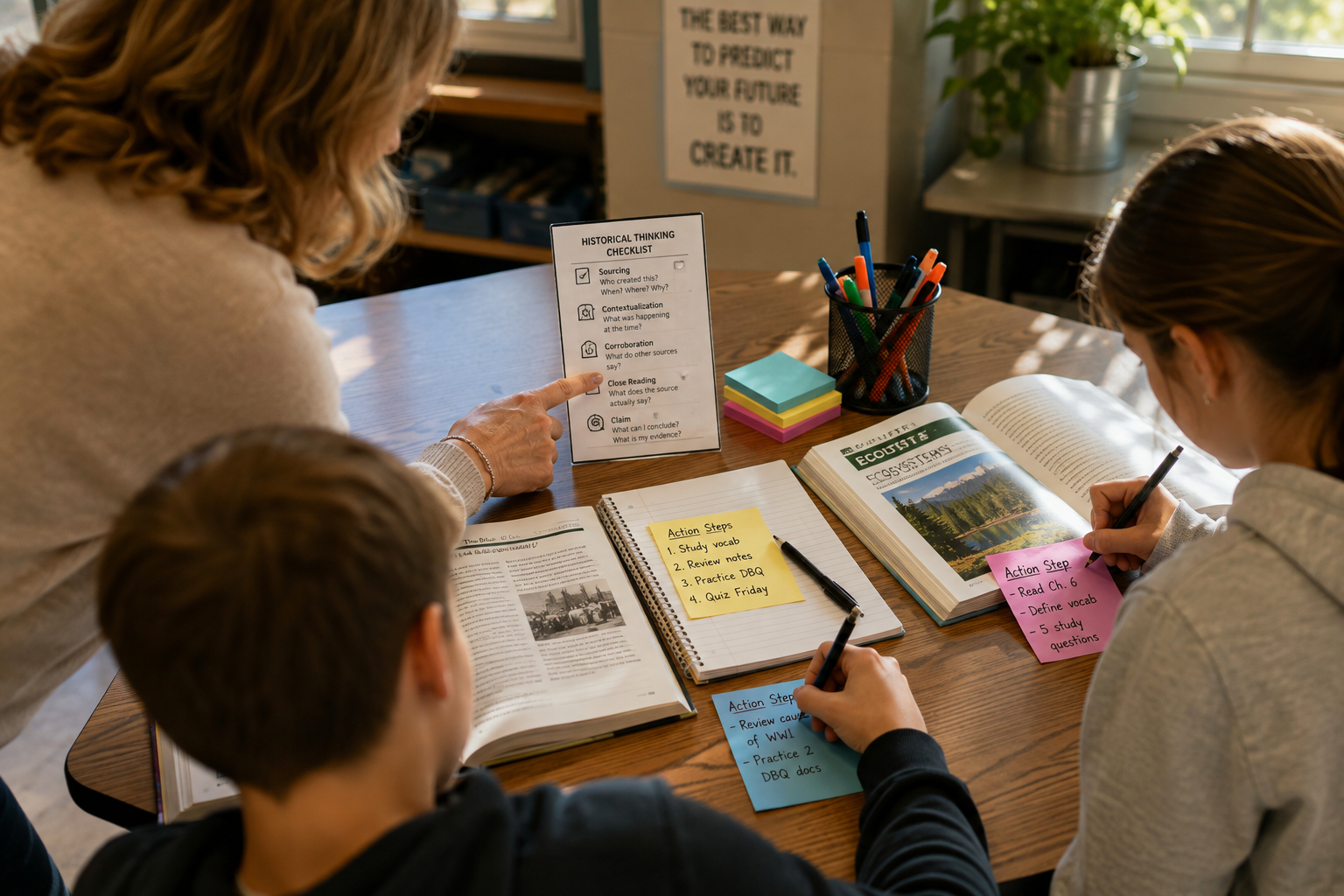
Helping learners build study routines that travel across subjects increases consistency and reduces decision fatigue. Small, repeatable steps give students a framework they can customize without starting from scratch each time. Teachers can scaffold these habits so they become portable tools rather than one-off classroom tricks. This article outlines practical ways to design, teach, and refine compact routines that learners actually use.
Why small routines matter
Small routines act as cognitive scaffolds, freeing students to focus on learning rather than logistics. When routines are simple and applicable across tasks they reduce the mental load involved in planning and help preserve motivation. They also create predictable checkpoints for teachers to observe and give feedback without overwhelming learners. Over time, these tiny habits compound into reliable study practices that support deeper skill development.
Introducing small routines early and revisiting them often strengthens uptake. Emphasize consistency, not perfection, and encourage students to adapt steps to their preferences. As routines become familiar, teachers can fade support so learners take more ownership.
Designing transferable study steps
Design routines around core cognitive actions: preview, chunk, practice, reflect, and plan. Each action should be concise enough to apply in a ten- to twenty-minute window so students can use it across homework, projects, or revision sessions. Provide templates or short scripts that students can personalize and carry from one class to another. Model the sequence and show examples of how the same routine supports different tasks.
- Create one-page checklists for common task types.
- Offer two-minute demonstrations that make the mechanics visible.
These practical anchors help students translate the idea of a routine into repeated practice. Keep materials simple and portable so transfer is natural.
Implementing and adjusting in classrooms
Start with a single, low-stakes routine and measure how students use it for a week. Collect quick feedback and observe where steps break down or feel unnecessary. Use short conferences or anonymous polls to capture student perspectives and iterate on the routine. Scaling slowly ensures routines remain usable and meaningful rather than becoming another classroom chore.
Encourage peer sharing so students see diverse adaptations and borrow what works. Finally, link routines to clear outcomes—better focus, steadier progress, or easier review—to maintain motivation for continued use.
Conclusion
Small, transferable study routines help learners work efficiently across contexts. Teachers build these habits deliberately, starting small and iterating with student input. Over time, compact routines become dependable tools that empower independent learning.