Consistent routines are the scaffolding that help students turn effort into progress. Small, repeatable structures reduce decision fatigue and create predictable opportunities for practice and reflection. When routines are deliberately designed they encourage steady momentum and clearer goal pursuit. This article outlines practical patterns teachers can introduce quickly and adapt over time.
Designing Simple Daily Routines
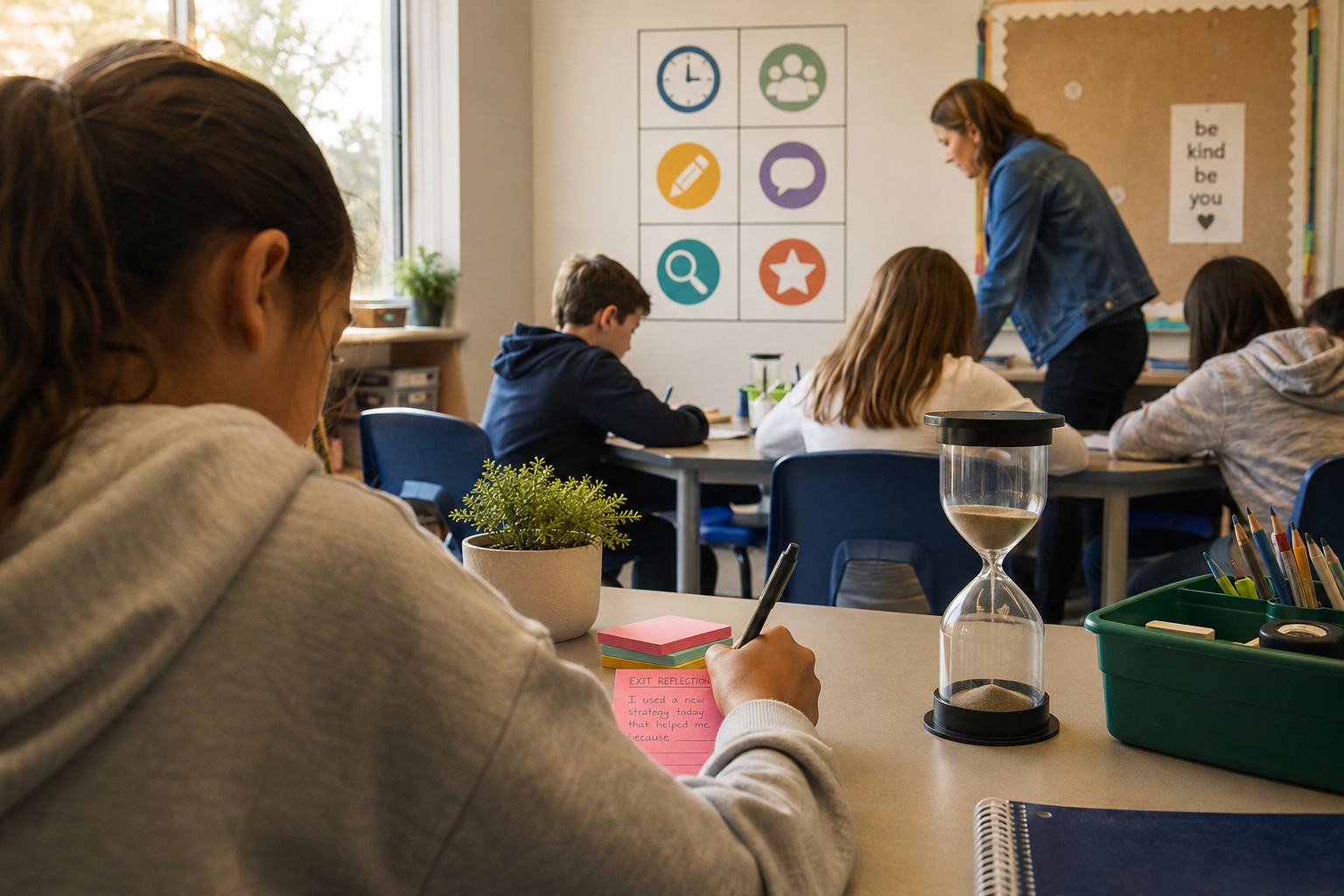
Begin with a few predictable moves that bookend lessons and study sessions, such as a two-minute warm-up, a focused work block, and a quick exit reflection. Keep instructions minimal so students spend more time doing work than decoding procedures, and make the sequence visible so it becomes a shared habit. Routines should cue attention, scaffold independence, and include a clear signal for transition. Over time, these small habits compound and reduce reliance on constant teacher direction.
- Warm-up prompt: one question to activate prior knowledge.
- Work block: a 15–25 minute focused task with a timer.
- Exit reflection: one sentence summarizing learning or next step.
These elements are flexible and can be adjusted by grade level or subject. Starting small makes classroom adoption smoother and gives students ownership of predictable learning rhythms.
Implementing Quick Checkpoints
Frequent, low-stakes checkpoints help students calibrate understanding and adjust strategies before errors become entrenched. Use brief formative signals like thumbs-up, one-minute papers, or a quick rubric check to gather evidence of progress. These checkpoints should be fast to complete and informative enough to guide the next learning step. They also provide natural moments for brief teacher feedback or peer coaching.
- One-minute paper: students note the main idea and a remaining question.
- Exit ticket rubric: three-point self-assessment of mastery.
Quick checkpoints keep momentum by making progress visible and actionable. When students see incremental gains they are more likely to persist and refine their approach.
Encouraging Student Ownership
Invite learners to personalize routines so the structures support individual goals and preferences. Provide choice within constraints, such as selecting a warm-up prompt or setting a personal target for a work block. Teach simple reflection scripts students can use independently to review what went well and what to try next. Over time, these practices shift responsibility from teacher-managed routines to student-directed systems.
Ownership grows when routines are predictable yet adaptable. Small shifts in responsibility prepare students to manage learning beyond the classroom.
Conclusion
Well-designed, compact routines make learning sustainable by reducing friction and clarifying next steps. Start with a few repeatable moves, layer in quick checkpoints, and invite student choices to build ownership. Consistent practice of these patterns helps learners maintain momentum and achieve steady growth.