Teachers can help students develop independence by introducing small, predictable routines that reduce cognitive load, make classroom expectations transparent, and create space for deeper learning.
These compact practices give learners clear expectations and repeated chances to practice executive skills like planning and monitoring, without overwhelming instruction.
When routines are simple, transferable, and co-created with learners, they support consistent progress and stronger metacognitive habits and durable self-regulation.
This article outlines why small routines matter and offers practical steps to design, implement, and scale them across everyday lessons.
Why small routines matter
Small routines act as scaffolds that externalize processes such as planning, monitoring, and reflection, making them visible and teachable for students who struggle with executive control.
They reduce decision fatigue, so students conserve mental energy for complex problem solving and creative work rather than constant task-switching.
Regular practice with brief rituals also normalizes struggle, encourages iterative improvement, and helps learners view effort as part of progress.
Because routines are low-cost and repeatable, they offer consistent practice opportunities that build competence over time.
When teachers prioritize a few durable moves, classroom systems become more reliable and less reactive.
Designing lightweight classroom routines
Start with routines that require minimal explanation: entry tasks, short planning frames, and quick reflection prompts are effective examples that anchor each lesson’s purpose.
Co-design elements with students so the language, cues, and steps feel relevant and memorable, increasing buy-in and fidelity of use.
Keep steps consistent and limited—three to five actions is enough to guide behavior without becoming a burden for teachers or learners.
Ground each routine in a clear purpose tied to learning goals rather than compliance, and use simple scripts to support initial practice.
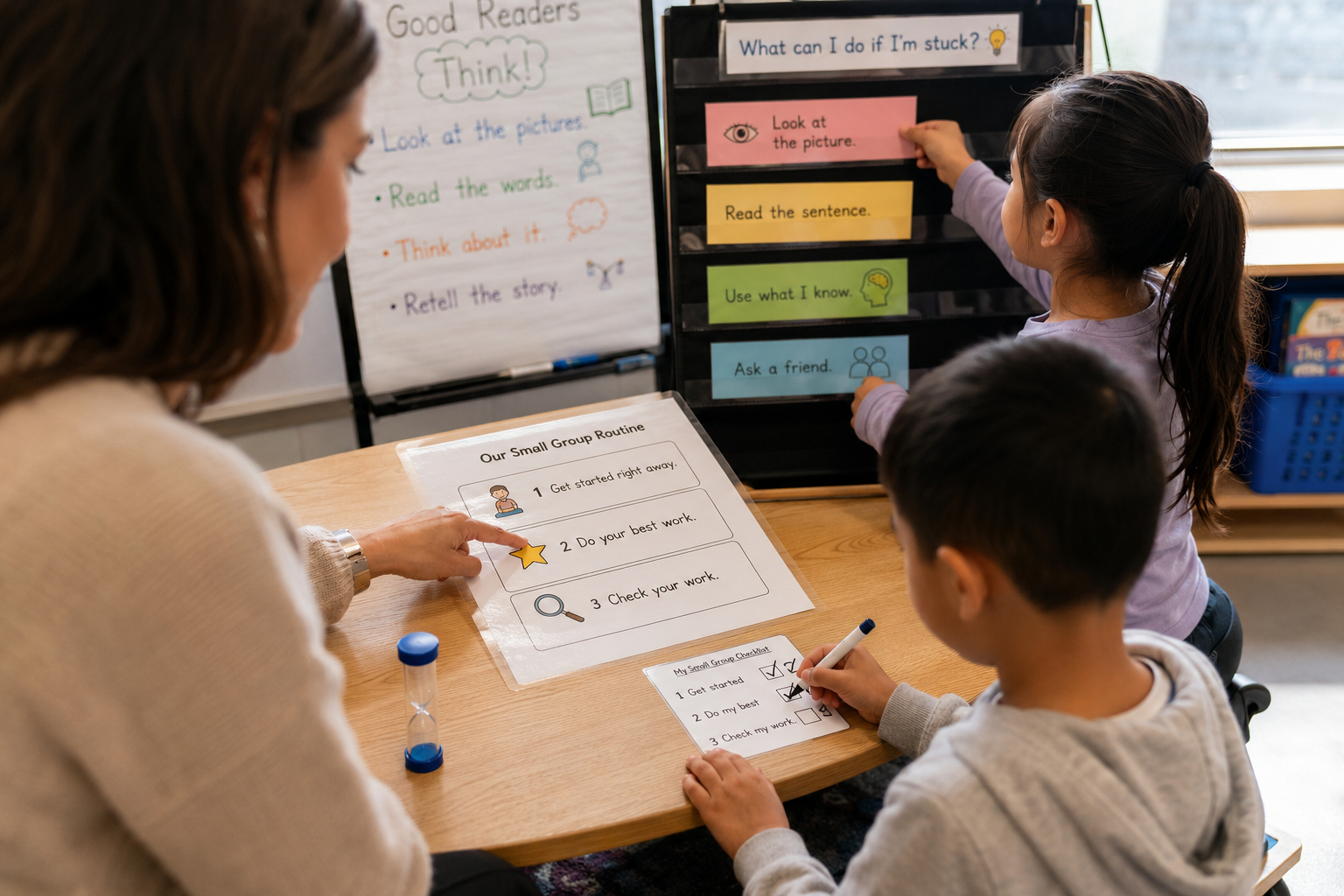
Visual supports, concise checklists, and short teacher modeling speed uptake and reduce confusion during transitions.
Iterate based on student feedback to ensure routines remain practical, accessible, and motivating.
Implementing and scaling routines
Introduce routines gradually and practice them with deliberate repetition before expecting independent use, using modeling and guided rehearsal in the first weeks.
Use brief teacher prompts and intentionally fade supports as learners demonstrate competence, turning external structure into internal habit through spaced practice.
Monitor how routines affect engagement and learning outcomes, adjusting timing or complexity to meet diverse student needs.
Share effective routines across colleagues to build coherence across classes and grades, and document simple scripts for new teachers or substitutes.
Celebrate small successes and track incremental improvements to sustain momentum and reinforce habit formation.
Conclusion
Small, well-designed routines are a high-leverage way to cultivate student independence and resilience. Prioritize clarity, student input, and steady practice when building these systems into daily teaching. Over time, compact routines become internal strategies students carry beyond the classroom.