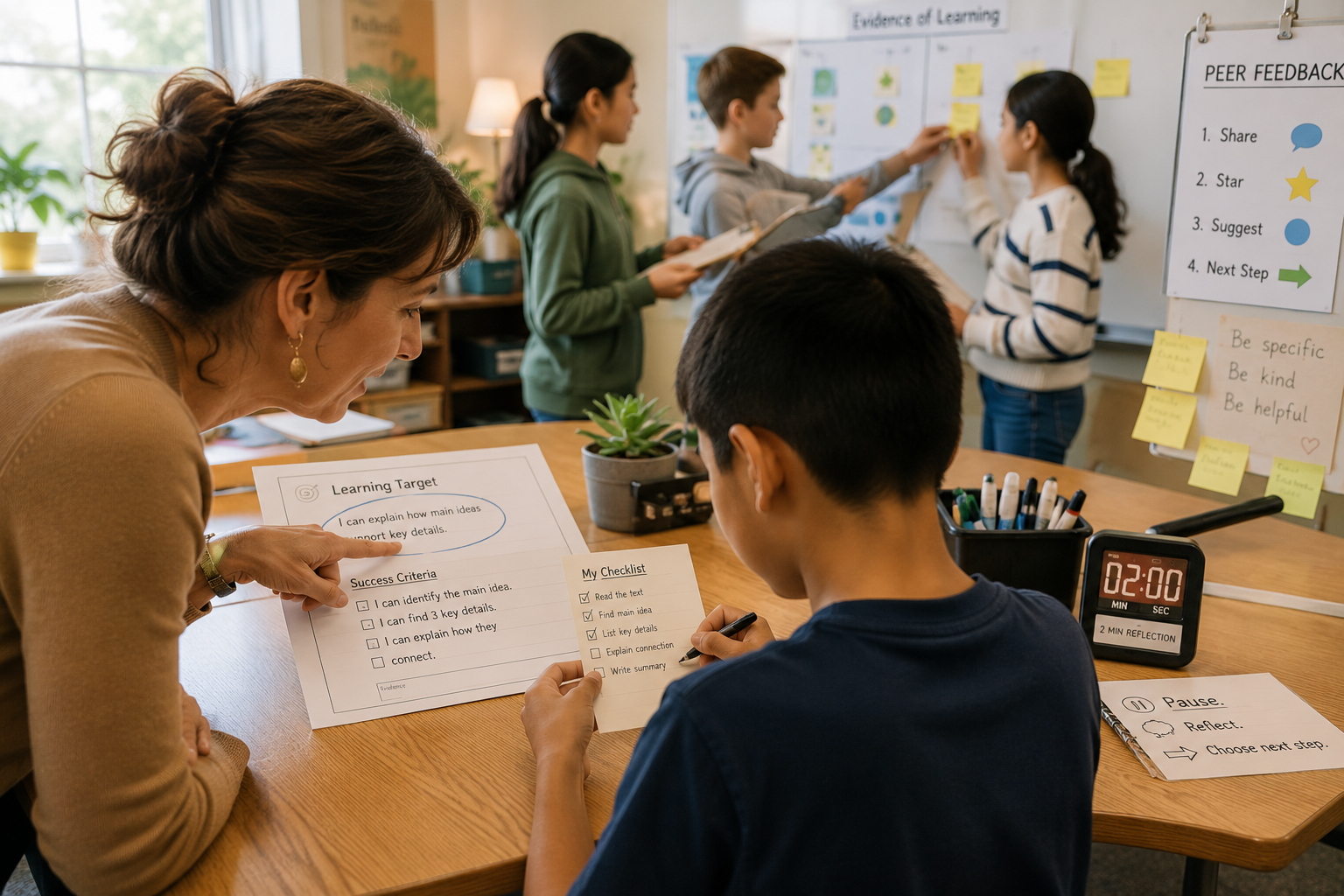
Short, regular feedback cycles help students recognize progress and take ownership of their learning. When feedback is timely and focused, learners can make small adjustments and build confidence quickly. Teachers who design micro-feedback routines reduce cognitive load and create clear pathways for growth. This article outlines practical approaches to implement feedback loops that scale across classrooms.
Why short feedback cycles matter
Frequent, bite-sized feedback shifts focus from summative judgment to formative improvement. Students are more likely to act on input delivered close to the moment of performance, which reinforces skill development. Short cycles also normalize revision and reduce anxiety associated with high-stakes evaluations. Over time, students learn to self-monitor and seek checkpoints independently.
These loops work best when feedback targets a single, specific skill or decision. Clarity helps learners prioritize actions and avoids overwhelming them with multiple change requests. Small wins compound into sustained independence.
Designing actionable micro-feedback routines
Start by identifying one observable learning target per lesson and craft a consistent prompt teachers use to respond. Prompts can be short written comments, checklists, or a one-minute conversation at a station. Keep language descriptive and task-focused so students know exactly what to repeat or revise. Establishable routines make the process predictable for both teacher and learner.
Consistency matters: use the same rubric language, the same timing, and the same follow-up expectation. When students know what comes next, they are more likely to engage with feedback rather than dismiss it. Over weeks, gradual shifts toward self-review are common.
Classroom strategies and timing
Integrate micro-feedback at natural transition points: after a warm-up, during stations, or at the close of a brief task. Allocate one to three minutes for each interaction so routines remain sustainable. Use a mix of teacher-to-student, peer-to-peer, and self-assessment moments to distribute responsibility across the room.
- Quick checks: two-sentence teacher comments focused on one goal.
- Peer prompts: structured sentence stems for constructive response.
- Self-mark: a checklist students use to verify mastery before submission.
Rotating these approaches keeps feedback varied and supports different learning preferences. The strategy reduces grading load while increasing actionable moments for improvement.
Measuring impact without heavy grading
Track changes through simple artifacts: revised drafts, checklist completion rates, or brief reflection entries. Look for patterns rather than perfection; improvement in targeted behaviors indicates the loops are effective. Use periodic quick measures to adjust the focus of feedback cycles and to celebrate gains.
Documentation can be lightweight—samples stored digitally or a short log of frequent wins is enough. The goal is to inform instruction and encourage student agency, not to create more paperwork.
Conclusion
Well-designed micro-feedback loops make independence tangible and achievable. They turn feedback into a predictable habit that students can internalize. Start small, stay consistent, and focus on clear, actionable steps to see steady growth.