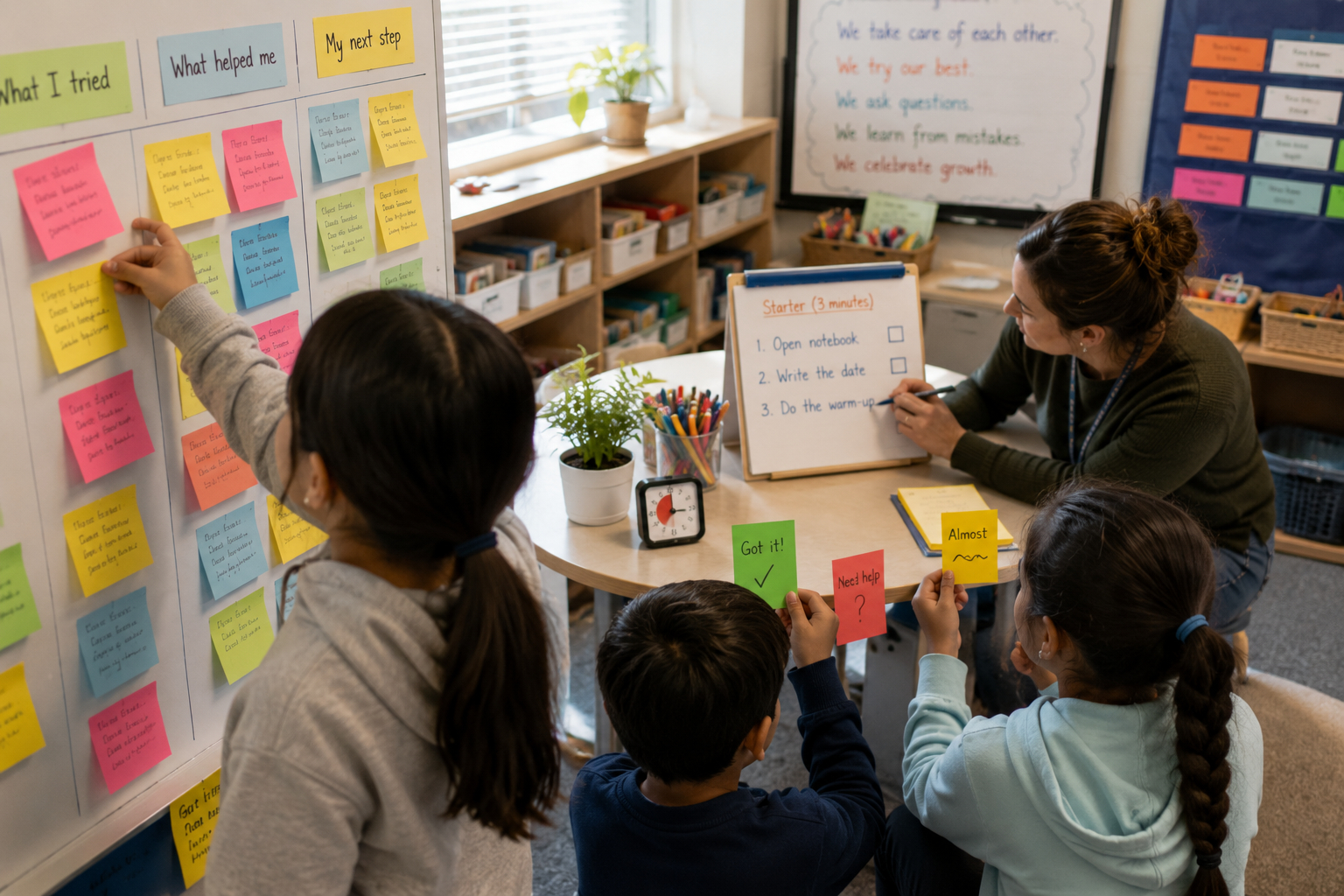
Building student autonomy begins with small, consistent classroom moves that students can learn and repeat. When routines are clear and compact, learners spend less energy on logistics and more on thinking. Teachers can design micro-protocols that model decision making and provide safe spaces for trial and error. Over time, those micro-protocols accumulate into reliable habits that support independent learning.
Designing Predictable Micro-Routines
Start by identifying three moments in a lesson where a brief routine would reduce friction: starting work, checking progress, and ending with reflection. Each routine should take no more than two minutes and use the same language and signals every time. Predictability helps students internalize expectations and frees cognitive bandwidth for content. Well-designed micro-routines also create visible entry points for students to take initiative.
- Starter prompts: a two-question checklist to begin tasks.
- Progress signals: a quick color or hand gesture to indicate status.
- Exit reflections: one sentence summarizing what was learned.
When teachers model and reinforce these patterns, students adopt them quickly. Consistency across lessons accelerates transfer and reduces dependence on adult direction.
Scaffolding Student Decision Points
Not every choice needs to be open-ended; scaffolded options let students practice decision making without feeling overwhelmed. Provide two or three viable pathways for tasks and teach criteria for choosing among them. Use brief decision frames such as “If you want speed choose A; if you want depth choose B.” This approach teaches metacognitive selection while preserving teacher guidance.
Over weeks, expand the range of options and encourage students to justify their choices. Recording decisions and outcomes builds a portable repertoire of strategies they can reuse in new contexts.
Feedback Loops and Quick Checks
Embed short feedback loops that prompt self-assessment and peer input within lessons. Use one-minute checks that ask students to rate confidence and note a single improvement step. Quick peer exchanges—two students summarizing each other’s work—provide immediate, actionable perspectives. These compact checks turn feedback into a routine rather than an occasional event.
- Confidence scales from 1–3 with one corrective action.
- Peer summary pairs with a single clarifying question.
Regular, low-stakes feedback strengthens students’ ability to monitor and adjust their learning. It also normalizes refinement as part of the process rather than a sign of failure.
Conclusion
Small, consistent protocols make autonomy teachable and scalable. By reducing choice overload and building quick decision frames, teachers help students practice independence. Over time these micro-routines become durable habits that support lifelong learning.