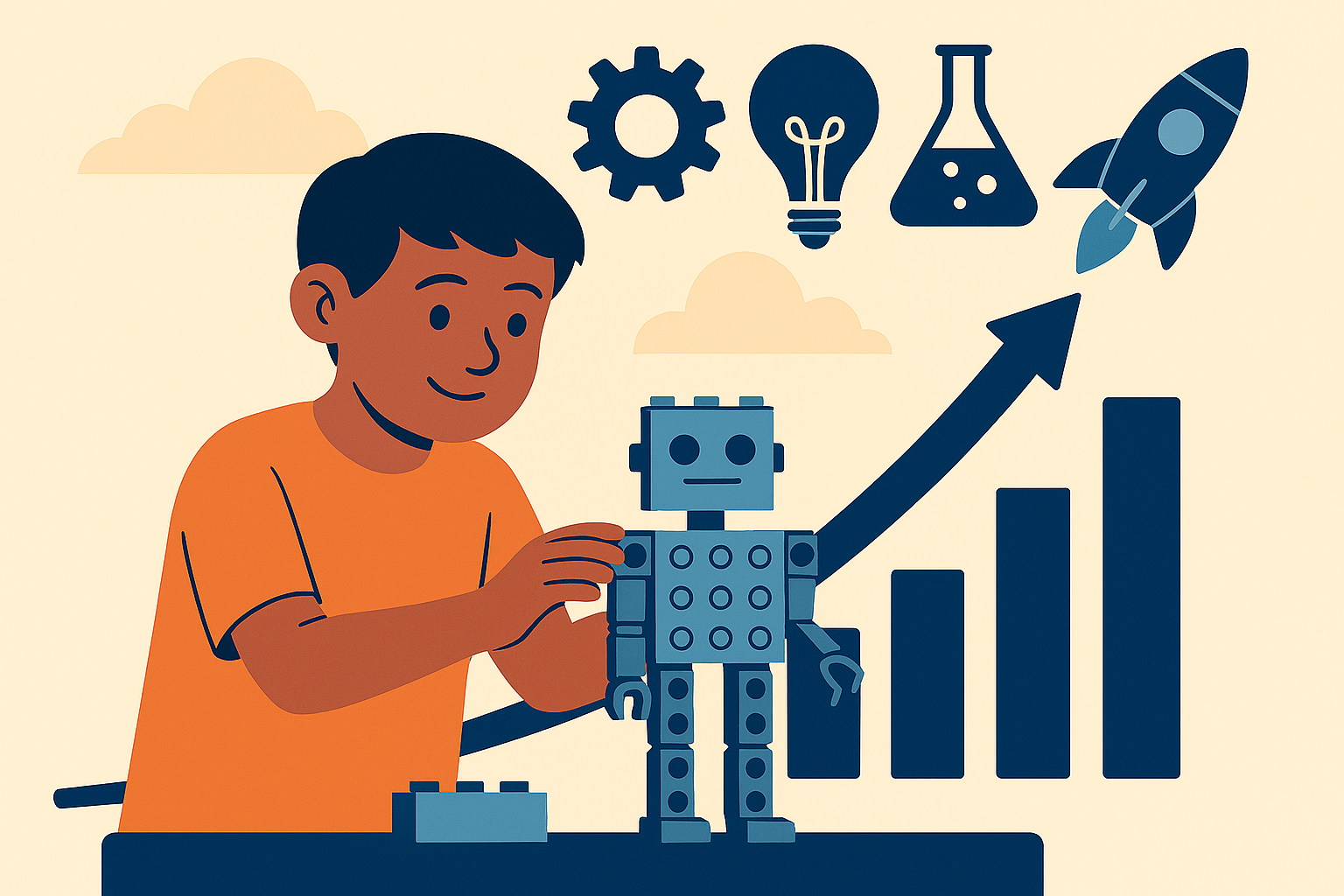
STEM education (Science, Technology, Engineering, Mathematics) teaches students how to ask questions, test ideas, and solve complex problems. It emphasizes inquiry-based learning, experimentation, and the scientific method, but contemporary STEM goes beyond labs and equations — it’s about building a mindset of curiosity and resilience.
Why it matters:
STEM skills help learners break down messy problems into manageable parts, apply logic, and use technology responsibly. Early exposure prevents math and science anxiety and opens pathways to careers as well as informed citizenship.
How to implement:
- Use project-based units where students design, build, test, and iterate (e.g., design a simple machine to solve a real classroom problem).
- Integrate technology thoughtfully: data-logging sensors in science, simple coding for simulations, or digital modelling tools.
- Blend disciplines: add engineering design challenges into science units and use math as the tool for measuring outcomes.
Classroom activities:
Maker-space challenges, design sprints, citizen-science projects, collaborative robotics tasks, and data-driven investigations.
Challenges & solutions:
- Resource gaps → low-tech, inquiry-focused adaptations (paper circuits, recycled-material engineering).
- Teacher confidence → professional learning communities and micro-credentials in STEM pedagogies.