Small, repeatable classroom routines help students develop independent learning skills over time. When routines are compact and clearly framed, students understand expectations and can self-regulate with less teacher prompting. Mini-routines create predictable moments for planning, monitoring, and reflecting within existing lesson flow. This article outlines practical routines teachers can implement, adapt, and iterate.
Why mini-routines work
Mini-routines reduce cognitive load by narrowing choices and providing a familiar structure for action. They create frequent opportunities for metacognitive practice—students plan, monitor, and adjust in short cycles that fit class periods. Repetition reinforces skill transfer across subjects because the underlying process remains the same even when content changes. Over time, students internalize the pattern and require fewer external prompts.
That steady internalization is what shifts responsibility from teacher direction to learner initiative. The key is keeping routines short and consistent.
Classroom strategies to start
Begin with two to three micro-protocols that address planning, checking, and short reflection. Example protocols include a 90-second goal-setting prompt at lesson start, a mid-lesson self-check with a three-question checklist, and a one-minute exit reflection to record next steps. Use clear, visually posted prompts and model the language the first few times. Consistency builds habit; avoid introducing too many routines at once.
- 90-second goal-setting at lesson start
- Mid-lesson three-question self-check
- One-minute exit reflection noting next steps
These strategies are low-tech and adaptable across grade levels and subjects. With visible prompts and consistent timing they become classroom norms.
Supporting student ownership
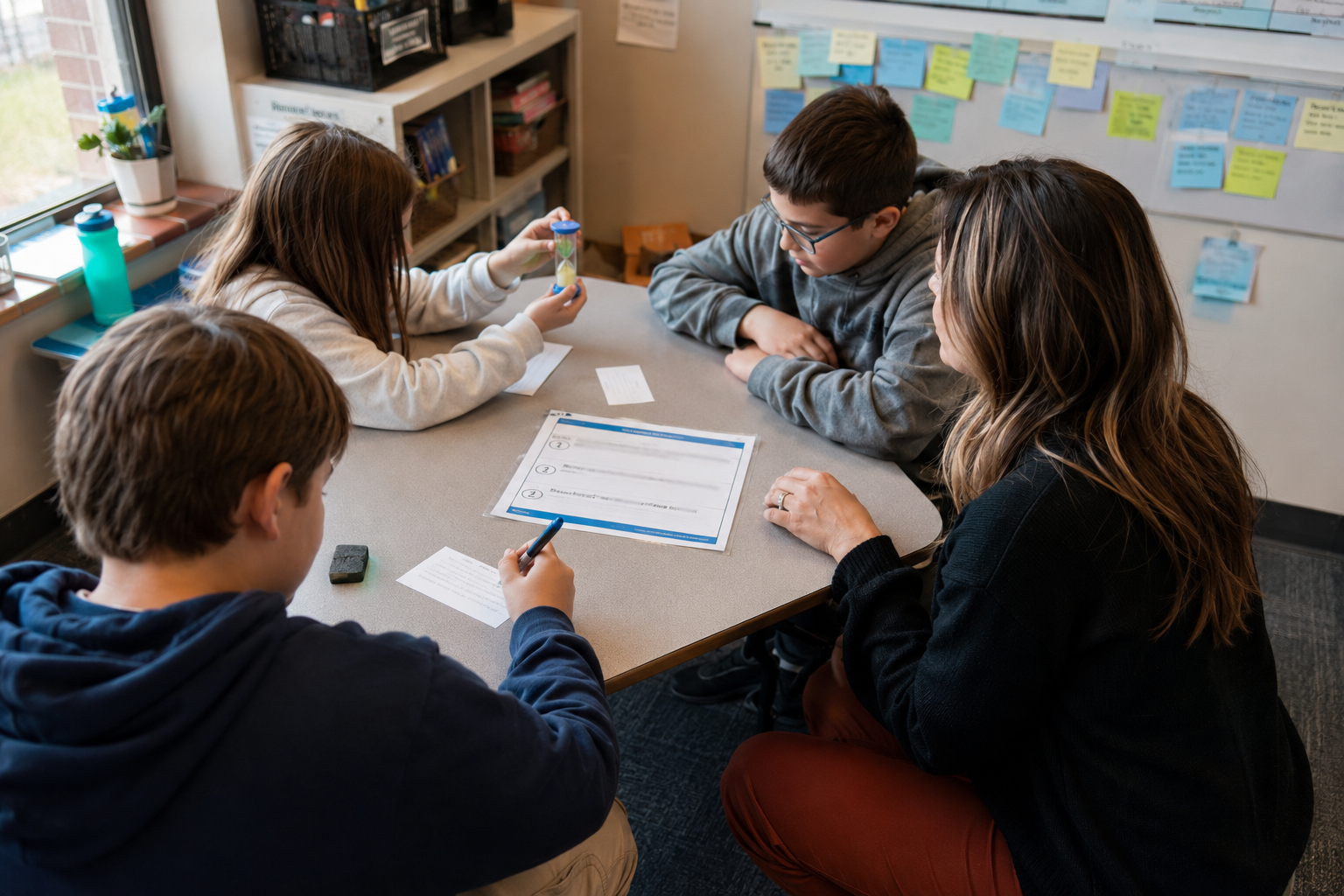
Build student agency by making routines a collaborative project: co-create checklists, rotate responsibility for leading short reflections, and celebrate incremental gains. When students help design prompts they better understand their purpose and are more motivated to follow them. Pair routines with brief coaching conferences for students who struggle to apply the pattern independently. Over time, leadership opportunities let students support peers and model the habits you want to scale.
Document student suggestions and test the most promising ideas systematically. Small ownership steps make routines more resilient and relevant.
Measuring and iterating
Collect lightweight evidence of impact: brief student reflections, a tally of self-checks completed, or quick peer observations. Use that evidence to tweak timing, wording, or the number of checkpoints rather than abandoning the practice after a single cycle. Invite student input in refining prompts so routines feel owned and useful. Small changes tested frequently create a feedback loop that accelerates adoption and effectiveness.
Keep iterations small and document what changes when outcomes improve. Over time, the classroom toolkit will reflect both teacher intent and student preferences.
Conclusion
Mini-routines are a practical pathway to greater learner autonomy when designed for clarity and repetition. Start small, measure lightly, and iterate with students to sustain momentum. The result is a classroom where independent learning is practiced daily and generalized across tasks.