Building student independence starts with predictable, small classroom moves that make agency routine and visible to learners.
Teachers can design brief, repeatable practices that scaffold decision-making, reflection, and self-regulation across lessons.
When those practices are explicit, consistent, and scaffolded they reduce cognitive load and steadily increase student confidence and competence.
This article outlines practical strategies teachers can adopt immediately to support independence without sacrificing instructional momentum.
Why small structured moves matter
Small, structured practices make independence concrete by breaking complex skills into manageable, repeatable steps that students can actually practice each day.
Rather than expecting learners to instantly self-regulate, teachers model simple habits and then fade support as students gain fluency with those moves.
This gradual-release approach builds competence and allows teachers to monitor progress, adapt supports, and intervene early when students struggle.
Over time, these micro-habits become internalized strategies students can apply across tasks and subjects, increasing transfer and deeper learning.
Consistent structure reduces anxiety and gives students clear signals about expectations, which fosters risk-taking and resilience.
That predictability creates room for higher-order thinking once basic routines are secure and classroom time becomes more productive.
Classroom strategies teachers can use
Select a few brief moves and practice them daily so they become part of the class rhythm rather than occasional tricks that are quickly forgotten.
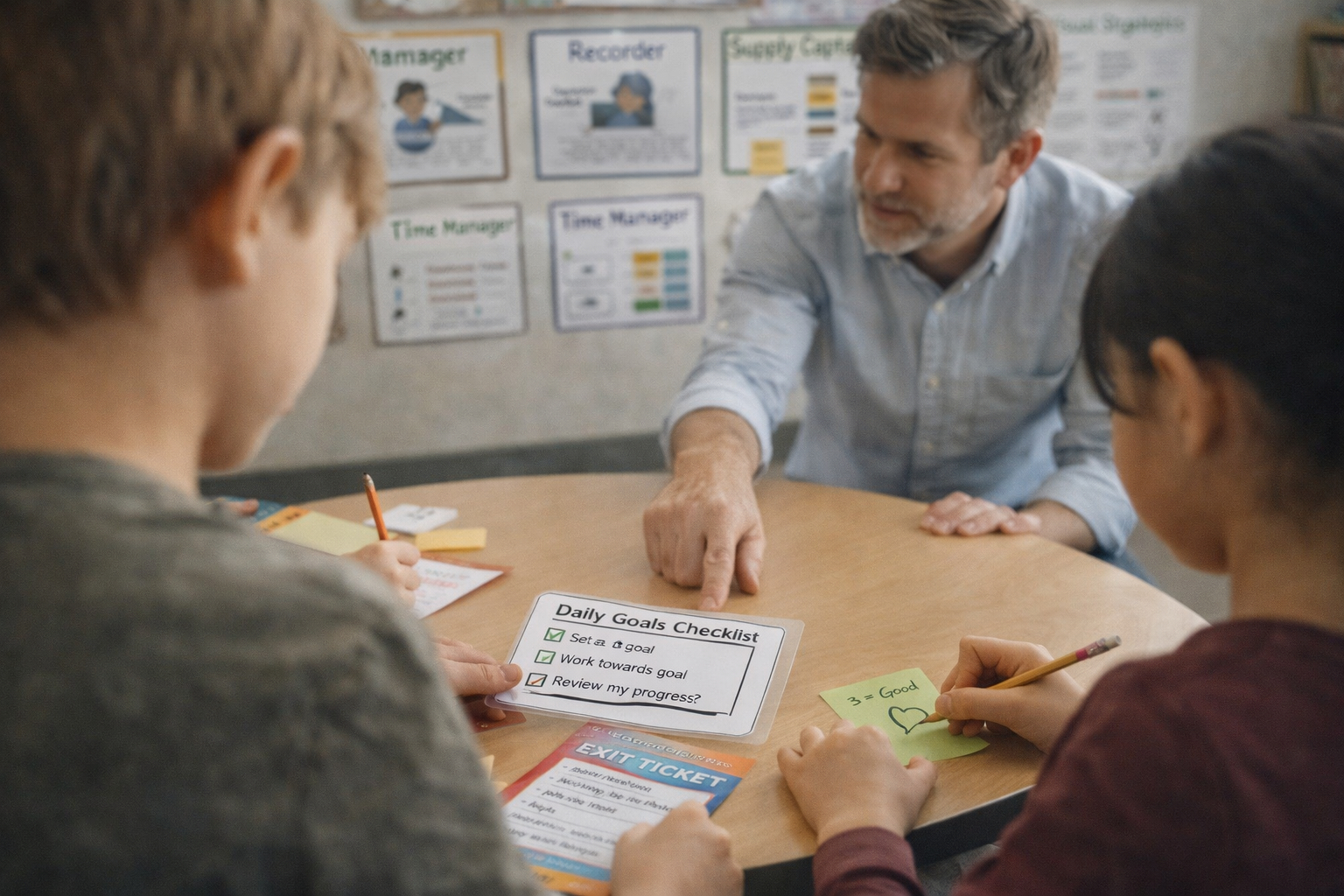
Examples include daily planning checkpoints, quick self-assessment prompts, short peer-teaching exchanges, and exit reflections that focus on next steps.
These strategies are low-prep but high-impact when applied consistently across lessons and adapted to grade level and content complexity.
Choose language, cues, and simple visual supports that make each step transparent and accessible for diverse learners.
- Start-of-class two-minute goal-setting and priority identification.
- Mid-task check-ins using a simple rubric or checklist to guide choices.
- Exit tickets that require one specific next step or revision plan.
- Rotating student roles for monitoring progress and offering brief feedback.
Small tools like rubrics, checklists, and defined roles externalize expectations so students can self-correct and make immediate improvements.
Pair these classroom routines with brief teacher conferences and targeted mini-lessons to keep supports timely and adaptive.
Assessing progress and fostering agency
Assessment for independence focuses on skill application, strategy use, and the ability to plan and revise work instead of only content recall.
Use formative checks that capture planning notes, self-ratings, annotated drafts, and short reflections so you can identify which supports to fade and when to reintroduce guidance.
Collecting these brief artifacts makes feedback actionable and helps students see concrete evidence of growth, which is critical for motivation and ongoing effort.
Share success criteria and involve students in tracking their own growth through simple charts or reflection logs to strengthen ownership and metacognition.
Regular reflection moments—when students compare a current piece of work to prior attempts—help them recognize progress and set meaningful, achievable goals.
Over time, cycling through practice, feedback, and reflection builds durable self-directed learning habits that extend beyond individual lessons and classrooms.
Conclusion
Small, predictable classroom moves make independence teachable and assessable by turning abstract expectations into consistent routines.
Implementing brief routines and simple tools lets teachers support autonomy without sacrificing lesson flow and allows learners to practice transferable strategies.
Consistent practice, targeted feedback, and student reflection help learners internalize approaches and apply them across contexts, strengthening long-term agency.