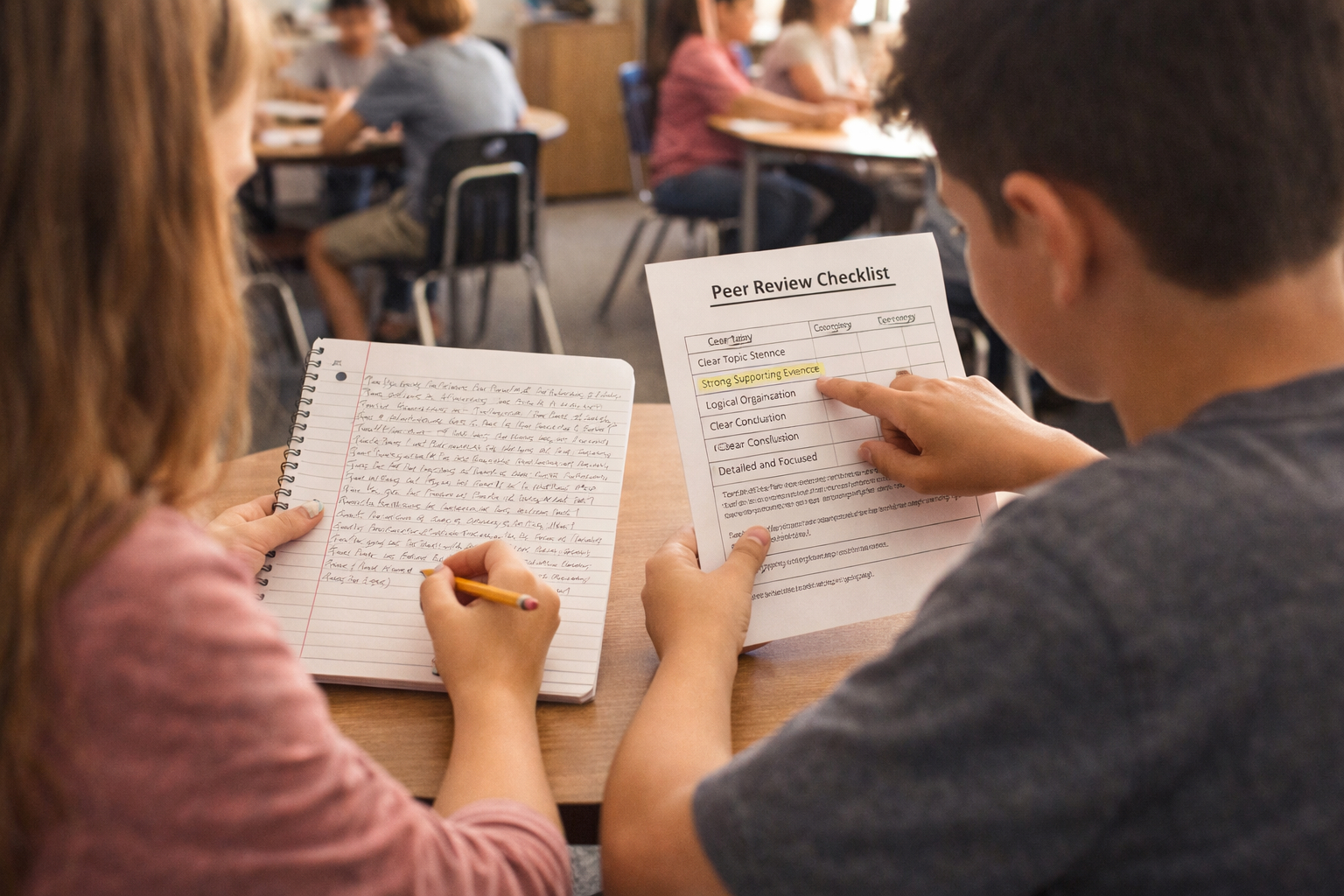
Peer review, when designed intentionally, becomes a powerful lever for student independence and sustained skill development. Clear routines, shared language, and frequent cycles let learners practice assessment and revision without constant teacher intervention. This article outlines practical techniques teachers can adapt to help students give useful feedback, reflect on their work, and take responsibility for improvement. The goal is to move classrooms from teacher-led correction to student-centered revision habits.
Establishing predictable review moments also normalizes critique as part of learning and reduces anxiety. Over time, students develop judgment, communication skills, and the ability to self-monitor progress.
Design clear peer review protocols
Start with precise expectations so peer feedback focuses on learning goals rather than vague praise or criticism. Define the product, the rubric criteria, and the specific role of the reviewer in each activity to eliminate confusion. Offer short modeling sessions where you demonstrate effective feedback and contrast it with unhelpful comments. Consistency in protocol across tasks builds student confidence and reduces cognitive load during review.
Once norms are established, rotate roles and scaffold complexity so responsibility increases gradually. This lets students practice guided independence before working with minimal support.
Teach feedback language and criteria
Students need a shared vocabulary to make feedback actionable, so teach sentence stems, questions, and criterion-focused prompts. Emphasize observable behaviors or text features rather than personal judgments to keep comments constructive. Use anchor samples showing weak, adequate, and strong responses so reviewers can calibrate their judgments. Reinforce the difference between corrective notes and suggestions for extension.
- Try stems like: “I notice…, which suggests…”, “One suggestion is…”, and “What would strengthen this is…”.
- Provide quick checklists tied to rubrics for efficient scanning.
- Require at least one positive and one improvement note per review.
These structures make feedback more consistent and teach students how to translate goals into concrete actions. With practice, learners internalize the language and use it to self-assess.
Structure cycles and reflection for independence
Design short, regular review cycles that include submission, peer feedback, revision, and self-reflection. Keep cycles manageable—brief reviews with focused criteria are more effective than sprawling critiques. Schedule reflection prompts where students summarize what they changed and why, which reinforces metacognitive growth. Track progress across cycles so students can see improvement and set next-step goals.
- Cycle example: draft → peer review (10 minutes) → revise (15 minutes) → reflection entry.
- Use portfolio snapshots to show growth over time.
Consistent cycles build habits: students learn to lean on peers for formative input and to use feedback purposefully during revision. Over time this reduces dependence on teacher direction and fosters autonomous learning.
Conclusion
Well-structured peer review embeds assessment and revision into everyday learning and cultivates student agency. By teaching feedback language, setting clear protocols, and scheduling regular cycles, teachers create conditions where independence grows naturally. These techniques help learners become more confident, reflective, and capable of directing their own improvement.