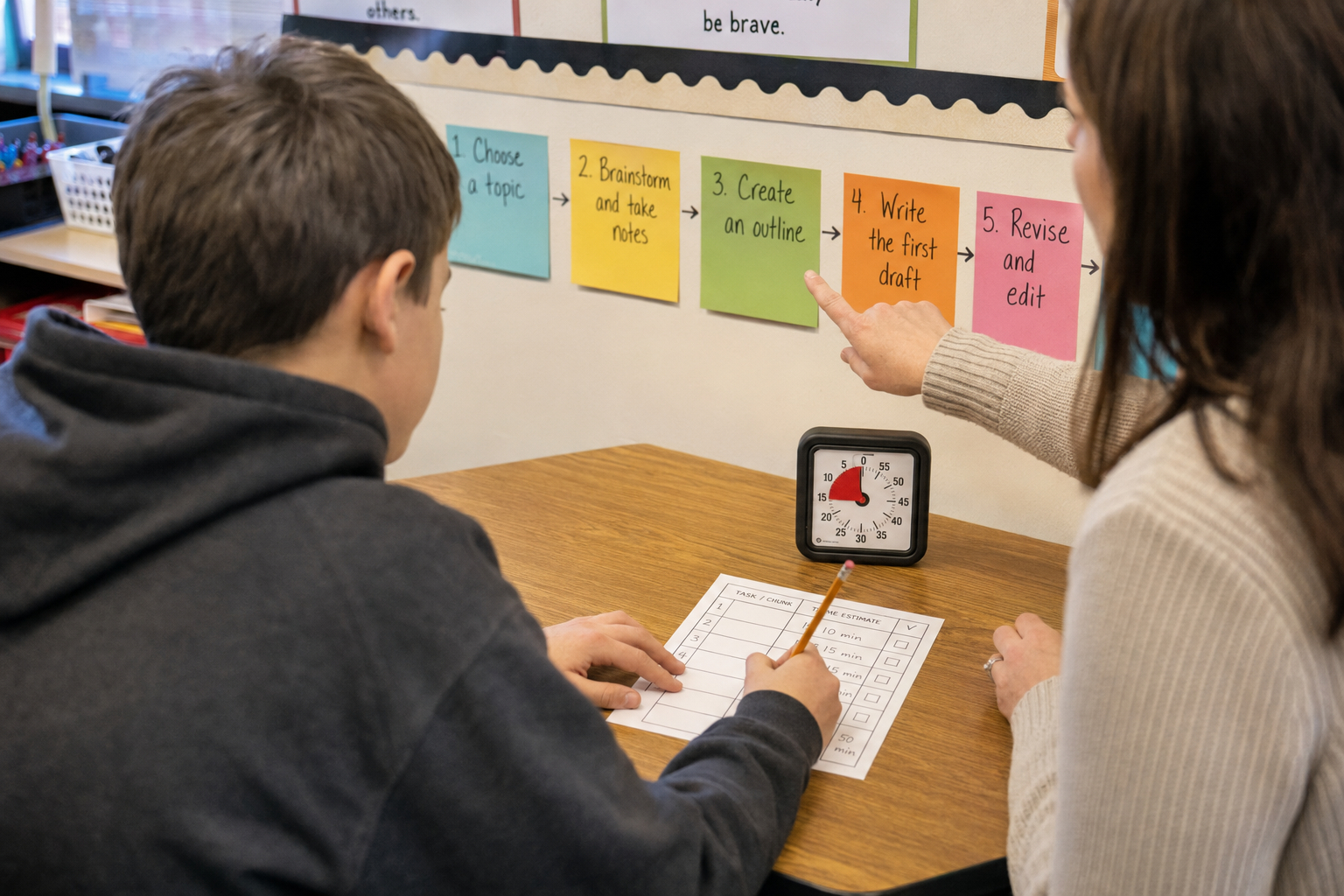
Students who can plan make more steady progress because their efforts align with clear steps. Teachers can teach planning as a repeatable skill rather than an occasional strategy. Small, consistent planning routines reduce overwhelm and improve follow-through. This article outlines practical moves teachers can use to help learners design their own study sequences.
Why structured planning matters
Structured planning turns vague intentions into actionable steps students can follow and refine. When planning is taught explicitly, learners become better at estimating time, sequencing tasks, and predicting obstacles. That clarity reduces procrastination and supports focus during independent work periods. Over time, students internalize the routines and transfer them to new contexts.
Teachers benefit too: a common planning language streamlines feedback and makes progress visible. Clear plans also help with grouping, differentiation, and assessment of strategies rather than only outcomes.
A simple four-step planning routine
Begin with a compact routine students can replicate: define the goal, break tasks into chunks, assign time estimates, and choose a monitoring check. Each step is short and concrete so learners can complete the cycle quickly before starting work. Regular repetition of the routine builds fluency and reduces the need for adult prompts. The routine works for single assignments, study sessions, and longer projects alike.
Model the routine in class and provide templates that scaffold early attempts. Gradually remove supports as students demonstrate mastery and independence.
Integrating routines into daily classwork
Embed planning moments into predictable points in your lesson flow, such as at the start of class, before independent practice, and after feedback. These anchor points make planning habitual and help students view planning as part of learning, not an extra task. Use brief teacher demonstrations and peer examples to illustrate realistic time estimates and checkpoints. Consistency across lessons reinforces the routine and normalizes adjustments.
Prompts and visual timers can support learners who struggle with self-regulation. Keep expectations clear and celebrate small successes to maintain momentum.
Monitoring and adjusting plans
Teach students simple monitoring moves: compare progress against the plan, note obstacles, and decide whether to revise time estimates or steps. Short mid-session check-ins and quick end-of-session reflections encourage accurate self-assessment and adaptive changes. Encourage learners to record one small change they will try next time so planning becomes iterative. Over time, this feedback loop strengthens metacognitive skills and reduces repeated mistakes.
Provide periodic one-on-one conferences to coach students through persistent challenges. Use those moments to build individualized strategies based on real planning evidence.
Conclusion
Consistent, taught planning routines make independent learning more reliable and transferable. Start small, model clearly, and scaffold until learners can run the cycle on their own. With regular monitoring and minor adjustments, students develop lasting study autonomy.