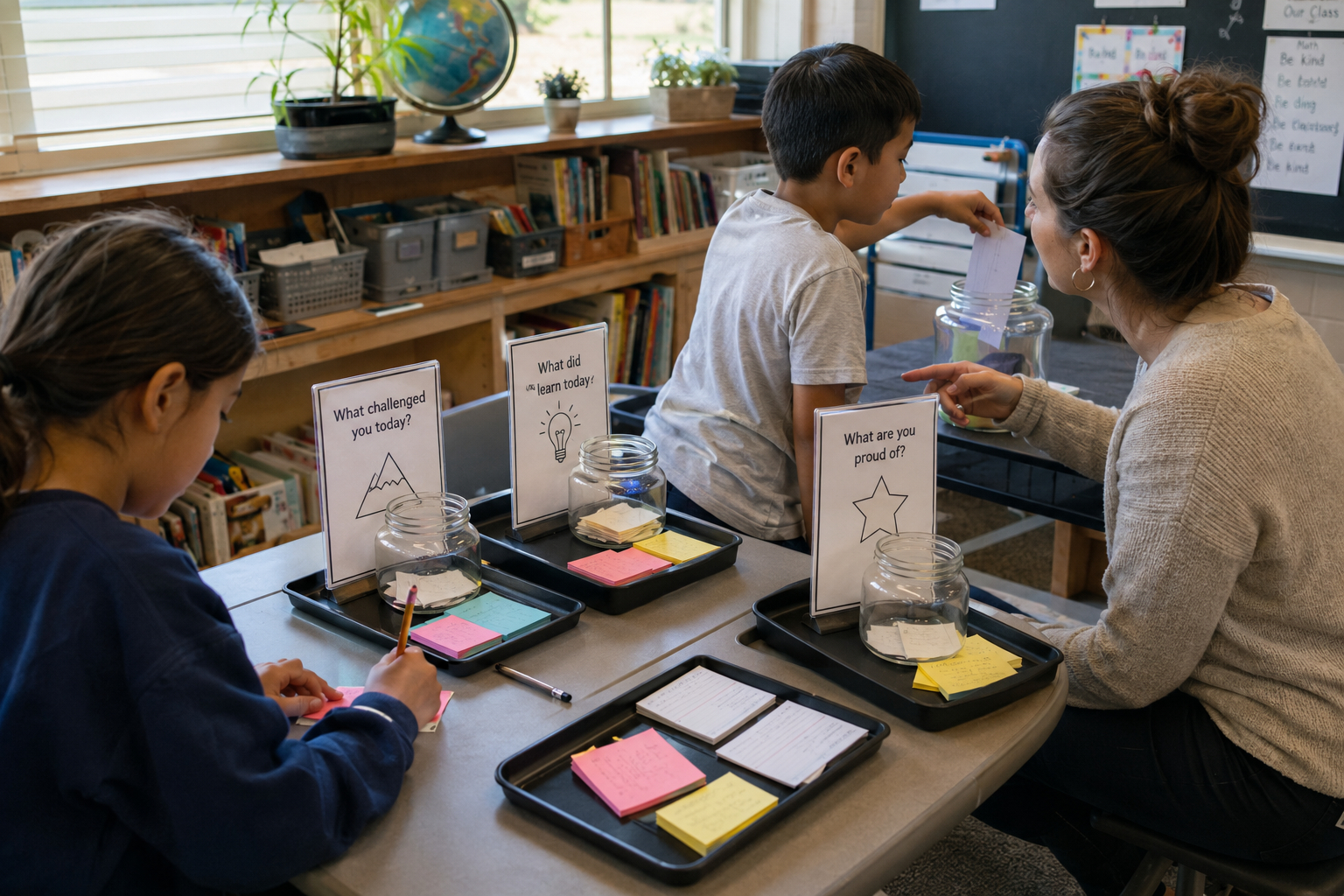
Reflection stations are compact, focused moments in a lesson where learners pause to consider what they know and what comes next. When implemented deliberately, these stations help students practice metacognition without taking up large chunks of classroom time. They can be low-tech, routine, and flexible across subjects and grade levels. This article outlines practical design choices and integration tips to make reflection stations productive and sustainable.
Why reflection stations work
Reflection stations create predictable pauses that reduce cognitive overload and promote transfer. By framing short, specific prompts, teachers cue students to summarize, question, and plan in targeted ways. These micro-actions build awareness of strategies and progress, which supports self-regulation over time. Students begin to recognize patterns in their understanding and make small adjustments that add up.
Used consistently, stations change classroom culture toward ownership and iteration. They give teachers quick diagnostic windows without formal assessment. Over several weeks, students often adopt the language and practices independently.
Designing quick reflection prompts
Effective prompts are brief, clear, and aligned to the lesson objective so students can respond in a minute or two. Examples include asking for a one-sentence summary, a next-step strategy, or a specific question about the content. Vary the prompt type to focus attention on comprehension, strategy use, or evidence evaluation. Rotate a small bank of prompts so students gain practice with different reflective moves.
- Summarize the main idea in one sentence.
- Write one strategy you used and why it worked.
- Pose a question that would help you deepen understanding.
Keep response modes flexible: sticky notes, index cards, quick digital entries, or partner shares all work. The choice should match available time and classroom flow.
Integrating stations into classroom routines
Place reflection stations at natural transition points: after a mini-lesson, mid-workshop, or at lesson close. Assign clear time limits and signal transitions with a consistent phrase or visual cue. Train students on expectations through modeling and brief practice sessions so the structure becomes automatic. Use student responses to inform next steps rather than as high-stakes grading artifacts.
Sustainability depends on simplicity and alignment. Start small with two stations per week, collect samples, and refine prompts based on typical student responses. Over time, students will take greater initiative in using the stations to plan and revise their work.
Conclusion
Brief reflection stations are a practical way to build metacognitive habits and student agency. When prompts are concise and routines are consistent, students learn to monitor and steer their own learning. Start small, iterate, and use the information gathered to guide instruction and student choices.