Quick self-assessments give students simple language and a repeatable structure to judge their understanding. When practiced regularly, brief reflections sharpen metacognition and create habits that move between topics. Teachers can design prompts that work across disciplines while keeping the routine predictable and low-stakes. The suggestions below focus on practical prompts, classroom routines, and lightweight tracking methods teachers can adopt quickly.
Why quick self-assessments matter
Short self-assessments matter because they turn vague impressions into concrete observations students can act on. A one-minute check like “I can explain this” versus “I need more practice with this step” trains learners to notice gaps and successes. Repeating similar checks across lessons helps students compare progress and transfer strategies from one subject to another. Over time, micro-checks reduce reliance on teacher prompts and build independent problem-solving habits.
These routines also create a classroom language for learning that teachers and students both use. Consistent phrasing makes it easier to monitor growth and intervene when patterns emerge.
Designing simple prompts teachers can use
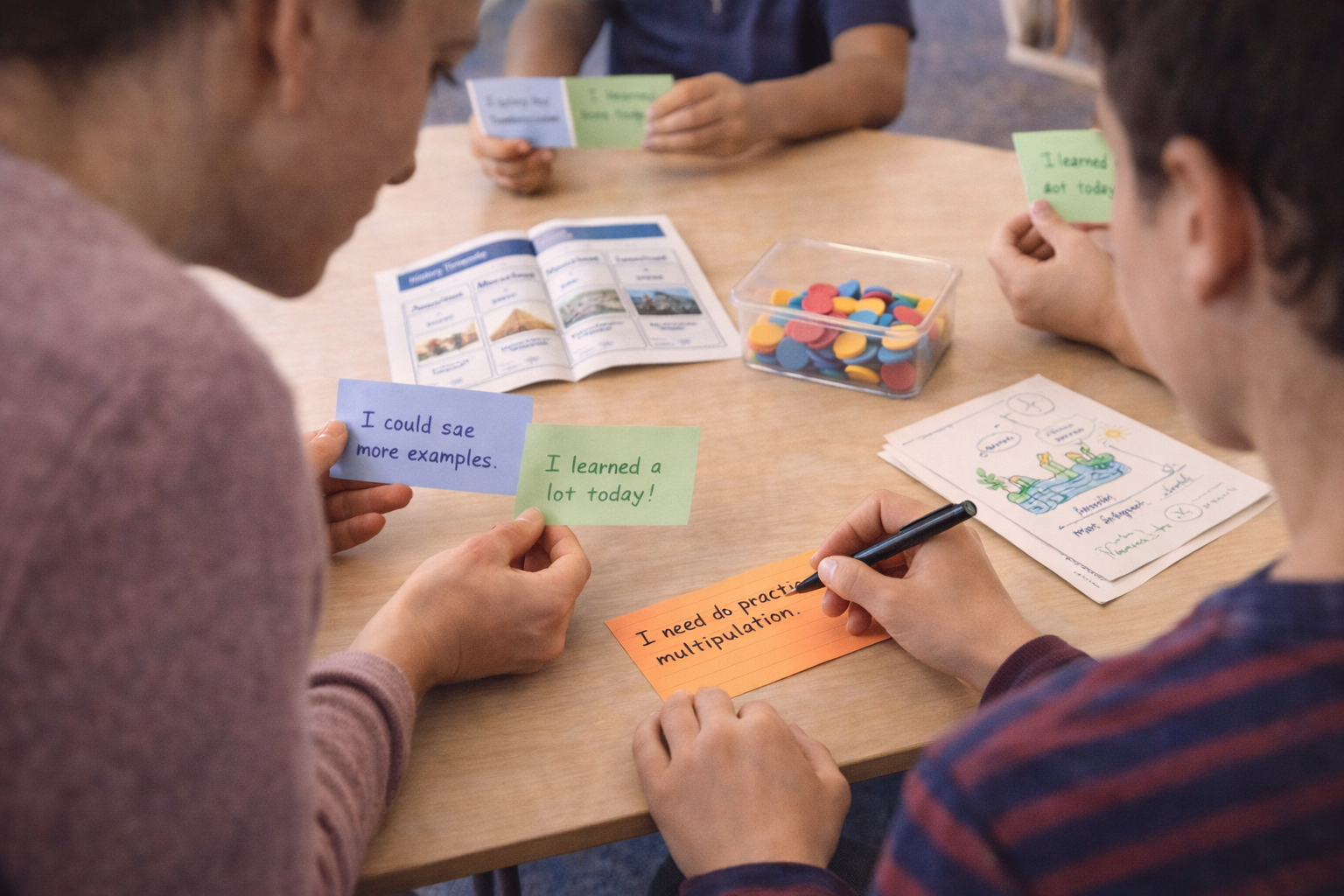
Design prompts that are short, specific, and adaptable to different content areas. Favor questions that target comprehension, confidence, and next steps so students can report a learning state and an action. Provide sentence stems at first, then fade supports as students become fluent with the routine. Keep scoring simple: a three-point check (confident, unsure, need help) is easy to interpret and apply.
- Comprehension: “I can summarize the main idea in one sentence.”
- Confidence: “I feel ready to try a similar problem on my own.”
- Next step: “My next action is ___ to improve my understanding.”
Share these prompts visually and practice them until they feel automatic. Familiarity helps students use the same prompts across lessons and subjects.
Routines for embedding assessments into lessons
Embed quick checks at predictable moments such as openings, mid-lesson pauses, or exit tasks so they do not interrupt flow. A sixty-second mid-lesson pause can reveal misconceptions before they solidify and guide a short reteach. Use pair or small-group checks where students compare responses against a prompt to amplify peer learning. Over repeated use, students will apply the habit independently when tackling new material.
Keep the procedure consistent and time-limited so it becomes a natural part of class rhythm. Predictability lowers resistance and increases honest reporting.
Tracking progress and encouraging reflection
Track responses to observe trends rather than to grade individuals each time; charts or quick tallies can signal when whole-class review is needed. Encourage students to keep a brief personal log of self-assessments so they can reflect on patterns and set concrete goals. Use periodic conferences to review logs and translate reflections into actionable study steps. This combination of personal tracking and teacher observation supports deeper metacognitive development.
Celebrate clear improvements and adjust prompts when they stop revealing useful information. The aim is sustainable transfer of self-assessment skills across contexts.
Conclusion
Quick, consistent self-assessment habits give students tools to judge and direct their own learning. When prompts are brief, versatile, and practiced routinely they translate across subjects and tasks. Implementing simple checks, light tracking, and reflection supports makes learner independence more achievable in any classroom.