Every classroom benefits when students learn quick, portable ways to self-assess. Short routines that students can use independently help them notice gaps and adjust strategies. These habits translate across subjects, simplify teacher feedback, and build learner confidence. This article describes practical routines teachers can introduce and adapt with minimal time.
Why portable self-checks matter
Portable self-check routines give students immediate evidence about their understanding without waiting for external evaluation. When learners regularly pause to monitor a task, they develop metacognitive awareness that guides next steps. Teachers benefit too, because visible student checkpoints reduce uncertainty about who needs support. Designing short checks emphasizes process over perfection and encourages risk-taking in learning.
Expect variability at first; consistency grows with explicit modeling and routine practice. Small wins accumulate and make these habits more likely to stick.
Core elements of an effective self-check
Effective routines are brief, clear, and repeatable so students can use them under time pressure. They focus on concrete signals — examples include summarizing a main idea, checking a sample problem, or rating confidence on a short scale. Clarity about what counts as acceptable progress helps students make real-time decisions. Providing language frames and simple tools reduces cognitive load during the check.
Start with one element and scaffold additional moves as students become fluent. Keep instructions visual and concise so routines survive busy lessons.
Classroom routines to introduce
Introduce routines through demonstration, think-alouds, and partnered practice so learners see the process. Examples include a 60-second summary at the end of a task, a two-item checklist, or a quick peer verification. Rotate routines so students can test which methods suit their cognitive style and the task demands. Use formative checks to inform whole-group instruction rather than only grading individual performance.
- 60-second summary: state the main point and one supporting detail.
- Two-item checklist: accuracy and understanding scored as yes/no.
- Peer verification: show work to a classmate and note one revision.
Give feedback on the use of the routine itself, not just the academic product. Normalize revisions based on what the check reveals.
Sustaining and scaling routines
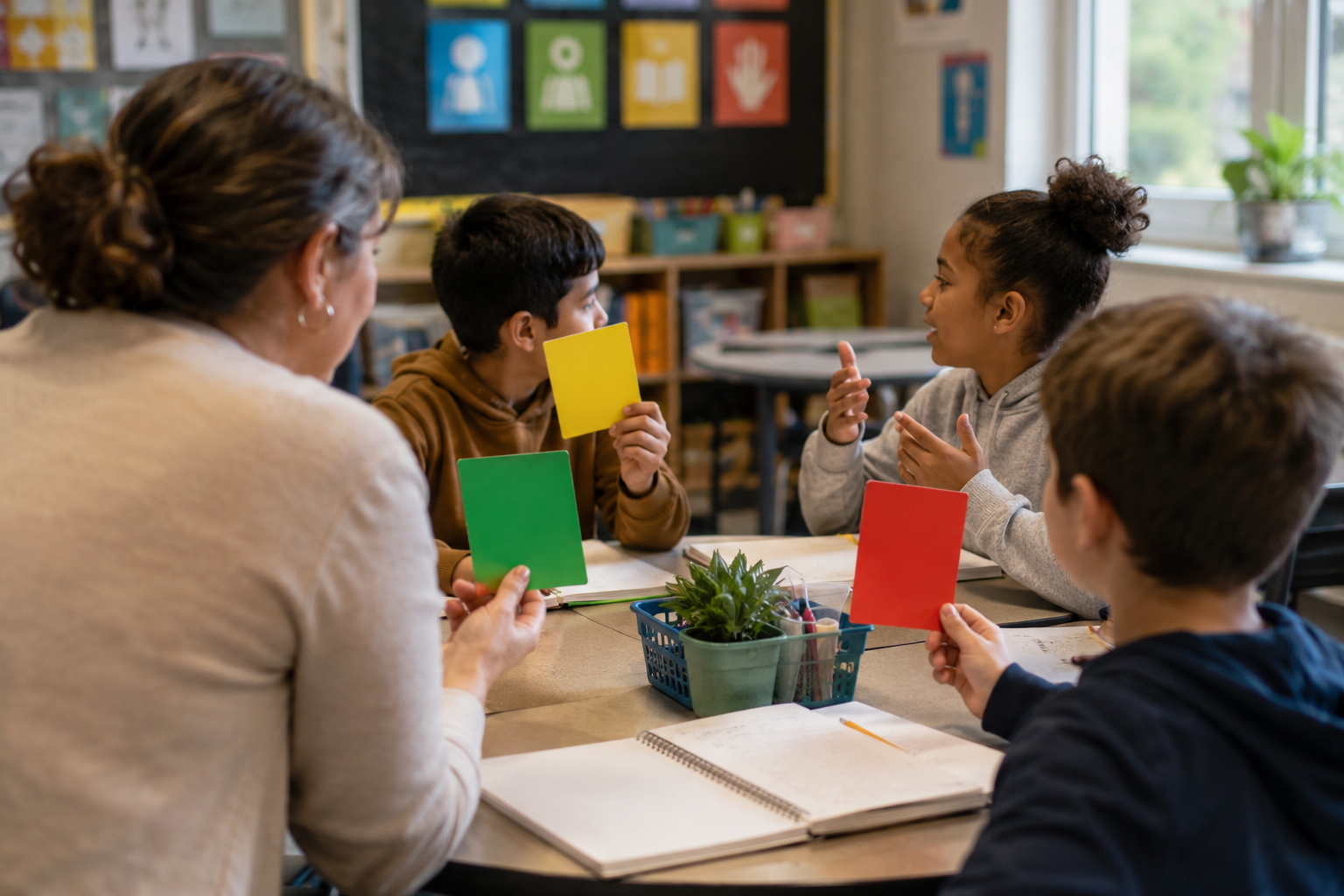
To scale routines across units, create shared anchors like posters, short prompts, or fixed signals. Celebrate instances where students use checks to improve outcomes and highlight those strategies during reflections. Allow students to adapt routines and propose their own variants as ownership grows. Track implementation with periodic classroom snapshots rather than heavy data systems.
Over time, minimalist self-checks become part of classroom culture and student identity as independent learners. Keep refining prompts so they remain relevant to emerging tasks and goals.
Conclusion
Portable self-check routines are lightweight tools that build learner independence. Start small, model clearly, and celebrate strategic use over perfect answers. With consistency these practices scale across subjects and support lifelong learning habits.