Portfolios turn scattered assignments into coherent learning stories that students can revisit and reflect on. They help learners see progress, identify patterns, and make choices about next steps. Curating a portfolio encourages intentional selection and critical reflection on quality and growth. When guided well, portfolios become practical tools for student agency and assessment conversations.
Why Portfolios Matter
Portfolios shift the focus from single grades to a broader view of student development over time. They allow teachers and students to trace skill growth, spot misconceptions, and celebrate improvements. Portfolios support metacognition because students must justify why an artifact represents their learning. When used consistently, they build ownership and provide richer evidence for conferences and reports.
Portfolios also connect classroom work to real-world competencies. They can showcase collaboration, research, drafts, and final products, giving a fuller picture than tests alone. With clear criteria, students learn to evaluate their own work against standards.
Getting Started: Tools and Structures
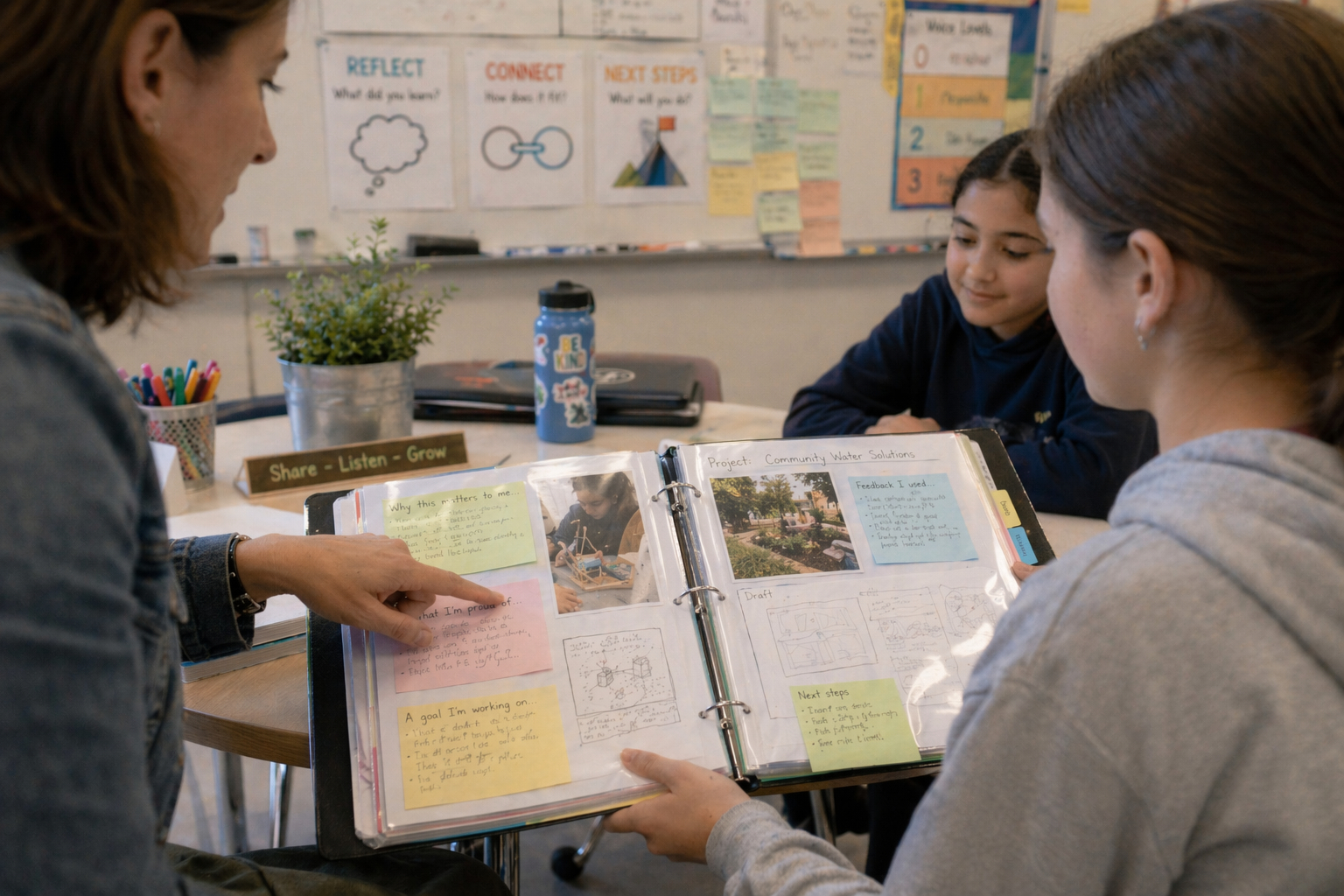
Begin with a simple framework so collection feels manageable rather than overwhelming. Decide on categories (for example: drafts, reflections, assessments, and projects) and a regular schedule for submissions and reviews. Digital platforms simplify storage and sharing, but a paper binder can work equally well when routines are clear. Clear rubrics and exemplars help students decide what to include and why.
- Drafts and revisions that show process.
- Reflective notes explaining choices and learning goals.
- Representative assessments and collaborative projects.
Start small: ask students to curate one artifact per week, then build to a termly selection for review. Regular checkpoints prevent portfolios from becoming passive archives.
Classroom Habits to Maintain Portfolios
Embed portfolio work into existing routines so it becomes natural, not extra. Use short reflection prompts after major tasks and dedicate a few minutes weekly for students to file new items and update reflections. Peer review sessions can surface strong examples and help students refine inclusion criteria. Teachers should model curation by thinking aloud about why an artifact matters.
Consistent feedback loops—teacher comments, peer suggestions, and self-assessments—keep portfolios living and relevant. Over time, students build a curated collection that tells a convincing story about their learning trajectory.
Conclusion
Portfolios give students a structured way to collect evidence and reflect on growth. They promote ownership by making learning visible and assessable over time. With simple routines and clear expectations, portfolios become powerful tools for lifelong learning.