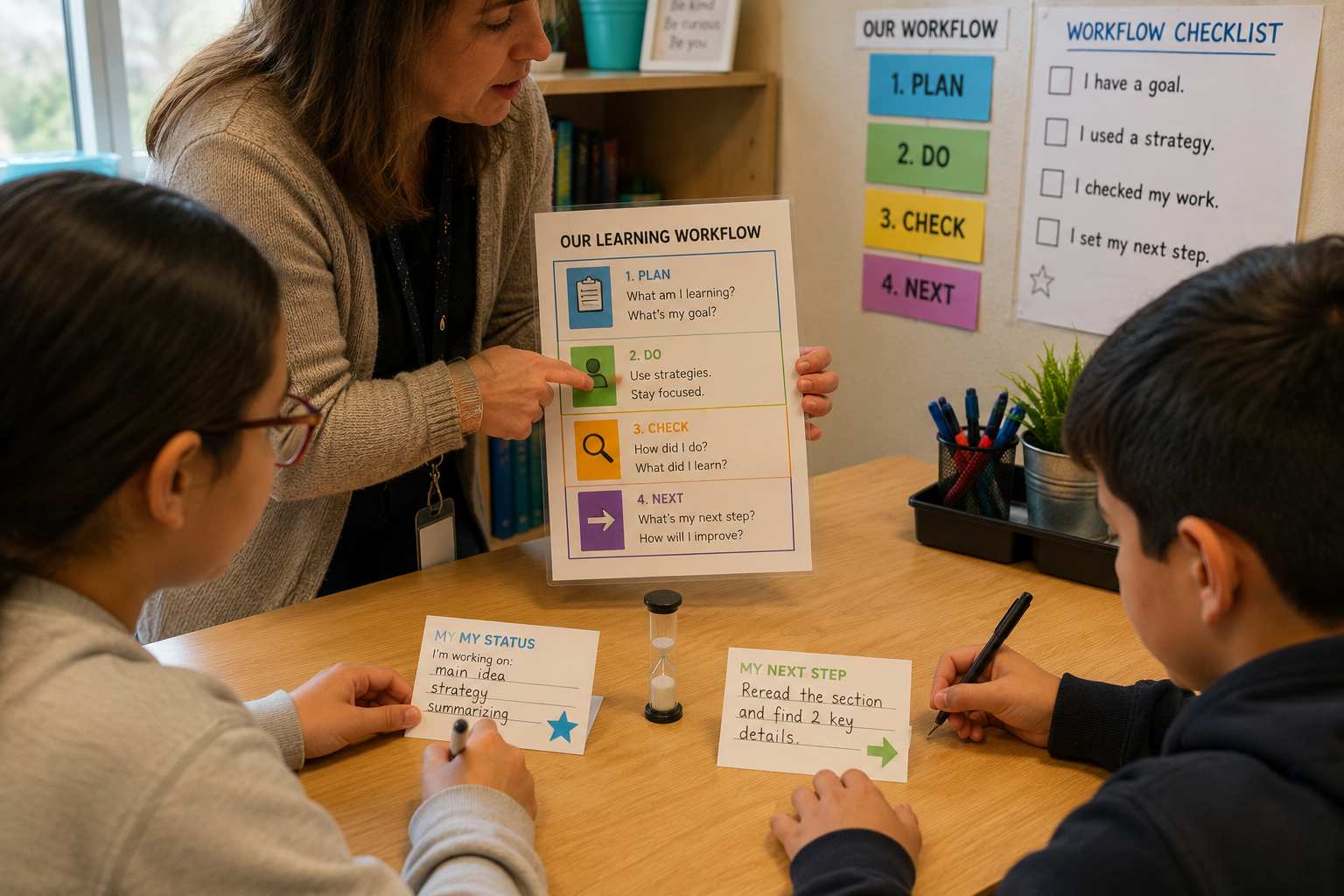
Helping learners manage their own workflows is a practical step toward greater independence and sustained progress. When students can organize tasks, prioritize actions, and monitor outcomes, they become more resilient problem-solvers. Teachers who scaffold these habits offer structure without taking ownership away from students. This article outlines classroom strategies that make workflow management teachable and repeatable.
These methods emphasize clarity, repetition, and quick feedback loops. They are adaptable to different ages and subjects. The goal is gradual release: demonstrate, coach, then let students run their processes. Consistency helps turn trial practices into durable habits.
Clarify the Workflow
Start by breaking common assignments into predictable steps so students can see the process end to end. Label stages such as goal setting, resource gathering, drafting, checking, and revision so learners can internalize a sequence. Use simple visual anchors in the room or on assignment sheets to remind students of each phase. Knowing the workflow reduces decision fatigue and makes complex tasks feel manageable.
Teach students to map tasks to time and priority at the outset of work. A shared checklist or a one-page flowchart helps students orient themselves quickly. Rehearse this mapping together until it becomes second nature.
Teach Tools, Shortcuts, and Smart Habits
Introduce a small set of tools and conventions that support the workflow, such as naming files consistently, time-boxing work, or using a two-minute review routine. Focus on lightweight practices that save cognitive energy rather than heavy systems that require constant maintenance. Demonstrate how these tools reduce friction and model their use while students observe. Encourage learners to adopt one new shortcut at a time so they are not overwhelmed.
Provide templates and quick-start guides to lower the activation energy for students. Over time invite them to adapt or replace tools as they discover what works best for their learning style.
Build Regular Checkpoints and Reflection
Embed brief, regular checkpoints that require students to report progress, identify obstacles, or request help. These can be two-minute status cards, peer check-ins, or quick exit prompts that focus on the next actionable step. Frequent checkpoints create accountability and allow teachers to spot patterns across learners. They also normalize iterative work rather than perfection on first attempts.
Pair checkpoints with short reflections that guide students to refine their workflow. Ask what worked, what slowed them down, and one adjustment they will try next time. This keeps workflow development focused and evidence-based.
Conclusion
Teaching workflow management equips students with repeatable processes that transfer across tasks. Small, explicit scaffolds and quick feedback loops help learners internalize productive routines. With consistent practice, students gain confidence and control over their own learning.