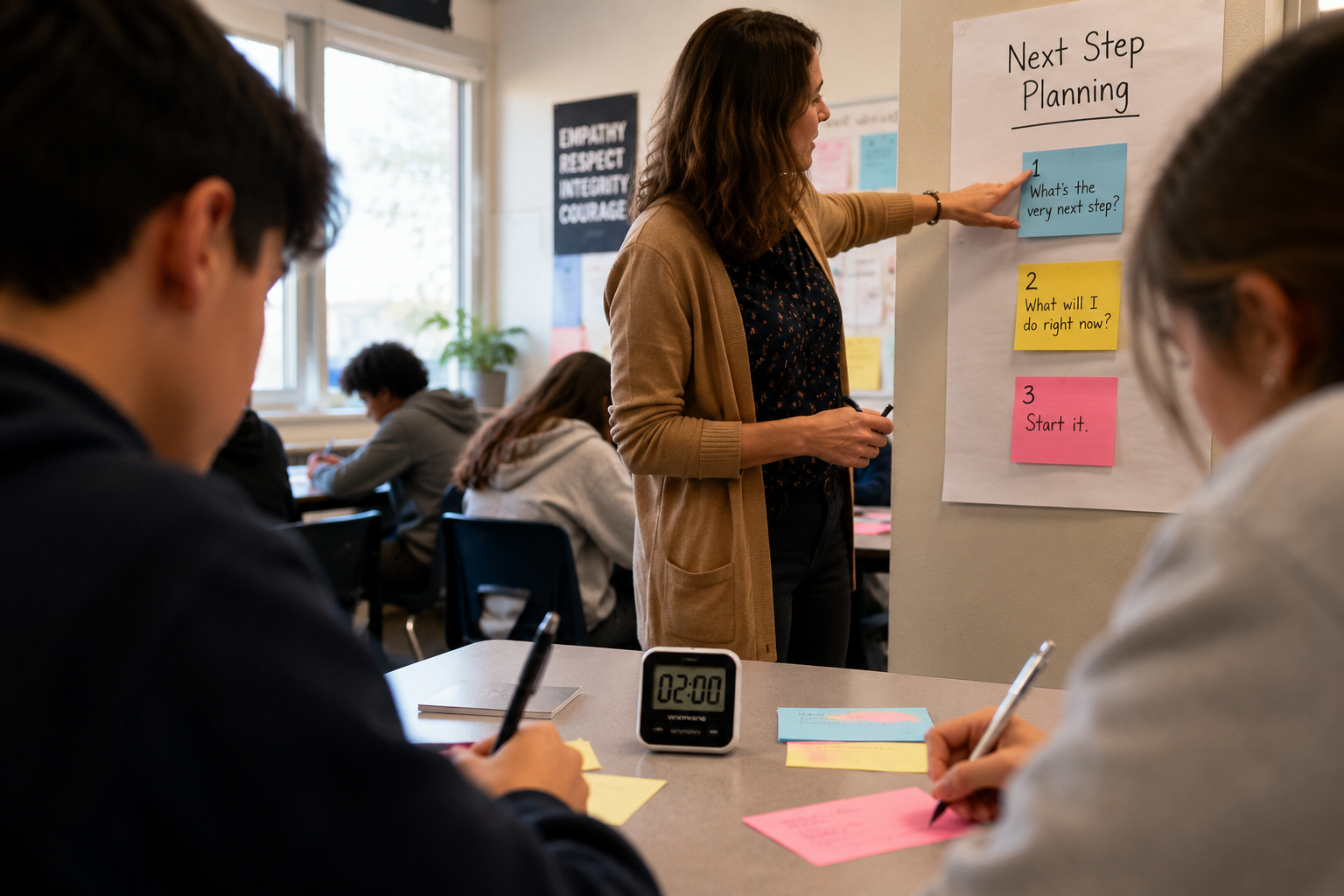
Short planning frames help students break tasks into manageable steps and reduce overwhelm. When learners use compact sequences they build clarity about priorities and time needed. Teaching sequencing explicitly makes hidden cognitive processes visible and repeatable. This piece outlines practical classroom moves to introduce small, durable planning frames.
Why short planning frames work
Short planning frames compress planning into a predictable ritual students can learn quickly. They reduce the decision load by limiting options to a few clear steps, which supports attention and reduces procrastination. Frames also scaffold metacognitive habits: students practice choosing next actions, estimating time, and checking progress. Because frames are brief, teachers can model and reinforce them frequently without losing instructional time.
Used regularly, frames shift planning from a one-off task to an ongoing habit that prepares students for independent work. Over time, learners internalize the sequence and apply it to different tasks and subjects.
Classroom steps to introduce sequencing frames
Start by demonstrating a simple three-step frame: Define, Plan, Execute. Model the frame with a real assignment, talking aloud about priorities and time estimates. Next, have students practice the frame in pairs, then independently with a timer to keep the activity focused. Provide quick feedback focused on accuracy of steps and realistic timing rather than perfection of the product.
- Define: identify the specific outcome or question to address.
- Plan: choose the next three actions and estimate time for each.
- Execute: start the first action and check progress at an agreed point.
Gradually extend the frame by adding a brief reflection step or adapting the number of actions to match task complexity. Keep prompts consistent so the frame becomes a reliable habit.
Sample planning frames and prompts for lessons
Offer students a small menu of frames they can choose from depending on task length and difficulty. For short tasks, a two-step frame like Identify + Do can be sufficient; for longer projects, use Define, Breakdown, Schedule, Review. Provide sentence starters and visual templates to lower the barrier to use. Encourage students to record estimates and actual time to build calibration skills.
Rotate frames across activities so learners practice transfer. Collect brief reflections to monitor which frames support progress and where adjustments are needed.
Conclusion
Short planning frames make sequencing predictable and teachable for learners. When consistently practiced, they reduce cognitive load and strengthen independent work skills. Start small, model often, and iterate with student feedback.