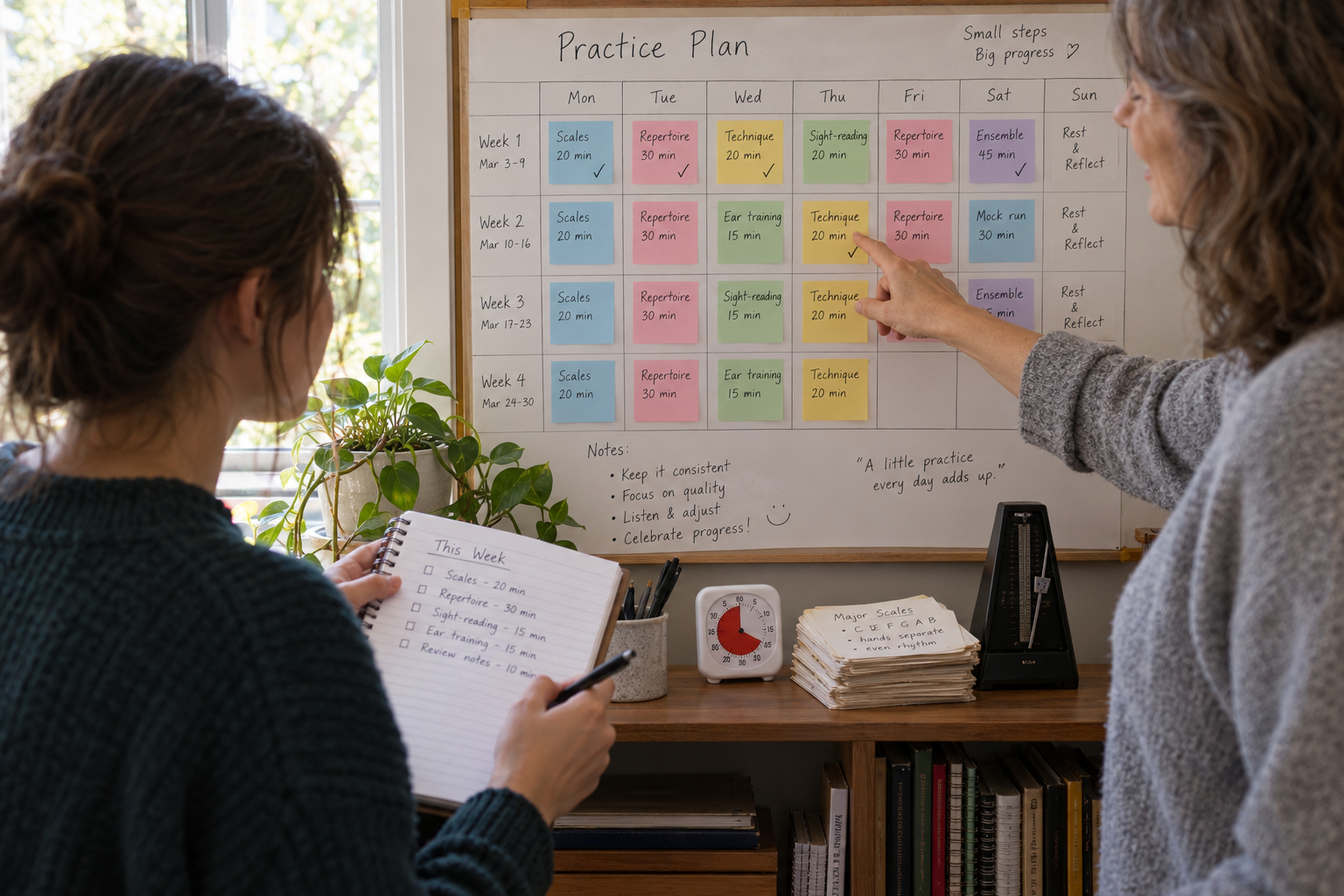
Developing a steady weekly plan can make learning more efficient and sustainable. When you break broader goals into compact weekly commitments, progress becomes measurable and less intimidating. A reliable weekly structure helps balance focused practice and review while preserving flexibility. This article outlines practical techniques to plan weeks that accelerate skill acquisition without overwhelming your schedule.
These approaches are designed for adaptability and consistent progress. Use them to create a routine that fits your life and learning goals.
Why weekly planning works
Weekly planning creates a natural rhythm between short, actionable goals and long-term objectives. It allows deliberate focus on one or two priorities while leaving room for review and reflection. Regular checkpoints reduce drift and encourage steady momentum.
A weekly cadence also accommodates life’s unpredictability more easily than daily rigid schedules. It gives learners a manageable horizon for planning. Experiment with different cadences to find what fits your schedule.
Set realistic weekly goals
Start by translating long-term aims into specific weekly outcomes. Focus on measurable tasks such as finishing a module, completing practice sets, or achieving time-on-task targets. Keep the number of goals small—three or fewer—to prevent dilution of effort. Prioritize clarity: each goal should have a defined deliverable and success criteria.
Clear, realistic targets make it easier to judge progress and adjust next week’s plan. They also reduce decision fatigue during learning sessions.
Design focused study sessions
Block time for concentrated sessions that match the cognitive demands of the task. Alternate intense focus periods with short breaks and include at least one session dedicated to active recall or application. Use techniques like spaced repetition or interleaving when appropriate to strengthen retention. Protect these blocks by minimizing distractions and setting explicit intentions.
- 25–50 minute focused blocks
- 10–15 minute review breaks
- Weekly synthesis session to integrate learning
Consistent session design reduces setup time and primes your brain for learning. Over time, these habits compound into measurable gains. Measure improvements with simple metrics.
Track progress and iterate
Maintain a simple tracking system to log what you practiced, what worked, and what didn’t. Use a brief weekly review to summarize successes, obstacles, and next steps. Iteration based on real feedback helps refine goals and session structure.
Small adjustments each week keep the plan aligned with real outcomes. Treat the review as a low-effort habit that yields directional clarity. Document small wins to stay motivated.
Conclusion
Weekly planning turns vague intentions into concrete steps that produce cumulative skill growth. By setting realistic goals, designing focused sessions, and reviewing outcomes, you build a resilient learning practice. Start small and iterate weekly to sustain progress over the long term.