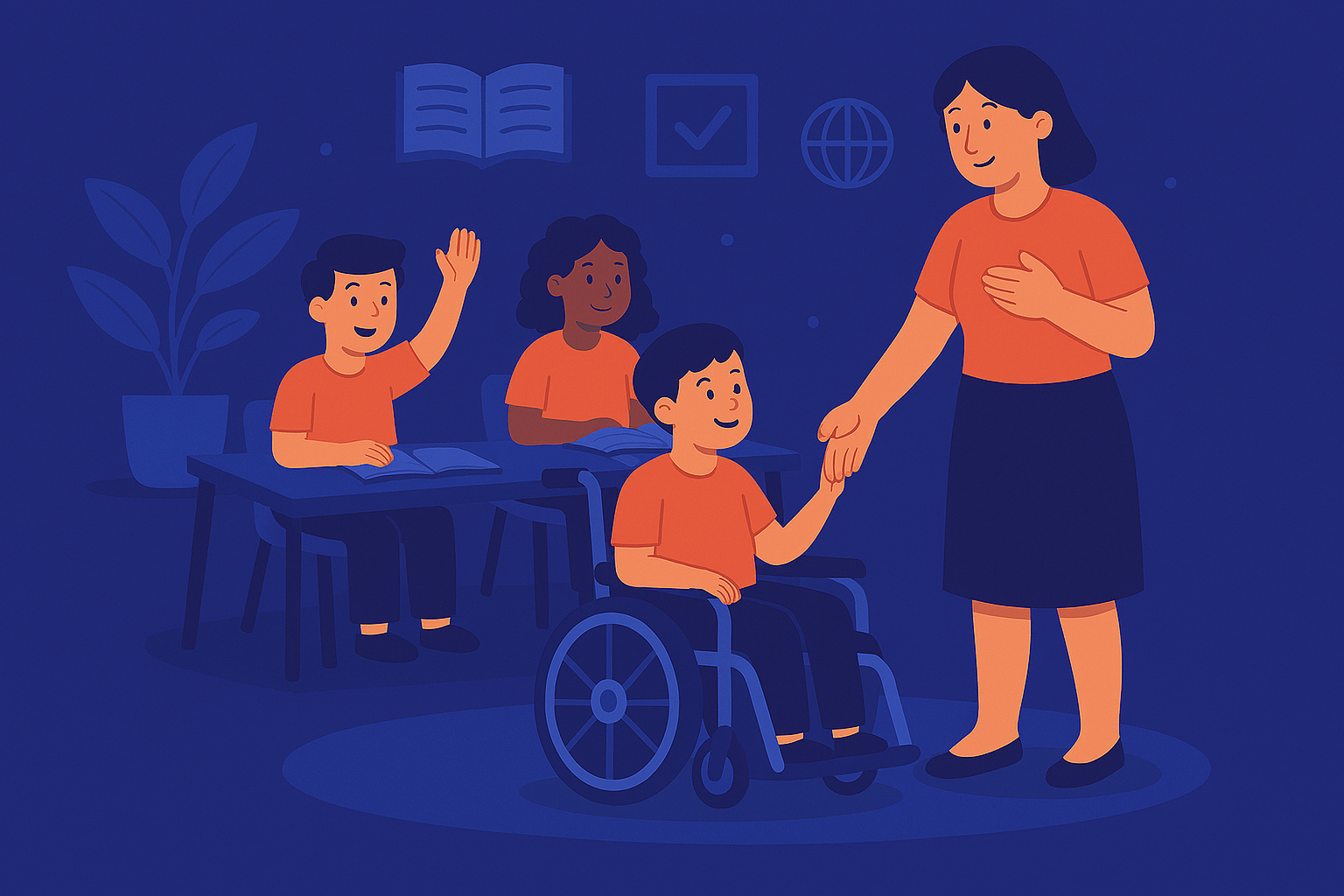
Inclusive education ensures that learners with diverse abilities, backgrounds, and learning styles participate fully in mainstream classrooms. It’s rooted in dignity and the belief that diversity enriches learning.
Why it matters:
Inclusive classrooms promote empathy, normalize differences, and produce better outcomes for all students. They foster a culture of belonging where varied strengths are recognized.
Principles to follow:
- Universal Design for Learning (UDL): provide multiple means of engagement, representation, and expression.
- Differentiated instruction: adapt materials and tasks to meet varied needs without lowering expectations.
- Collaborative team approach: teachers, support specialists, families, and students co-design supports.
Practical strategies:
Flexible grouping, scaffolded tasks, assistive technologies, visual schedules, and peer-support systems.
Challenges & solutions:
- Large class sizes → prioritize small-group interventions and peer-assisted learning.
- Stigma and low expectations → schoolwide culture work, teacher training, and celebrating diverse successes.
Takeaway:
Inclusive education creates equitable opportunities and prepares all students for a diverse society.