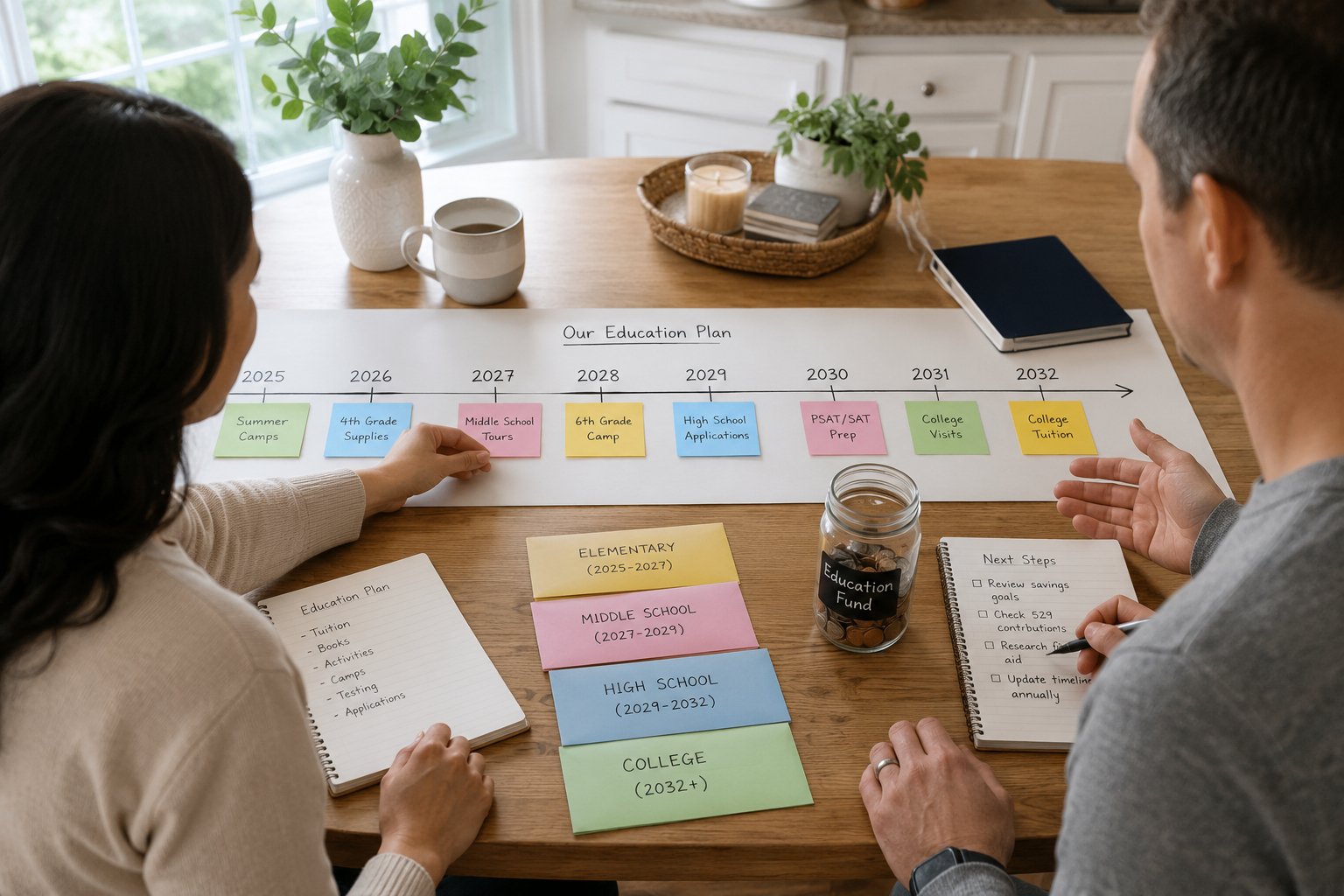
Predictable education expenses are rarely fixed across years, so a budgeting approach that adapts helps households plan with confidence. A rolling budget creates a continuous funding horizon that aligns contributions with timing, priority, and liquidity. This method treats future tuition, courses, and lifelong learning as scheduled obligations rather than occasional surprises. Implementing a rolling plan reduces last-minute tradeoffs and keeps funding choices intentional.
Why a Rolling Budget Works
A rolling budget extends a familiar monthly plan forward by adding forecasted education commitments for the next 12 to 36 months and updating it regularly.
It balances short-term cash flow with medium-term goals, allowing you to earmark funds without locking them into a single vehicle.
By setting target amounts for upcoming semesters, certifications, or enrichment activities, the plan keeps funding visible and actionable.
The approach also encourages modest buffers so price fluctuations or schedule changes don’t derail other household priorities.
Begin with realistic time horizons and conservative cost estimates to build trust in the system.
Early progress, even small, reinforces consistent contributions and simplifies adjustments later on.
How to Build the Rolling Budget
To build a rolling budget, start with an inventory of anticipated education events and their likely costs over your chosen horizon. Assign each event a priority and timeline, then convert totals into monthly contributions that feed a dedicated fund or labeled account. Where precise totals are unknown, use conservative estimates and round up to create breathing room. Update the list monthly or quarterly, shifting funds forward and back as dates firm up to reflect new information.
- Inventory events and estimate costs.
- Convert totals into monthly contributions.
- Automate transfers and review regularly.
Automate transfers when possible to remove friction and ensure consistency. Keep a brief record of assumptions so revisions are faster and clearer.
Managing Variability and Revisions
Variability is unavoidable: fees change, new opportunities appear, and household cash flow ebbs and flows.
A rolling budget handles this with three levers—timing, priority, and buffer—so you can pause lower-priority items, accelerate critical ones, or tap reserves temporarily. Periodic reviews let you reallocate without creating panic; move surplus into a contingency buffer or shorten timelines when income improves. This disciplined reassessment prevents underfunding and preserves flexibility for unexpected learning needs.
Communicate the plan with other household decision-makers to maintain alignment.
Small, scheduled check-ins make revisions painless and habitual.
Tracking and Reporting
Clear tracking makes the rolling budget actionable by turning assumptions into measurable outcomes and revealing where adjustments are needed.
Use a simple spreadsheet or budgeting tool that lists events, dates, estimated costs, and cumulative contributions, and update actual spending against targets.
Record reasons for variances to refine future estimates and to build a more accurate forecast each cycle. Share a concise monthly summary so everyone understands progress and trade-offs before decisions are finalized.
Visual cues like progress bars or percent funded help motivation and clarity. Annual summaries provide the context needed for larger strategic shifts.
Conclusion
A rolling budget turns uncertain education costs into manageable steps. It prioritizes predictability and flexibility so households can fund learning without disrupting other goals. Start with a single forecast cycle and refine it as needs evolve.