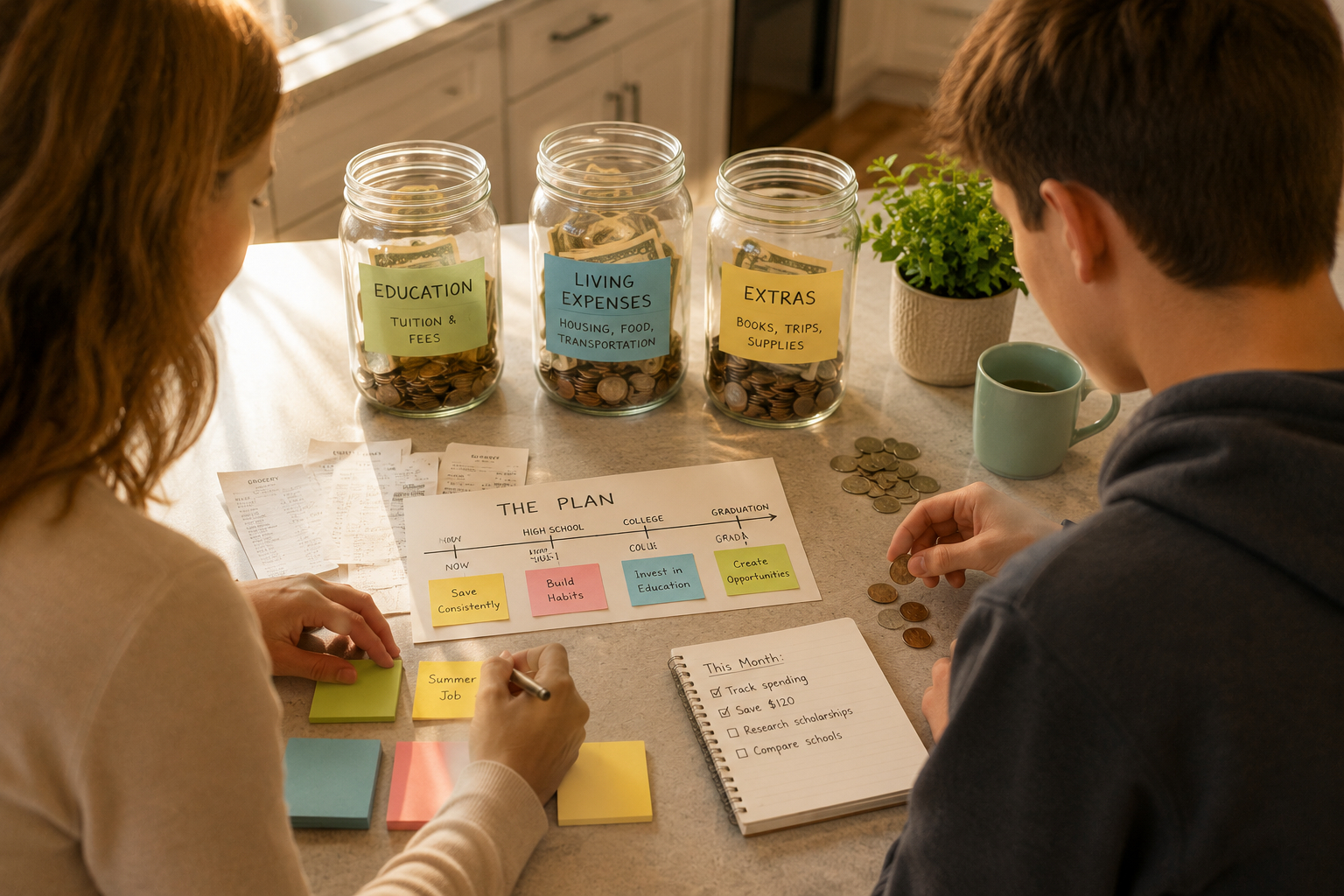
Managing education expenses over time is a challenge that benefits from structure rather than shortcuts. A durable budget balances forecasted costs, household priorities, and the inevitable surprises that arise. This article outlines practical steps to map needs, build flexible funding buckets, and keep plans adaptive as circumstances change. Read on for a clear, repeatable approach to reduce stress and improve outcomes for learning investments.
Start with realistic cost mapping
Begin by listing foreseeable education milestones and attaching approximate costs to each one. Use recent invoices, program brochures, and conversations with providers to ground estimates in reality, and include ancillary expenses like materials, travel, and testing fees. Break large costs into annual or monthly equivalents to see how they fit into cashflow. This mapping creates a baseline that informs how much to save and how quickly.
Once estimates exist, classify needs by priority and timing so planning focuses on what matters now versus later. Prioritization keeps short-term budgets from being overwhelmed by long-range goals. Clear cost mapping also makes trade-offs easier to evaluate.
Create flexible funding buckets
Divide savings into purpose-driven buckets that reflect timing and flexibility: immediate operational costs, near-term program fees, medium-term credential expenses, and a contingency buffer. Allocate monthly contributions across these buckets in proportions tied to priority and timing rather than exact amounts. This reduces the need to raid long-term funds when a short-term expense appears. Consider automated transfers to keep allocations consistent.
- Operational bucket: tuition, fees, subscriptions due within a year.
- Development bucket: certifications or programs planned in 1–3 years.
- Contingency buffer: unexpected exams, materials, or schedule changes.
Buckets do not have to be rigid accounts; simple labeled sub-accounts or spreadsheets suffice. The goal is clarity and flexibility rather than strict compartmentalization.
Leverage low-cost options and timing
Reduce required funding by exploring lower-cost providers, scholarships, and asynchronous learning that spreads fees over time. Timing purchases for sales or academic cycles can also lower costs without sacrificing quality. Encourage incremental learning paths that deliver measurable skills and delay larger commitments until benefits are clearer. Small adjustments in timing and provider selection compound into meaningful savings.
Encourage learners to combine free resources with paid experiences to validate commitments before major spending. This staged approach protects capital and improves return on education dollars.
Review, adapt and protect your plan
Schedule regular reviews—quarterly or semiannually—to compare actual spending against projections and adjust contributions. Life changes, price shifts, and new opportunities will alter priorities, so a durable budget is one that evolves. Maintain an accessible emergency buffer to avoid disrupting planned learning when income or timing shifts. Tracking and periodic adjustments keep the plan realistic and actionable.
Use simple metrics like coverage months per bucket and percentage of goal funded to guide revisions. Regular monitoring reinforces discipline and highlights when strategies need to change.
Conclusion
Durable education budgets start with clear cost mapping and flexible funding buckets aligned to timing and priorities. Pair disciplined reviews with low-cost options and a contingency buffer to protect learning plans. With a repeatable system, households can support education goals without sacrificing financial stability.