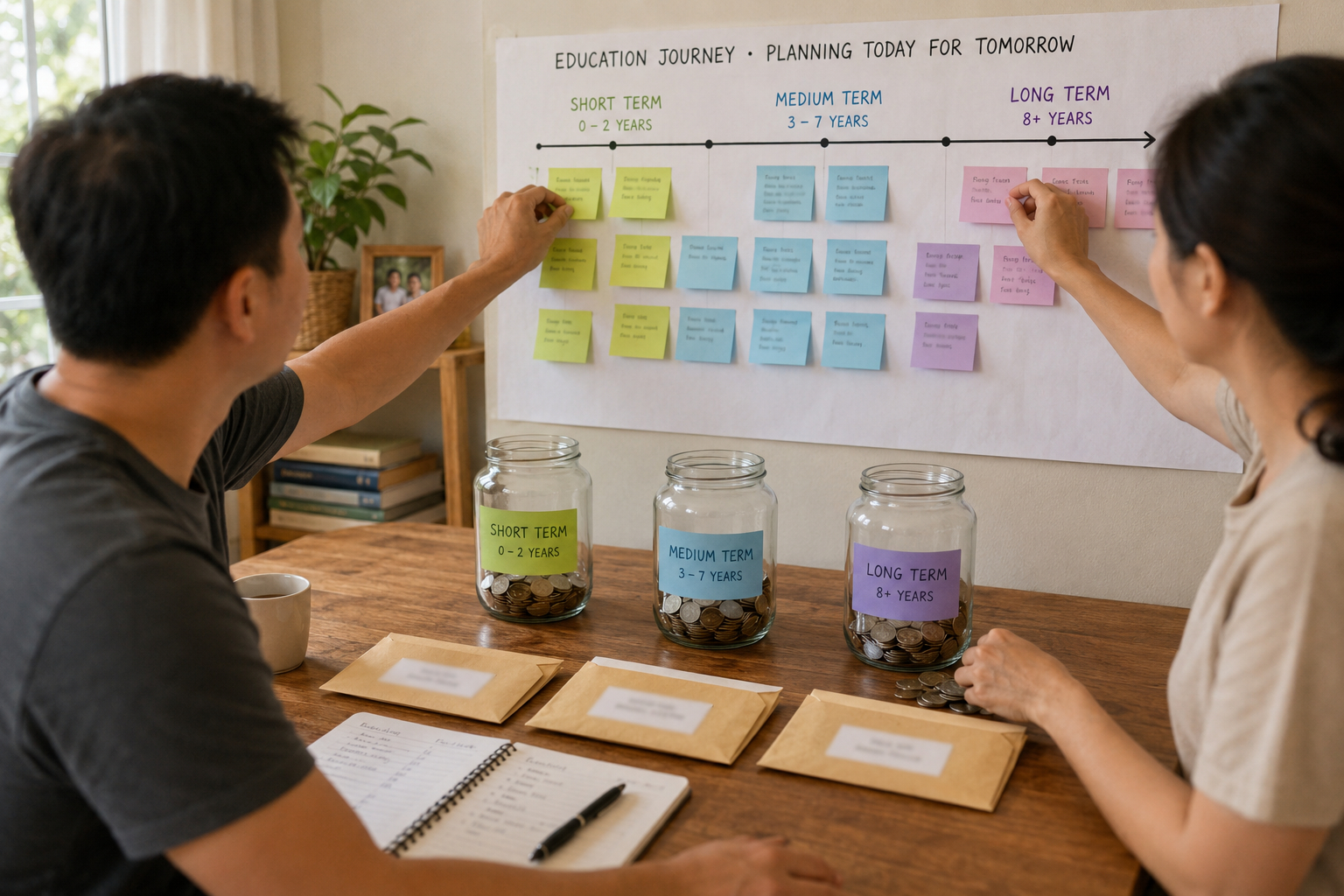
Planning how household resources meet education expenses requires more than a single savings account. A clear map ties each learning goal to when it will occur and how large the cost will likely be. This introduction outlines a phased approach that helps households prioritize, fund, and adapt as timing or circumstances change. The goal is to create a predictable, flexible path that keeps learning options viable without overstretching monthly cash flow.
Assess timing and scale of upcoming education costs
Start by listing education items and their expected timing: short courses, certification renewals, term-based tuition, or multi-year programs. For each item estimate a reasonable cost range and note which are mandatory versus optional. Consider who bears the cost and whether any external funding or employer support could offset needs. This assessment clarifies which expenses require near-term cash and which can be smoothed over time.
Capture these details in a single, shared spreadsheet or simple planning tool so decisions reflect the full picture. Knowing timing and scale reduces surprises and supports realistic prioritization.
Create phased funds tied to priority and timing
Allocate household resources into phased funding pools matched to timing: immediate (0–12 months), medium (1–3 years), and longer-term (3+ years). Fund immediate needs from liquid savings or monthly cash flow, medium-term expenses from planned contributions or short-term investments, and long-term aims from disciplined savings vehicles. Attach clear criteria to each pool that describe when funds can be tapped and what trade-offs are acceptable.
Phased funds let you direct limited resources where timing makes the biggest difference, preventing last-minute borrowing and reducing the need to cut other essential spending.
Maintain flexibility with reviews and contingency buffers
Build a modest contingency buffer within each phase to absorb price changes or schedule shifts without derailing plans. Schedule quarterly or biannual reviews to reallocate contributions as priorities or household income change. When unexpected opportunities or setbacks appear, use the review cadence to decide whether to accelerate, pause, or reprioritize funding rather than reacting impulsively.
Regular reviews and small buffers preserve options and keep the plan aligned with changing household realities.
Conclusion
Mapping resources to timing turns vague intentions into actionable plans and reduces financial friction. A phased approach, clear criteria, and routine reviews make education spending manageable and adaptable. These steps help households balance support for learning with overall financial stability.