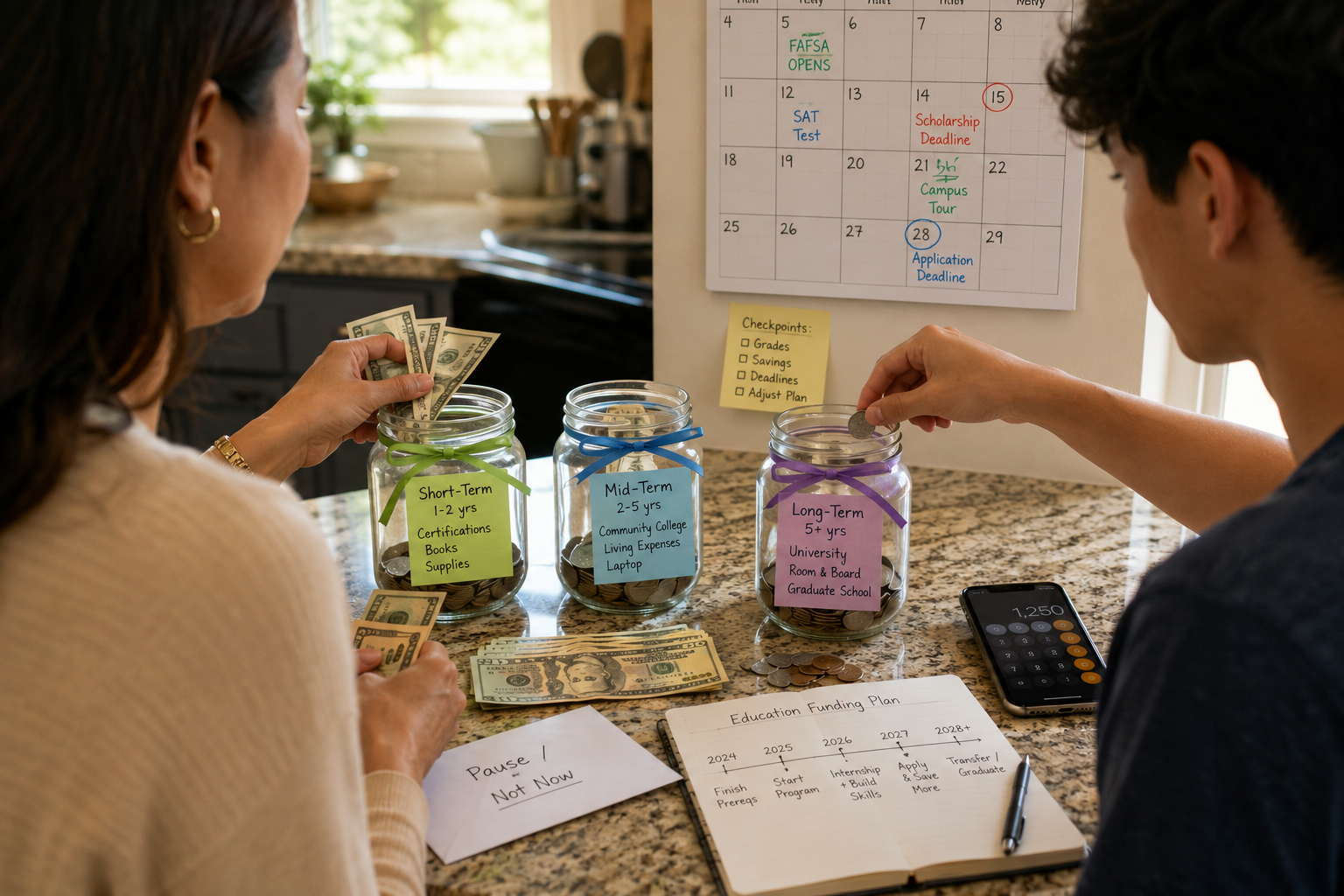
Households face ongoing education costs that shift with careers, interests, and life stages. A simple framework helps allocate limited cash without sacrificing learning goals. This article outlines pragmatic steps to prioritize spending, build flexible reserves, and set review points. These tactics fit routine budgets and adapt when income or priorities change. Simple habits lower stress and free resources for higher-value learning choices.
Set priorities by timeframe and impact
Begin by sorting education expenses into short-, medium-, and long-term buckets based on timing and expected benefit. Short-term items cover monthly subscriptions and immediate courses; medium-term might include semester tuition or certification fees; long-term covers degrees or multi-year programs. Estimating costs and deadlines clarifies what needs funding now versus later. This practice prevents small, recurring charges from crowding out larger, high-impact investments. Be realistic with cost estimates and include modest inflation for multi-year plans.
Use simple labels and a spreadsheet or app to track each bucket. Revisit labels annually or when a major household change occurs.
Build tiered reserves and flexible funding
Create a three-tier reserve: an operational buffer for monthly education costs, a dedicated sinking fund for planned programs, and a contingency reserve for unexpected opportunities or changes. Allocate a percentage of income to each tier rather than fixed amounts so contributions scale with earnings. Consider low-friction saving methods such as automated transfers or earmarked accounts to keep discipline. Complement cash reserves with flexible financing options like installment plans when sensible. When possible, pair savings with scholarships, discounts, or employer education benefits to stretch reserves.
Keep the contingency accessible but distinct to avoid incidental spending. Aim to replenish any used reserve within a defined timeframe. Track both contributions and usage so you can spot trends early.
Review checkpoints and pivot strategies
Set regular checkpoints—quarterly or semesterly—to compare actual spending against estimates and to reassess priorities. At each checkpoint, decide whether to pause lower-impact items, accelerate funding for rising needs, or pivot funds to emerging opportunities. Use simple metrics: months of coverage, percent progress toward each target, and impact-to-cost ratio for new requests. Document decisions so rationale guides future choices and reduces decision fatigue. Communicate changes with family members and stakeholders so expectations match available funding.
Small, scheduled reviews prevent last-minute scrambling and costly short-term borrowing. Make adjustments proportional to household cash flow.
Conclusion
Practical, repeatable choices keep education spending aligned with household goals. Prioritize by timeframe, protect core funds, and review outcomes regularly. With these habits, families can support learning without derailing broader long-term financial stability and peace of mind.